Thoran Recipe
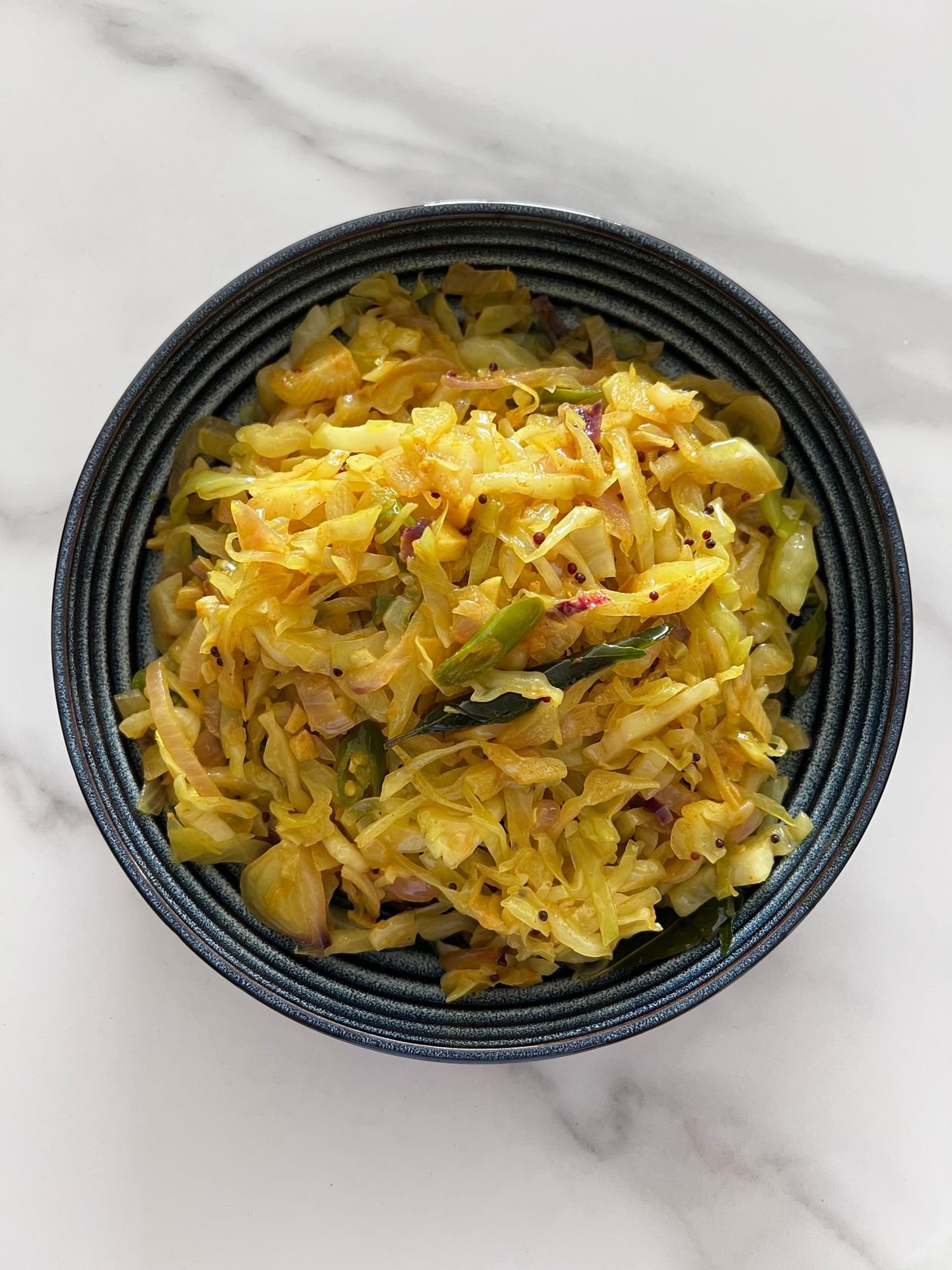
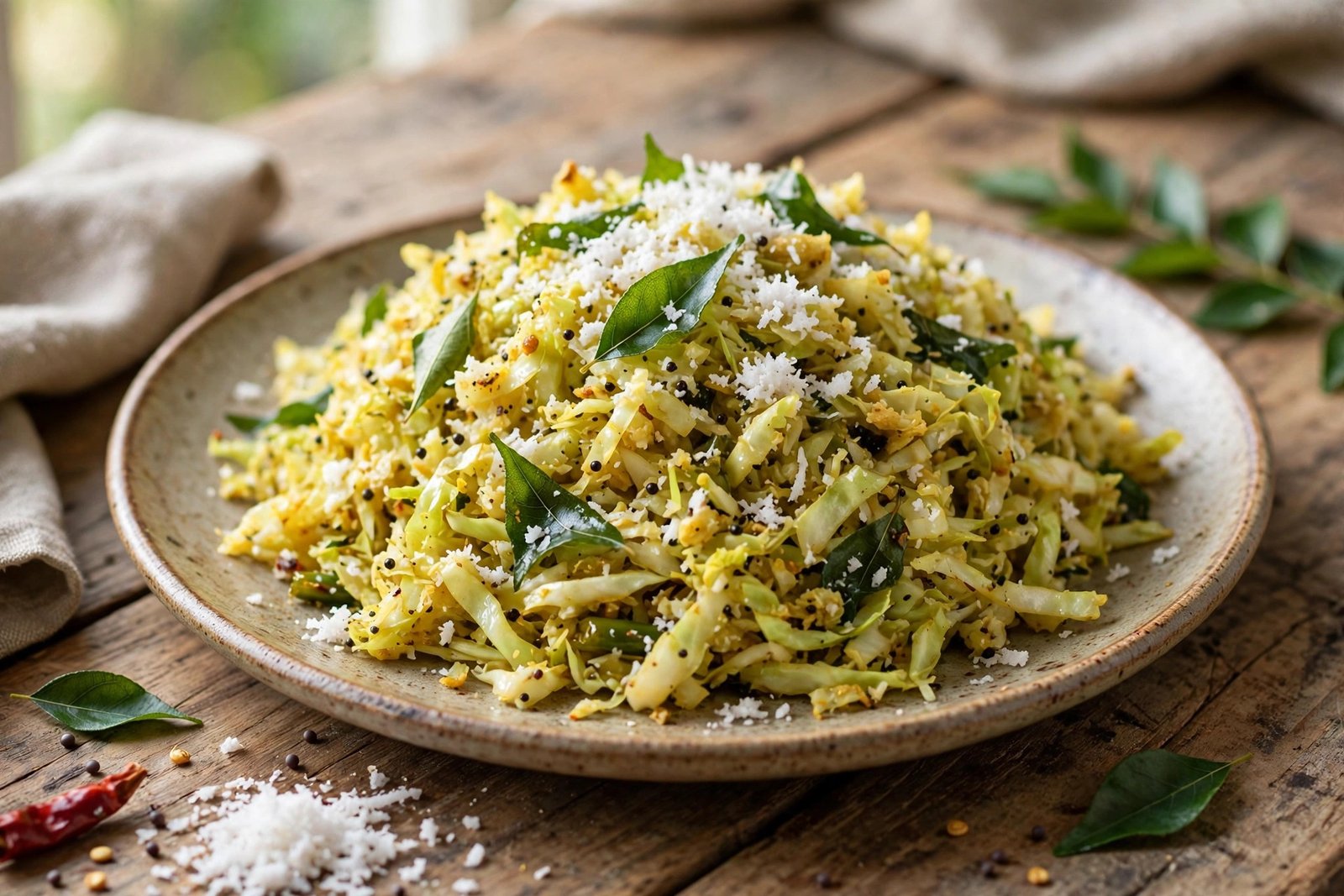
Crisp, fresh, and gently spiced, thoran is Kerala's beloved stir-fry of finely chopped vegetables and grated coconut. It takes just 30 minutes, and it is the dish that turns a plain bowl of rice into a proper South Indian meal. The coconut is toasted just enough to smell nutty, the mustard seeds pop, and the vegetables stay bright and crunchy. Simple, honest, and endlessly adaptable.
The story behind Thoran
Thoran is one of Kerala's oldest and most loved dishes, and it has been cooked in homes along the Malabar Coast for centuries. The name comes from the Malayalam word for a dry stir-fry, and the dish itself is a perfect example of Kerala cooking: fresh vegetables, grated coconut, and a simple tempering of mustard seeds, curry leaves, and green chilli. Coconut is the heart of Kerala's kitchen, and thoran is one of the purest ways to taste it, toasted just enough to smell nutty, never sweet, never heavy.
In Kerala homes, thoran is an everyday dish, not a special-occasion one. It appears on the table for lunch almost daily, served with rice, sambar, and a spoonful of curd, as part of the sadya-style meal that anchors the day. The vegetable changes with the season and the market: cabbage in the cooler months, beans and carrots year-round, beetroot when it is cheap, pumpkin when it is in season. A Kerala cook judges a thoran by its dryness and its crunch; it should be light and crumbly, never wet, and the vegetables should still have a little bite.
What makes thoran special is its freshness. There is no long simmering, no heavy sauce, no complicated spice mix. The vegetables are cut fine, cooked briefly, and finished with coconut that is toasted for just a minute or two. The result tastes clean and bright: the sweetness of the carrot, the mildness of the cabbage, the nuttiness of the coconut, and the gentle heat of the green chilli, all held together by the tempering. It is the kind of dish that makes a plain bowl of rice feel like a proper meal.
Cook this when you want a quick, healthy side dish, or when you need something fresh next to a rich curry. It takes 30 minutes from start to finish, and most of that is chopping. It is also a good dish for using up vegetables that are starting to wilt; a tired cabbage or a handful of beans becomes a proper thoran with a little coconut and tempering. Serve it hot, with rice and sambar, and enjoy the simplest cooking Kerala has to offer.
- Prep time
- 15 mins
- Cook time
- 15 mins
- Total time
- 30 mins
- Servings
- 4 servings
- Calories
- 210
Ingredients
- 300 g cabbage, finely shredded
- 1 medium carrot, peeled and finely grated
- 100 g green beans, finely chopped
- 1/2 cup fresh grated coconut
- 1 onion, finely chopped
- 2 green chillies, slit lengthwise
- 1 teaspoon fresh ginger, grated
- 1 tablespoon coconut oil
- 1 teaspoon mustard seeds and 1 teaspoon cumin seeds
- 1 sprig curry leaves
- 1/2 teaspoon turmeric powder
- 1/2 teaspoon chilli powder, optional
- Salt, to taste
- Fresh coriander leaves, to garnish
Instructions
- Prep all the vegetables first, because the cooking moves fast. Shred the cabbage finely, grate the carrot, and chop the beans into small pieces, about 1 cm long. The pieces should be roughly the same size so they cook evenly. If the cabbage is cut too thick, it will still be raw when the carrot is soft, so take the time to cut it fine.
- Heat the coconut oil in a wide pan or kadai over medium heat. Add the mustard seeds and wait for them to pop and crackle, which takes about 30 seconds. You will hear them jumping in the pan; this is the sound of the tempering working. Then add the cumin seeds and the curry leaves, and fry for 20 seconds until the leaves turn crisp and fragrant.
- Add the chopped onion, green chillies, and grated ginger, and cook for 2 minutes, stirring often, until the onion turns soft and translucent. Stir in the turmeric and chilli powder, if you are using it, and cook for 30 seconds more. The spices should smell warm and toasty, not raw, and the oil will take on a pale golden colour.
- Tip in the cabbage, carrot, and beans, and stir well to coat them in the spiced oil. Add a pinch of salt and 2 tablespoons of water, then cover the pan and cook on medium heat for 6 to 7 minutes. The vegetables should steam gently in their own moisture; lift the lid halfway through and give them a stir so nothing sticks.
- Take the lid off and check the vegetables. They should be tender with a little bite left, bright in colour, and mostly dry. If there is still water in the pan, cook uncovered for 2 more minutes, stirring often, until it evaporates. The thoran should be dry and crumbly, not wet, because it is meant to be eaten with rice and sambar.
- Add the grated coconut and stir it through the vegetables. Cook for 1 to 2 minutes more, stirring constantly, until the coconut turns pale gold and smells nutty. Watch it closely, because coconut goes from golden to burnt in seconds, and burnt coconut tastes bitter and will spoil the whole dish.
- Taste and adjust the salt. Add a little more if the flavours taste flat, or a squeeze of lemon if you want a touch of brightness. The finished thoran should taste fresh and clean, with the sweetness of the coconut, the warmth of the spices, and the gentle heat of the green chillies all in balance.
- Take the pan off the heat and sprinkle the chopped coriander over the top. The residual heat will wilt the leaves slightly and release their fresh smell. Serve the thoran hot, as part of a South Indian meal, with rice, sambar, and a spoonful of curd on the side.
Pro tips
- Cut the vegetables finely and evenly. Thick pieces cook slowly and unevenly, while fine pieces cook fast and stay crisp, which is exactly what a thoran needs.
- Wait for the mustard seeds to pop before adding anything else. The pop is the signal that the oil is hot enough and the seeds have released their flavour.
- Add only 2 tablespoons of water. The vegetables release their own moisture as they cook, and too much water turns a dry thoran into a soggy one.
- Add the coconut at the very end and cook it for 1 to 2 minutes only. It should turn pale gold and smell nutty; a minute too long and it burns and tastes bitter.
- Check the vegetables a minute early. They should be tender with a little bite left, not soft. They keep cooking in the residual heat after you take the pan off the stove.
Variations & serving ideas
Swap the vegetables freely. Beetroot thoran is a Kerala favourite, with a deep red colour and a sweet, earthy flavour; grate the beetroot finely and cook it for 2 minutes longer than cabbage. Pumpkin thoran is softer and sweeter, and it needs no water at all because the pumpkin releases plenty of its own. Carrot thoran on its own is sweet and bright, and it is a good choice for children who prefer milder flavours.
For a richer version, add a spoonful of grated coconut at the start as well as at the end, so some of it cooks into the vegetables and some stays fresh on top. For a lighter version, use less oil and skip the chilli powder; the dish stays fragrant from the tempering alone. A handful of cooked moong dal stirred in at the end makes the thoran more filling and adds protein, which is a common home variation in Kerala.
Serve thoran as part of a South Indian meal, with rice, sambar, rasam, and curd, and it is complete. It also works as a side dish next to a North Indian curry, where its freshness balances a richer sauce. The leftovers make a good filling for a chapati roll the next day, wrapped with a little pickle and curd, and it packs well in a lunchbox.
Pair the thoran with foods that need a fresh, crisp contrast. A rich veg kurma, a spicy fish curry, or a creamy dal all sit well next to a bowl of thoran. A glass of buttermilk or a pot of South Indian filter coffee goes well alongside it. Keep the rest of the table simple; the thoran is there to refresh the palate, and it does its job best when it is not competing with another loud dish.
Getting it right
The key technique is the tempering, called tadka in the north and called vaghar in some parts of the south. Mustard seeds go into hot oil first, and they must pop; the popping is what releases their flavour. If the oil is too cool, the seeds sit there and taste raw. If it is too hot, they burn and turn bitter. Medium heat, a little patience, and your ears are the guide: wait for the crackle, then add the cumin and curry leaves quickly after.
Cutting is the second skill. Thoran only works when the vegetables are cut finely and evenly, so they cook in the same time. Thick cabbage and thin carrot will never finish together. Shred the cabbage as fine as you can, grate the carrot, and chop the beans into pieces no longer than 1 cm. A food processor with a grating disc makes this fast, but a sharp knife and a few minutes of patience will do just as well.
The common mistakes are easy to spot. Overcooking turns the vegetables soft and watery, so cook them covered for just 6 to 7 minutes and check them early. Adding the coconut too soon or cooking it too long burns it, so it goes in at the very end, for 1 to 2 minutes only. And a wet thoran usually means too much water was added at the start; use just 2 tablespoons, because the vegetables release their own moisture as they cook.
Storing & reheating
Thoran keeps in the fridge for up to 2 days in a sealed container. The vegetables soften a little and the coconut loses some of its crunch, but the flavour stays fresh and pleasant. Reheat it gently in a pan with a splash of water for 2 minutes, or eat it cold with hot rice; it is good both ways, and many people in Kerala eat the leftovers cold the next morning.
Do not freeze thoran. The cabbage and beans turn limp and watery when thawed, and the coconut goes soggy. It is a quick dish to make fresh, so cook it on the day you plan to eat it. If you must prep ahead, chop the vegetables and grate the coconut the night before, store them separately in the fridge, and cook the thoran fresh in 15 minutes.
Frequently asked questions
Can I make thoran with any vegetable?
Yes, and it is one of the best ways to use up whatever is in the fridge. Cabbage, carrots, beans, beetroot, and pumpkin all make good thoran, and each one cooks in about the same time. Just cut everything finely and keep the pieces even so they cook together.
Why does my thoran taste bitter?
The coconut is probably burning, which happens fast in a hot pan. Add the coconut at the end, keep the heat medium, and stir it constantly for just 1 to 2 minutes. It should turn pale gold and smell nutty, not dark brown and bitter.
Can I make thoran without a coconut grater?
You do not need a grater for this. A food processor with the grating disc does the job in seconds, and a vegetable peeler can shave thin strips that work just as well. The pieces should be small and even, whatever tool you use.
Is thoran vegan?
Yes. This dish is vegan as written, as long as you use coconut oil instead of ghee. The coconut, vegetables, and spices are all plant-based, so nothing else needs changing.
How do I keep the vegetables crisp?
Keep the heat at medium and stir often, but do not overcook. The vegetables should be tender with a little bite left, not soft and watery. Adding a pinch of salt early draws out water, so salt the vegetables lightly at the start and adjust at the end.
Can I make thoran ahead of time?
Yes, it keeps in the fridge for up to 2 days in a sealed container. Reheat it gently in a pan with a splash of water, or eat it cold with rice; it is good both ways. The coconut softens a little on reheating, but the flavour stays fresh.