Rasam Recipe
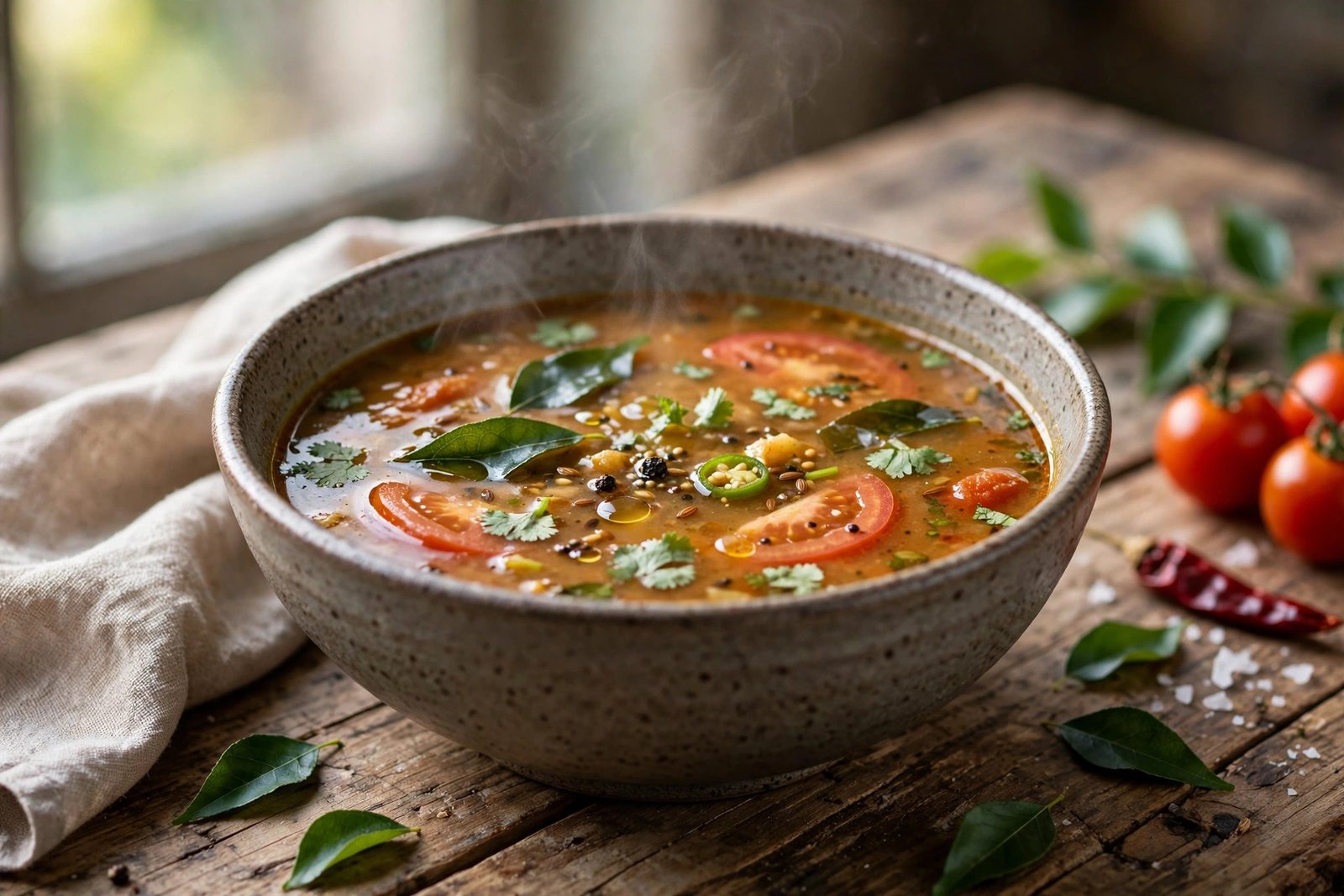
Rasam is South India's beloved pepper-tomato soup: tangy tamarind, juicy tomatoes and a crackle of black pepper and cumin in a light, aromatic broth. Served over rice or sipped as a soup, it is the ultimate comfort when you need something warming and light.
Advertisement
- Prep time
- 10 mins
- Cook time
- 15 mins
- Total time
- 25 mins
- Servings
- 4 servings
- Calories
- 90
Ingredients
- 3 ripe tomatoes, quartered
- 1 tbsp tamarind pulp soaked in 250ml warm water
- 1 tsp black peppercorns
- 1 tsp cumin seeds
- 3 garlic cloves
- 0.5 tsp turmeric powder
- 1 tsp salt
- 500ml water
- 1 tbsp ghee or oil
- 1 tsp mustard seeds
- 1 dried red chilli
- 1 sprig curry leaves
- Pinch of asafoetida (hing)
- Fresh coriander, chopped
Instructions
- Strain the soaked tamarind, squeezing out all the pulp, and discard the fibers.
- Crush the peppercorns, cumin seeds and garlic together into a coarse paste.
- Mash the tomatoes into the tamarind water and add the crushed spice paste, turmeric, salt and 500ml water.
- Bring to a gentle simmer and cook 8-10 minutes until the raw smell disappears and it froths lightly.
- Heat the ghee in a small pan and pop the mustard seeds, then add the red chilli, curry leaves and asafoetida.
- Pour the tempering over the rasam and stir through.
- Garnish with fresh coriander and serve hot with steamed rice or as a soup.
Advertisement
Pro tips
- Do not boil rasam hard — a gentle simmer keeps the flavor bright and clean.
- Freshly crushed pepper and cumin make all the difference.
- Adjust the tamarind to your tanginess preference.
- Rasam tastes best fresh but keeps 2 days refrigerated.
Frequently asked questions
What is the difference between rasam and sambar?
Rasam is a thin, peppery tamarind soup, while sambar is thicker, made with lentils and vegetables.
Is rasam good when sick?
Yes, it is traditionally served for colds and digestive troubles — light, peppery and warming.
Can I make rasam without tamarind?
Lemon juice added at the end works, though tamarind gives the authentic depth.
How do you eat rasam?
Pour it over hot rice with a spoon of ghee, or sip it like a soup.