Mint Chutney Recipe
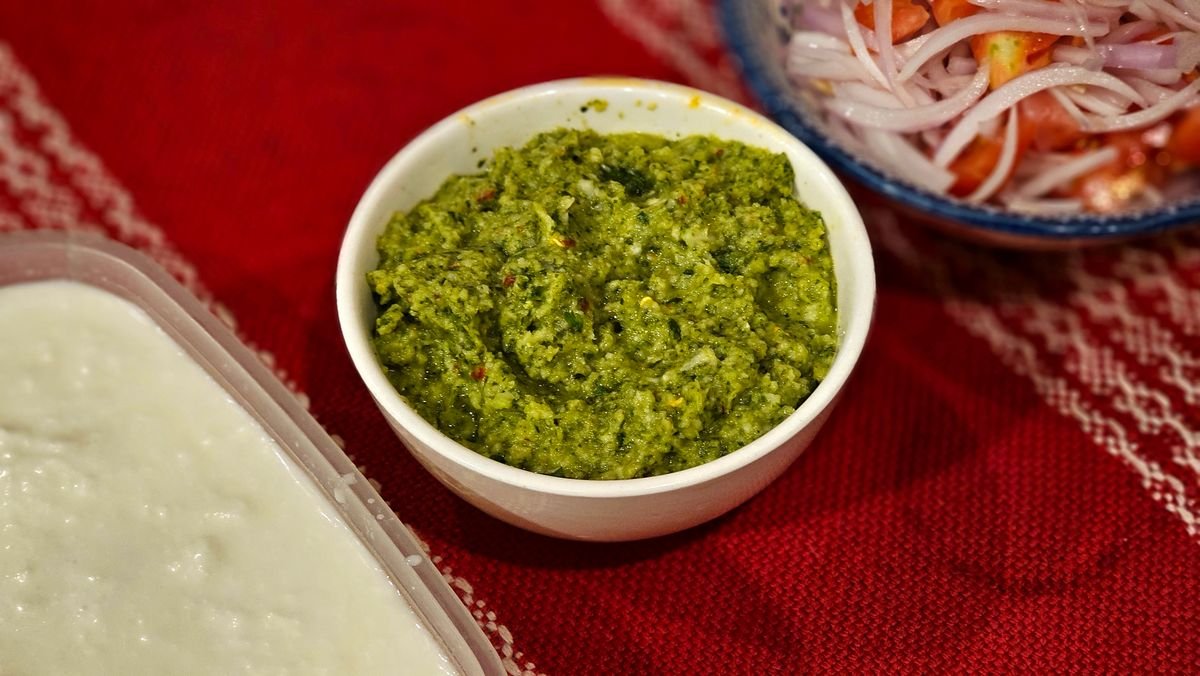
Mint chutney is the bright green sauce that turns a plate of samosas, pakoras or kebabs into a proper snack. Fresh mint and coriander are blended with green chilli, ginger, garlic and lemon into a smooth, cool, tangy paste. It takes ten minutes, needs no cooking, and keeps in the fridge for days, ready whenever you need it. It is cool, tangy and lightly hot, and it wakes up everything it touches, from samosas to grilled chicken.
The story behind Mint Chutney
Chutneys are one of the oldest parts of Indian cooking, and they were made long before blenders existed, ground by hand on a stone slab called a sil batta. The word comes from the Hindi chatni, meaning to lick, which says a lot about how these sauces are eaten: they are not poured over food, but licked up with it, a small, sharp mouthful alongside each bite. The stone slab gave chutneys a coarse, rustic texture that a blender can never quite match, and some cooks still swear by it.
Mint chutney, or pudina chutney, is a north Indian staple, and it turns up at every chaat stall, every tandoori restaurant and every home where snacks are taken seriously. The recipe changes from kitchen to kitchen: some cooks add yoghurt for a creamy version, others keep it sharp and green, and the amount of chilli is a matter of family pride. What stays the same is the mint, which gives the chutney its cool, fresh character. In Delhi, the chutney is served with almost every snack, from samosas to kebabs, and no chaat stall would open without a pot of it.
What makes it special is the balance of cool and hot. The mint is cooling and clean, the coriander adds a citrus note, the green chilli brings a fresh, bright heat, and the lemon ties it together with sourness. A little ginger adds warmth, and a pinch of roasted cumin gives depth. The chutney should taste fresh and green, never dull, and it should wake up whatever it is served with. The cumin adds a warm, earthy note underneath the fresh herbs, and a pinch of sugar rounds the edges without making the chutney sweet.
Make it whenever you are frying samosas, grilling kebabs or serving a plate of chaat. It also works as a sandwich spread, a dip for raw vegetables, or a sauce for grilled chicken and fish. Blend it fresh and keep it in the fridge, where it will be ready for a week of snacking.
- Prep time
- 10 mins
- Cook time
- 0 mins
- Total time
- 10 mins
- Servings
- 4 servings
- Calories
- 40
Ingredients
- 2 cups fresh mint leaves, tightly packed
- 1 cup fresh coriander leaves, tightly packed
- 2 green chillies, roughly chopped
- 1 inch fresh ginger, peeled and chopped
- 2 garlic cloves
- 2 tablespoons lemon juice
- 1 teaspoon roasted cumin powder
- 1/2 teaspoon sugar
- 1/2 teaspoon fine sea salt
- 3 to 4 tablespoons cold water
- 2 tablespoons plain yoghurt (optional)
- 1/4 teaspoon chaat masala (optional)
- 1 tablespoon roasted peanuts (optional)
Instructions
- Pick the mint and coriander leaves off their stems and rinse them well in cold water. Shake off the water and pat the leaves dry in a clean towel. Discard any yellow or wilted leaves, as they will dull the colour.
- Put the mint, coriander, green chillies, ginger and garlic in a blender or food processor. Add the lemon juice, cumin powder, sugar and salt. The lemon juice helps keep the chutney green, so do not leave it out.
- Add 3 tablespoons of cold water and blend on high speed for 1 to 2 minutes, stopping to scrape down the sides. The chutney should turn smooth and thick, with a bright green colour and no large pieces of leaf left.
- If the chutney looks pale, add a few more mint leaves and blend for 20 seconds more. The colour should be a deep, even green with no pale streaks, and the texture should be smooth enough to spread.
- Check the texture. It should be thick enough to coat a spoon but loose enough to drip. Add water a tablespoon at a time if it is too thick, blending briefly after each addition.
- Taste the chutney. It should be fresh, tangy and lightly hot, with the mint coming through clearly. Add more lemon juice if it tastes flat, a pinch more salt if it tastes dull, or another chilli if you want more heat.
- If you want the creamy version, blend in the yoghurt now and pulse for 10 seconds. The chutney will turn a paler green and taste softer and cooler, which suits grilled meats and tandoori chicken. Use thick hung curd for the creamiest result, and add it a spoonful at a time so the chutney stays thick enough to dip.
- Scrape the chutney into a small bowl and smooth the top. Drizzle over a few drops of lemon juice, which helps the colour stay bright while it sits.
- Serve at once with samosas, pakoras, kebabs or chaat, or cover and chill until you need it. Let it come to room temperature for 10 minutes before serving, as cold dulls the flavour.
- Store any leftover chutney in a small jar with a tight lid, and press cling film onto the surface before you seal it. This keeps the colour bright and stops the top layer from drying out.
Pro tips
- Use only the leaves, not the stems. Mint stems are woody and bitter, and they make the chutney taste harsh. Pick the leaves carefully and discard any that are yellow or bruised.
- Use cold water and blend briefly. Heat from a long blend turns the herbs dark and dull, so keep the blending short and the water cold for the brightest green colour. A squeeze of lemon in the blender also helps, since the acid stops the herbs from oxidising while you blend.
- Add the lemon juice early. The acid stops the mint from oxidising and keeps the chutney green for longer, so put it in the blender from the start, not at the end.
- Taste and adjust before you store it. The balance of salt, lemon and chilli is personal, and it is far easier to fix now than after the chutney has been sitting in the fridge.
- Make it the same day you need it if you can. The colour and the fresh mint flavour are at their best in the first few hours, though it keeps well for several days. If the colour darkens, stir in a little fresh lemon juice and a few chopped mint leaves to freshen it up.
Variations & serving ideas
For a creamy version, blend in 3 to 4 tablespoons of plain yoghurt or a spoonful of thick hung curd. The chutney turns pale green and soft, which suits tandoori chicken, grilled paneer and kebabs. A spoonful of cream works too, though it makes the chutney richer and less sharp.
Add a small handful of roasted peanuts or a tablespoon of desiccated coconut for a thicker, nuttier chutney. The peanuts add body and a gentle roasted flavour, while coconut gives a softer, sweeter note that suits South Indian snacks like dosa and idli. Soak the peanuts in warm water for 10 minutes first, so they blend smoothly instead of leaving gritty pieces behind.
Swap half the mint for fresh dill or a few curry leaves for a different green chutney. The method stays the same, and each herb brings its own character. A pinch of chaat masala stirred in at the end adds a tangy, spiced edge that suits chaat and street snacks. A handful of fresh dill gives the chutney a softer, more delicate flavour that works well with fish and grilled vegetables.
Serve it as a dip with samosas, pakoras and kebabs, or spread it on sandwiches with sliced cucumber and tomato. It also works as a sauce for grilled fish or chicken, thinned with a little water. Pair it with a sweet tamarind chutney, and the two together cover every flavour a snack needs. It also makes a good marinade for chicken: coat the pieces, leave them for an hour, then grill until charred at the edges.
Getting it right
The key technique is the blend. The herbs need to be broken down fully, but not overworked, and the order matters. Put the lemon juice in first, then the herbs, then the chillies and spices, and blend in short bursts, scraping down the sides. The chutney should be smooth and thick, with a bright green colour. Scrape down the sides halfway through, since the herbs climb up the blender walls and leave the bottom under-blended.
Heat and timing matter even in a no-cook recipe. A blender warms the herbs as it runs, and that warmth turns the chutney dark. Keep the blending to 1 to 2 minutes in total, use cold water, and stop as soon as it is smooth. If the chutney looks dull, it was blended too long. Chill the blender jar in the fridge for a few minutes before you start, which helps keep the herbs cool and green.
The common mistake is adding too much water. A chutney that is too thin slides off food and tastes weak, so add water a tablespoon at a time and blend briefly after each one. If it does turn out thin, blend in a few more mint leaves or a spoonful of yoghurt to bring it back. If the chutney tastes bitter, you may have blended in too many stems, so pick the leaves carefully next time.
Storing & reheating
Keep the chutney in a sealed container in the fridge for up to 5 days. The colour will darken slightly after the first day, but the flavour stays good. Press a piece of cling film directly onto the surface to slow the darkening, and stir in a squeeze of lemon before serving. The yoghurt version keeps for only 2 to 3 days, so make the plain version if you want it to last the week.
Freezing works well for this chutney. Spoon it into ice cube trays, freeze until solid, then store the cubes in a bag for up to a month. Thaw a cube or two in the fridge for a few hours, stir well, and it will taste almost as fresh as the day you made it. Label the bag with the date, so you know how long the cubes have been in the freezer.
Frequently asked questions
How long does mint chutney keep?
It keeps in a sealed container in the fridge for up to 5 days. The colour darkens slightly after day one, but the flavour stays good. Stir in a squeeze of lemon before serving to freshen it up. The yoghurt version keeps for only 2 to 3 days, so use the plain version for a longer life.
Why did my chutney turn dark?
The herbs oxidised, usually because the blend ran too long or the lemon juice was left out. Use cold water, blend briefly, and add lemon juice from the start to keep the colour bright green. Using cold water and blending briefly also helps, since heat from a long blend darkens the herbs fast.
Can I freeze mint chutney?
Yes, it freezes well. Spoon it into ice cube trays, freeze until solid, then store the cubes in a bag for up to a month. Thaw in the fridge and stir well before serving. The cubes thaw in a few hours in the fridge, or in 30 minutes at room temperature.
Is mint chutney spicy?
It has a fresh, gentle heat from the green chillies, not a fiery burn. Use one chilli for a mild version or three for a hotter one. Removing the chilli seeds makes it milder still. Taste a small spoonful before serving, and add another chilli if the heat is too gentle for you.
Should I add yoghurt to mint chutney?
It depends on how you plan to use it. The plain version is sharp and green, best for chaat and samosas. The yoghurt version is creamy and cool, best for tandoori chicken and kebabs. The plain version is sharper and greener, while the yoghurt version is softer and cooler on the palate.
What can I serve mint chutney with?
Samosas, pakoras, kebabs, chaat, dosa and sandwiches are the classics. It also works as a sauce for grilled chicken or fish, and as a dip for raw vegetables like cucumber and carrots. It also works as a sandwich spread with sliced tomato and cucumber, or thinned with water as a salad dressing.