Kootu Recipe
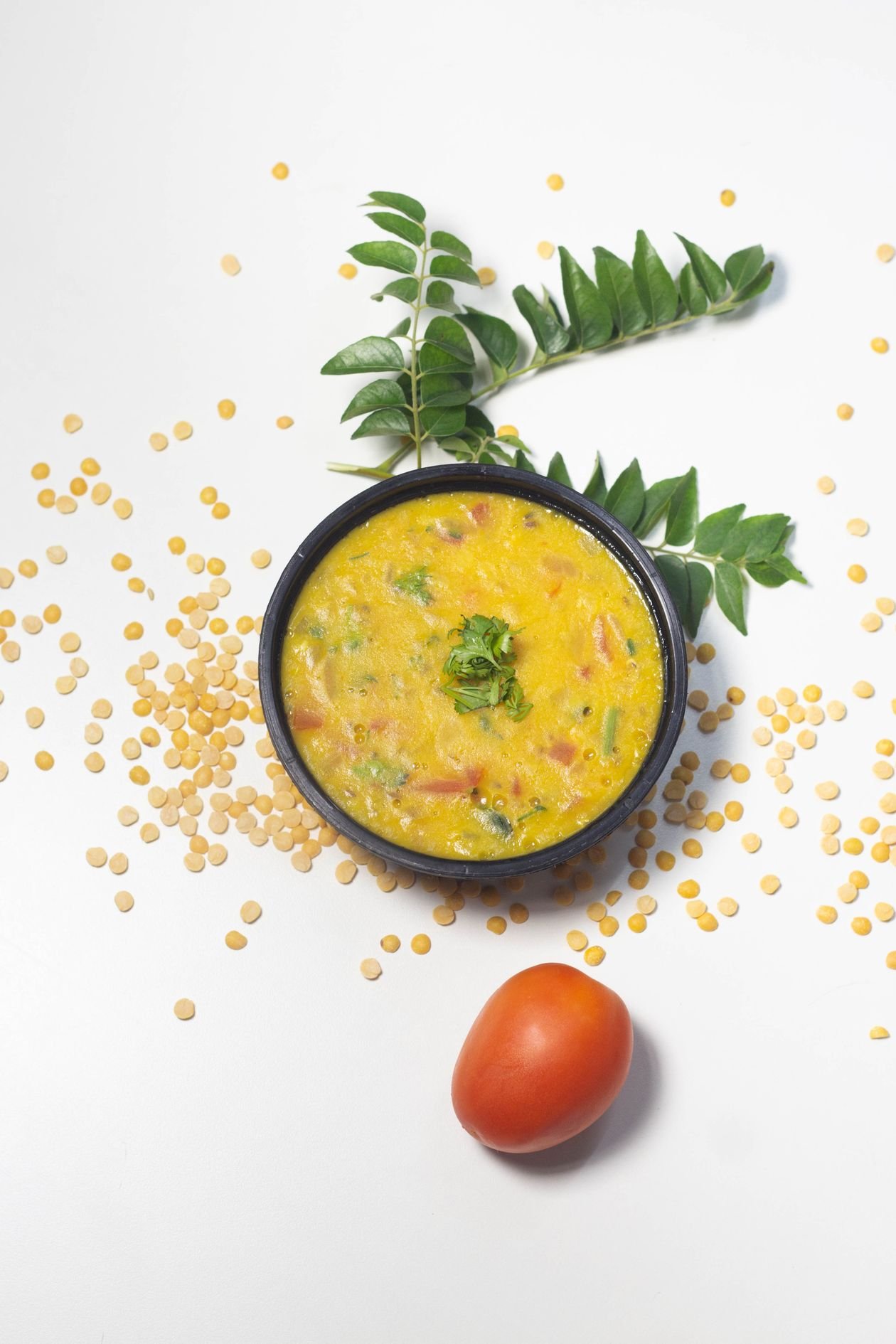
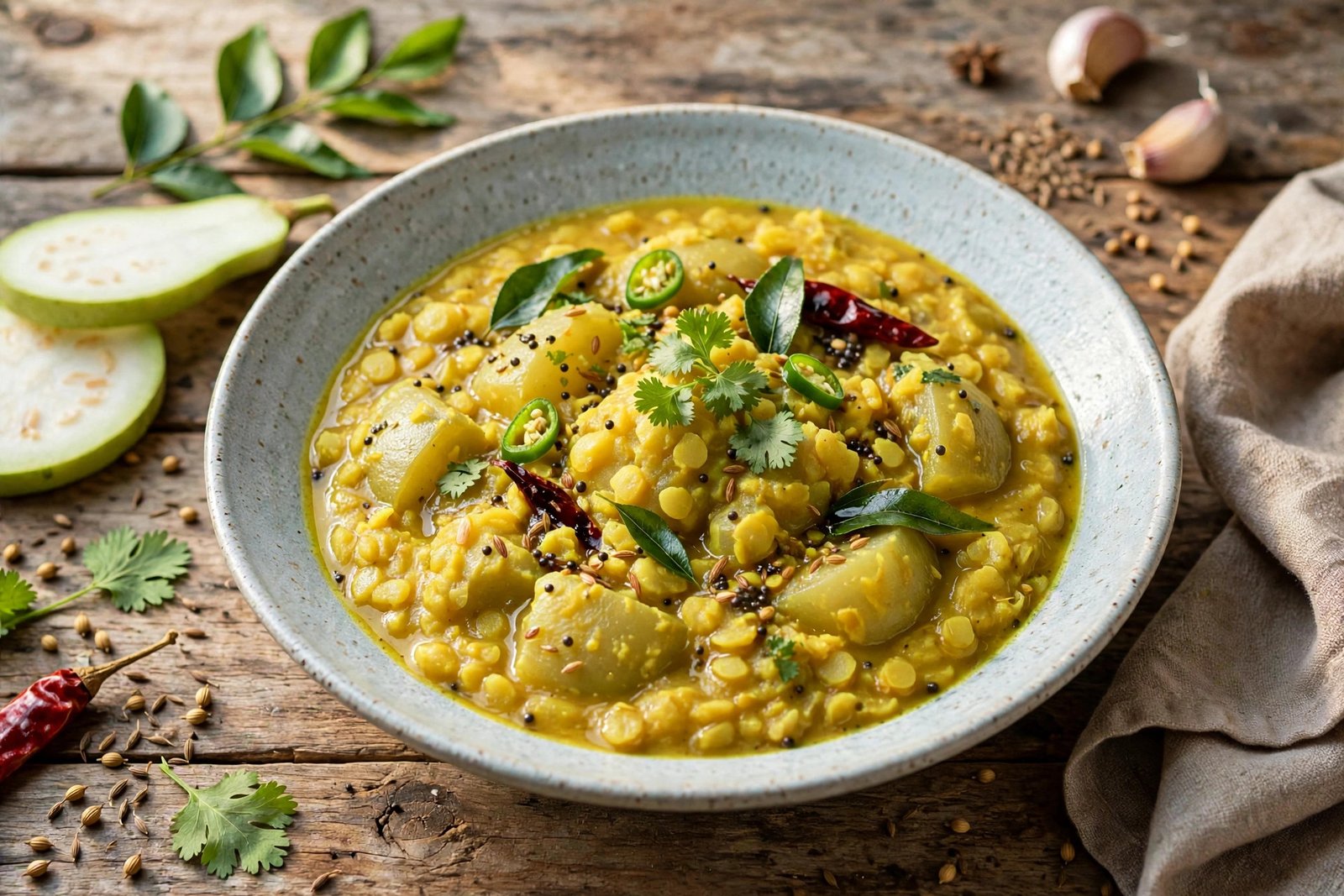
Soft lentils and vegetables simmered together with coconut and a crackling tempering of mustard seeds and curry leaves, kootu is South India's gentle, nourishing one-pot dish. It is mild, creamy, and deeply comforting, the kind of food that feels like a warm blanket on a rainy day. Serve it with rice and a spoonful of ghee, and let the simplicity do the talking.
The story behind Kootu
Kootu is one of the oldest dishes in Tamil cooking, and it has been simmering in South Indian homes for centuries. The word kootu means a mixture, and the dish is exactly that: dal and vegetables cooked together in one pot, thickened with a coconut paste and finished with a crackling tempering. It was peasant food first, made from whatever dal and vegetables were to hand, and it became a staple because it was nourishing, cheap, and easy to make in a single pot over a wood fire.
In Tamil Nadu, kootu is everyday food, served for lunch with rice and a spoonful of ghee. It appears at weddings and festivals too, as part of the sadya-style meal, where it sits alongside sambar, rasam, and thoran. The vegetables change with the season: pumpkin and snake gourd in the summer, raw banana and drumstick when they are in season, chayote and beans year-round. A Tamil cook judges a kootu by its consistency, thick enough to coat a spoon, never watery, with the vegetables soft but still holding their shape.
What makes kootu special is its gentleness. There is no chilli heat to speak of, no sharp sourness, no heavy spice. The moong dal gives it a creamy, comforting body, the coconut paste adds a soft, nutty sweetness, and the tempering of mustard seeds, curry leaves, and asafoetida brings a warm, fragrant top note that lifts the whole dish. It is the kind of food that soothes you, the dish South Indian families make when someone is unwell or when the day has been long.
Cook this when you want something nourishing and simple, or when the fridge holds a few vegetables and a bag of dal. The hands-on time is short, and the pot simmers happily while you make the rice. It is also a good dish for a beginner, because there is very little that can go wrong: the dal and vegetables cook together, the coconut paste goes in at the end, and the tempering takes a minute. Serve it hot, with rice and ghee, and enjoy the quiet comfort of one of Tamil Nadu's oldest recipes.
- Prep time
- 15 mins
- Cook time
- 30 mins
- Total time
- 45 mins
- Servings
- 4 servings
- Calories
- 320
Ingredients
- 150 g moong dal, rinsed well
- 200 g pumpkin, peeled and cut into 2 cm cubes
- 100 g snake gourd or chayote, cut into 2 cm pieces
- 100 g green beans, cut into 2 cm pieces
- 1/2 cup fresh grated coconut
- 2 green chillies, slit lengthwise
- 1 teaspoon cumin seeds
- 1/2 teaspoon turmeric powder
- 1 tablespoon coconut oil or ghee
- Tempering: 1 teaspoon mustard seeds, 1 sprig curry leaves, 1 dried red chilli, 1 pinch asafoetida (hing)
- Salt, to taste
- Fresh coriander leaves, to garnish
Instructions
- Rinse the moong dal in cold water until the water runs clear, then put it in a large pot with 500 ml of water and the turmeric. Bring it to a boil, skim off any foam that rises to the surface, then turn the heat down and simmer for 15 minutes. The dal should be soft and starting to break down, with a creamy texture when you stir it.
- While the dal cooks, prep the vegetables. Peel the pumpkin and cut it into even 2 cm cubes, and cut the snake gourd or chayote and the beans into pieces of the same size. Even pieces cook at the same speed, which matters here, because the vegetables all go into the pot together and you want them to finish at the same time.
- Add the pumpkin, snake gourd or chayote, beans, and green chillies to the pot with the dal, along with another 250 ml of water. Bring it back to a gentle simmer and cook for 12 to 15 minutes, until the vegetables are tender when pierced with a knife but still holding their shape. The pumpkin should be soft enough to squash with a spoon, not so soft that it falls apart.
- While the vegetables cook, make the coconut paste. Grind the grated coconut with the cumin seeds and 3 tablespoons of water in a small blender or grinder, until it is smooth and creamy. This paste is what gives kootu its gentle, nutty body, so blend it properly; a gritty paste makes a gritty kootu.
- Stir the coconut paste into the pot and cook for 3 minutes on low heat, stirring gently. The kootu will thicken slightly and turn a pale, creamy gold. Do not let it boil hard once the coconut is in, because a hard boil can split the sauce and turn it grainy. Keep the heat low and the simmer gentle.
- Mash a few spoonfuls of the dal and vegetables against the side of the pot with the back of a ladle. This is the traditional way to thicken kootu: a few mashed pieces give the dish body without any flour or extra thickener. Stir it back in and check the consistency; it should be thick enough to coat a spoon, not watery like a soup.
- Make the tempering in a small pan. Heat the coconut oil or ghee over medium heat, add the mustard seeds, and wait for them to pop and crackle. Then add the curry leaves, the dried red chilli, and the asafoetida, and fry for 20 seconds until the leaves turn crisp and the kitchen smells warm and fragrant. Take the pan off the heat at once so nothing burns.
- Pour the hot tempering over the kootu, including the oil, and stir it in. You should hear a satisfying sizzle as the hot oil hits the dal, and the smell of mustard and curry leaves will rise up from the pot. Taste and add salt if needed; the kootu should taste mild and creamy, with a gentle warmth from the tempering.
- Sprinkle the chopped coriander over the top and serve the kootu hot, with steamed rice and a spoonful of ghee, plus a dry thoran or a crisp papad on the side. Eat it fresh, while the tempering is still fragrant and the vegetables are soft and warm.
Pro tips
- Rinse the moong dal until the water runs clear. Clean dal cooks into a creamier kootu, and the foam that rises is less bitter when the dal is well rinsed.
- Cook the dal until it is completely soft and starting to break down. Firm dal makes a thin, watery kootu, while soft dal gives it a creamy, comforting body.
- Cut the vegetables evenly, about 2 cm. Even pieces cook at the same speed, so nothing turns mushy while the rest is still hard.
- Add the coconut paste at the end, on low heat, and never let the kootu boil hard after it goes in. A hard boil splits the sauce and you cannot undo it.
- Make the tempering fresh and pour it over the kootu just before serving. The mustard seeds must pop and the curry leaves must crisp, or the flavour will be flat.
Variations & serving ideas
Swap the vegetables to suit the season. Raw banana, drumstick, chayote, and pumpkin are all classic choices, and each one brings a different texture. Raw banana gives a starchy, satisfying bite, drumstick adds a unique flavour and a little drama at the table, and chayote stays pleasantly firm. Keep the pieces even and add hard vegetables first so everything finishes cooking together.
For a richer version, use more coconut in the paste and finish the kootu with a spoonful of ghee on top. For a lighter version, use less coconut and add a spoonful of rice flour mixed with water to thicken the kootu instead. The lighter version is less creamy but still fragrant, and it works well for an everyday meal when you want something gentle.
Serve kootu with steamed rice and a spoonful of ghee, plus a dry thoran or a crisp papad on the side, and it is a complete South Indian lunch. It is also good with chapati, and the leftovers make a filling lunch the next day, packed with rice and a little pickle. The flavours deepen overnight, so a second-day kootu is often better than the first.
Pair the kootu with foods that balance its mild creaminess. A sharp pickle, a fresh cucumber salad, or a spicy rasam alongside it all work well, because they add brightness and heat to a gentle dish. A glass of buttermilk or a pot of filter coffee sits well with the meal. Keep the rest of the table simple; the kootu is the comfort food, and it does its job best when it is not competing with another loud dish.
Getting it right
The key technique is cooking the dal until it is completely soft. Moong dal should break down into a creamy, almost porridge-like texture, because it is the dal that gives kootu its body. If the dal is still firm and whole, the kootu will taste thin and watery, however good the vegetables are. Give it a full 15 minutes at a gentle simmer, and skim the foam off the top as it cooks, because the foam can taste bitter.
Timing the vegetables is the second skill. They go into the pot with the dal, and they need 12 to 15 minutes to turn tender without falling apart. Cut them evenly, about 2 cm, and add the hardest vegetables first if you are mixing types. Pumpkin cooks faster than raw banana, so it goes in a few minutes later. Check the vegetables with a knife: they should be tender when pierced, but still holding their shape on the spoon.
The common mistakes are easy to fix. A split kootu means the coconut paste was boiled too hard, so always add it last and keep the heat low. A watery kootu means the dal was undercooked or too much water was added; mash a few spoonfuls of dal against the side of the pot to thicken it. And a bland kootu usually needs more salt and a better tempering; the mustard seeds must pop, the curry leaves must crisp, and the asafoetida must hit hot oil to release its flavour.
Storing & reheating
Kootu keeps in the fridge for up to 3 days in a sealed container. It thickens as it sits, because the dal keeps absorbing liquid, so stir in a splash of hot water when you reheat it. Warm it gently over low heat, stirring often, and do not boil it hard, or the coconut may split. The flavours deepen overnight, and many people think kootu tastes even better the next day.
This dish freezes well for up to 2 months, though it is best to freeze it before the tempering goes in. Cool the cooked dal and vegetables completely, freeze in portions, and thaw overnight in the fridge. Reheat gently, then make a fresh tempering and pour it over the top just before serving, so the mustard and curry leaves smell as fragrant as the first time.
Frequently asked questions
Which dal should I use for kootu?
Moong dal is the classic choice because it cooks fast and turns creamy, and it is easy to digest. Toor dal works too, but it takes longer to cook and gives a slightly different flavour. Either way, rinse the dal well and cook it until it is completely soft.
Can I freeze kootu?
Yes, and that is how most families make it. Cook the dal and vegetables, cool the mixture, and freeze it in portions for up to 2 months. Add the coconut paste and the tempering fresh on the day you serve it, so the flavours stay bright.
Why did my kootu split?
It is usually because the coconut paste was added too early or the kootu boiled hard after it went in. Add the paste at the end, keep the heat low, and warm the kootu through gently for 2 minutes. A spoonful of cold curd whisked in off the heat can often bring a split kootu back together.
What vegetables work best in kootu?
Pumpkin, chayote, raw banana, snake gourd, and drumstick are all classic choices, and they each bring a different texture. Keep the pieces even, about 2 cm, and add hard vegetables first so everything finishes cooking at the same time.
Is kootu vegan?
Yes, it is vegan as written, as long as you use coconut oil instead of ghee. The dal, vegetables, coconut, and spices are all plant-based, so nothing else needs changing.
What do I serve with kootu?
Serve it hot with steamed rice and a spoonful of ghee, plus a dry thoran or a papad on the side. It is also good with chapati, and the leftovers make a filling lunch the next day with a little pickle.