Easy Chicken Tikka Masala Recipe
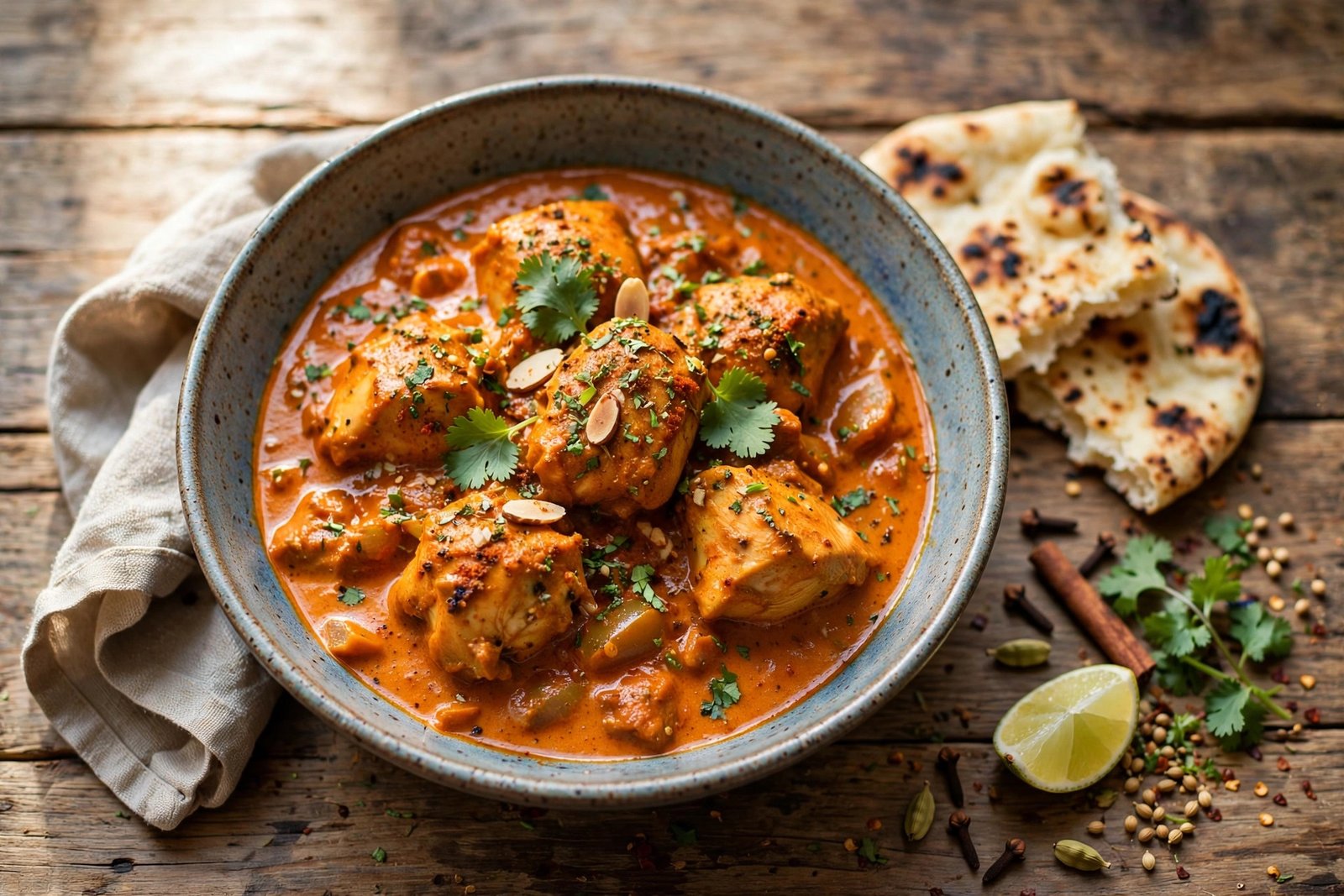
This chicken tikka masala starts with yoghurt-and-spice marinated chicken, charred at high heat, then simmered in a creamy tomato sauce with garam masala and a little cream. It is the restaurant favourite, made properly at home in about 45 minutes — smoky, rich and warming, with a sauce worth mopping up with warm naan.
The story behind Chicken Tikka Masala
Chicken tikka masala is one of the most argued-over dishes in the world. It began as chicken tikka — marinated meat cooked in a tandoor — and somewhere along the way, in Britain, a tomato-and-cream sauce was added to keep the chicken moist. Some say a Glasgow restaurant invented it in the 1970s; others trace it to cooks in the Punjab. The truth is probably a bit of both, and the argument is part of the dish now.
Whatever its birthplace, it became Britain's unofficial national dish and a fixture on menus everywhere. The appeal is easy to see: smoky, charred chicken in a sauce that is rich without being heavy, spiced without being hot, and creamy enough to please almost anyone. It is the dish people order when they want comfort, and the one they learn to cook when they want to bring the restaurant home.
The home version has two advantages over a takeaway. First, you control the char — a ripping-hot pan gives the chicken the same smoky edges a tandoor does. Second, you control the sauce: real tomatoes, good cream, and spices you can taste, instead of the oversweet, over-oiled version that arrives in a plastic tub. Done right, it tastes like the best version of the restaurant dish, not a copy of it.
Cook it on a Friday night when the week is over and you want something generous, or for friends who think Indian food is too hard to make at home. It scales easily for a crowd, and the sauce actually improves overnight, so it is a good make-ahead for a dinner party. Serve it with rice and naan and let people help themselves.
Tikka masala also shows why marinating matters. The yoghurt and lemon do more than add flavour — they soften the chicken so it stays juicy under high heat, and they carry the spices into the meat instead of leaving them on the surface. A chicken that has sat in the marinade overnight tastes different from one that went in half an hour ago: deeper, warmer, and more even all the way through. It is the quiet step that makes the loudest difference.
- Prep time
- 25 mins
- Cook time
- 35 mins
- Total time
- 1 hr
- Servings
- 4 servings
- Calories
- 450
Ingredients
- 800 g boneless chicken thighs, cut into 1.5-inch pieces
- 1 cup (240 g) plain yogurt
- 2 tablespoons lemon juice
- 2 tablespoons tikka masala spice mix or garam masala
- 1 tablespoon grated fresh ginger
- 4 garlic cloves, minced
- 1.5 teaspoons salt, divided
- 2 tablespoons vegetable oil, plus extra for searing
- 1 large onion, finely chopped
- 1 can (400 g) crushed tomatoes
- 1 cup (240 ml) heavy cream
- 1 teaspoon ground cumin
- 1 teaspoon Kashmiri chili powder or paprika
- 0.5 teaspoon ground turmeric
Instructions
- In a large bowl, whisk together the yogurt, lemon juice, tikka masala spice, ginger, half the garlic, and 1 teaspoon of salt. The marinade should smell warm and sharp. Add the chicken pieces, coat thoroughly, cover, and refrigerate for at least 1 hour — or up to 8 hours for deeper flavor. Longer is better here; the yoghurt tenderises while the spices sink in.
- Heat a tablespoon of oil in a large skillet or grill pan over medium-high heat until it shimmers. Shake excess marinade off the chicken and sear in batches for 2–3 minutes per side until lightly charred at the edges. Do not crowd the pan — the pieces need space to brown. Set aside; the chicken does not need to be cooked through yet.
- In the same pan, heat 2 tablespoons of oil over medium heat. Add the chopped onion and cook for 6–8 minutes until soft and golden, stirring now and then. Sweet, golden onion is the base of the sauce, so do not rush this step — pale, crunchy onion makes a sharp, raw-tasting sauce.
- Stir in the remaining garlic, cumin, chili powder, and turmeric, and cook for 1 minute until fragrant. The spices should smell warm and toasty, not burnt. If the pan is dry, add a splash of water so the spices do not scorch on the hot metal.
- Pour in the crushed tomatoes, stir well, and bring to a gentle simmer. Cook for 10 minutes, stirring occasionally, until the sauce thickens and the oil begins to separate at the edges. That separation is the sign the tomatoes have cooked down properly and the raw edge is gone.
- Reduce the heat to low and stir in the heavy cream. Taste and adjust salt with the remaining 0.5 teaspoon and a pinch more chili if you like extra heat. Keep the sauce below a boil now — a hard boil after the cream goes in can make it split and turn grainy.
- Return the seared chicken (with any juices) to the sauce. Cover and simmer gently for 10–12 minutes until the chicken is cooked through and tender. The sauce should barely bubble; a rolling boil will toughen the meat.
- Rest the pot off the heat for 5 minutes so the sauce settles and the chicken relaxes. Taste once more and adjust the salt — a dish like this often needs one last pinch to wake the flavours up.
- While the chicken simmers, warm the naan. A dry hot pan or a few minutes in a warm oven is enough — the bread should be soft and pliable, with a few toasted spots. Cold naan next to a hot curry is a missed chance.
- Garnish with fresh cilantro and serve hot with steamed basmati rice and warm naan. Put the pot on the table and let people help themselves — the sauce is half the point, and there should be plenty of bread to mop it up.
Pro tips
- Chicken thighs stay juicier than breast in this recipe, but breast works if you avoid overcooking it. Cut breast into even pieces and pull it from the sauce the moment it is cooked through.
- A good char on the chicken is key — use high heat and don't crowd the pan so the pieces sear instead of steam. Work in batches and let each piece sit still for 2 to 3 minutes before turning.
- Marinate at least 1 hour; overnight gives the most tender, flavorful results. If you are short on time, even 30 minutes at room temperature is better than none.
- Stir the cream in off a rolling boil so the sauce stays silky and doesn't split. Keep the heat low from the moment the cream goes in until the dish is served.
- Taste the sauce before you serve it and adjust the salt in small pinches. Tomatoes and cream can mute seasoning, and a dish like this often needs more salt than you expect to make the spices sing.
Variations & serving ideas
Swap the chicken for paneer and you get paneer tikka masala, a vegetarian version that is just as satisfying. Cube the paneer, marinate it the same way, and sear it until golden — it holds its shape and soaks up the sauce. Chickpeas are another good swap: stir a drained can into the sauce for the last 10 minutes.
Lamb works beautifully too, though it needs longer in the sauce — about 25 minutes — to turn tender. Prawns are the quickest option: sear them for a minute a side and add them to the sauce for just 3 minutes at the end, or they turn rubbery. The sauce itself is the star, and it welcomes almost any protein.
Adjust the heat and richness to your taste. More Kashmiri chilli powder gives colour and warmth without much bite; a chopped green chilli stirred in at the end adds real heat. For a lighter version, use half cream and half yoghurt, stirred in off the heat so it does not split. A knob of butter melted into the sauce at the end adds shine and richness.
Serve it with steamed basmati rice and warm naan, the classic pairing, or with roti if you prefer. A cucumber raita or a simple salad of onion, tomato and lemon cools the spices. It also works as a filling — spoon it into a wrap with shredded lettuce for a lunch that beats any sandwich.
For a dinner party, make the sauce a day ahead and refrigerate it. The flavours settle and deepen overnight, and on the day you only need to sear the chicken and simmer it in the reheated sauce. It is one of the few dishes that genuinely improves with a night in the fridge, which makes it a forgiving choice when you are cooking for guests.
Getting it right
The char is the first thing to get right. The chicken needs a hot pan, space between the pieces, and no moving it around for the first 2 to 3 minutes. Crowding the pan drops the temperature and the chicken steams instead of searing — that grey, wet look is the sign you put too much in at once. Work in batches and the edges will brown properly.
The sauce is built in layers. Onions cooked slowly until golden give sweetness; the spices, fried for a minute in the oil, release their flavour; the tomatoes, simmered for 10 minutes, lose their raw edge and thicken until the oil separates at the sides. Rush any of these steps and the sauce tastes flat. The cream goes in last, off a rolling boil, so it stays silky instead of splitting.
The most common mistake is overcooking the chicken in the sauce. It is already seared when it goes in, so a gentle 10 to 12 minute simmer is enough — the sauce should barely bubble. Boiling it hard makes the thighs tough and the cream grainy. The second mistake is under-seasoning: taste before serving and add salt in small pinches until the flavours wake up.
Storing & reheating
Tikka masala keeps beautifully in the fridge for up to 3 days, and many people think it tastes better the next day, once the spices have settled into the sauce. Cool it completely, then store it in a sealed container. It also freezes well for up to 3 months — portion it into containers before freezing so you can thaw one serving at a time.
Reheat it gently on the stove over low heat, stirring now and then, and add a splash of cream or water if the sauce has thickened too much. The microwave works for a single portion, but stir halfway through so it heats evenly. Make fresh rice and warm naan when you serve it again — the leftovers deserve the same treatment as the first night.
Frequently asked questions
Can I make Chicken Tikka Masala ahead of time?
Yes, it tastes even better the next day. Cool completely, refrigerate for up to 3 days, and reheat gently on the stove, adding a splash of cream or water if the sauce thickened too much. Make the rice and naan fresh when you serve it.
How spicy is Chicken Tikka Masala?
It is mild to medium. Control the heat by adjusting the Kashmiri chili powder — 1 teaspoon gives a gentle warmth and classic color without much bite. A chopped green chilli stirred in at the end adds real heat if you want it.
What do I serve with Chicken Tikka Masala?
Steamed basmati rice and warm naan are the classic pairings. A simple cucumber salad or raita on the side cools the spices nicely. It also works spooned into a wrap with shredded lettuce for lunch the next day.
Can I use chicken breast instead of thighs?
Yes. Cut breast into even pieces and reduce the final simmer time slightly, as breast dries out faster than thigh meat. Pull it from the sauce the moment it is cooked through, and rest it for 5 minutes before serving.
Can I make tikka masala dairy-free?
Yes. Use coconut yoghurt for the marinade and full-fat coconut milk instead of cream in the sauce. The flavour shifts slightly — a little sweeter, a little richer — but the spices still carry the dish. Skip the butter at the end and use oil instead.
What is the difference between tikka masala and butter chicken?
They are close cousins. Butter chicken is usually milder and sweeter, with more butter and a smoother, blended sauce, and the chicken is often cooked in a tandoor first. Tikka masala is a little spicier and more robust, with a chunkier tomato sauce. Both start with marinated, charred chicken.