Pastitsada Recipe
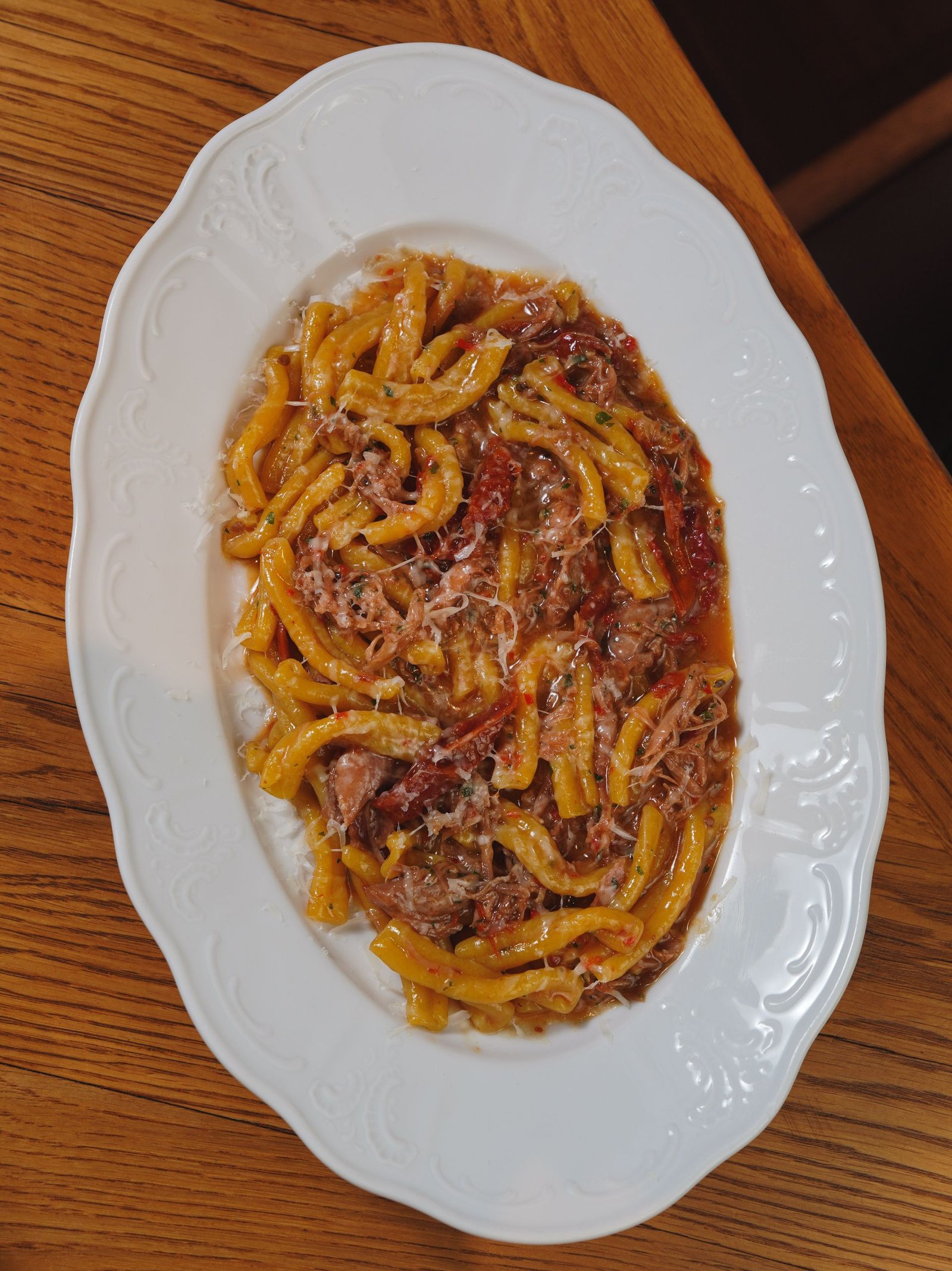
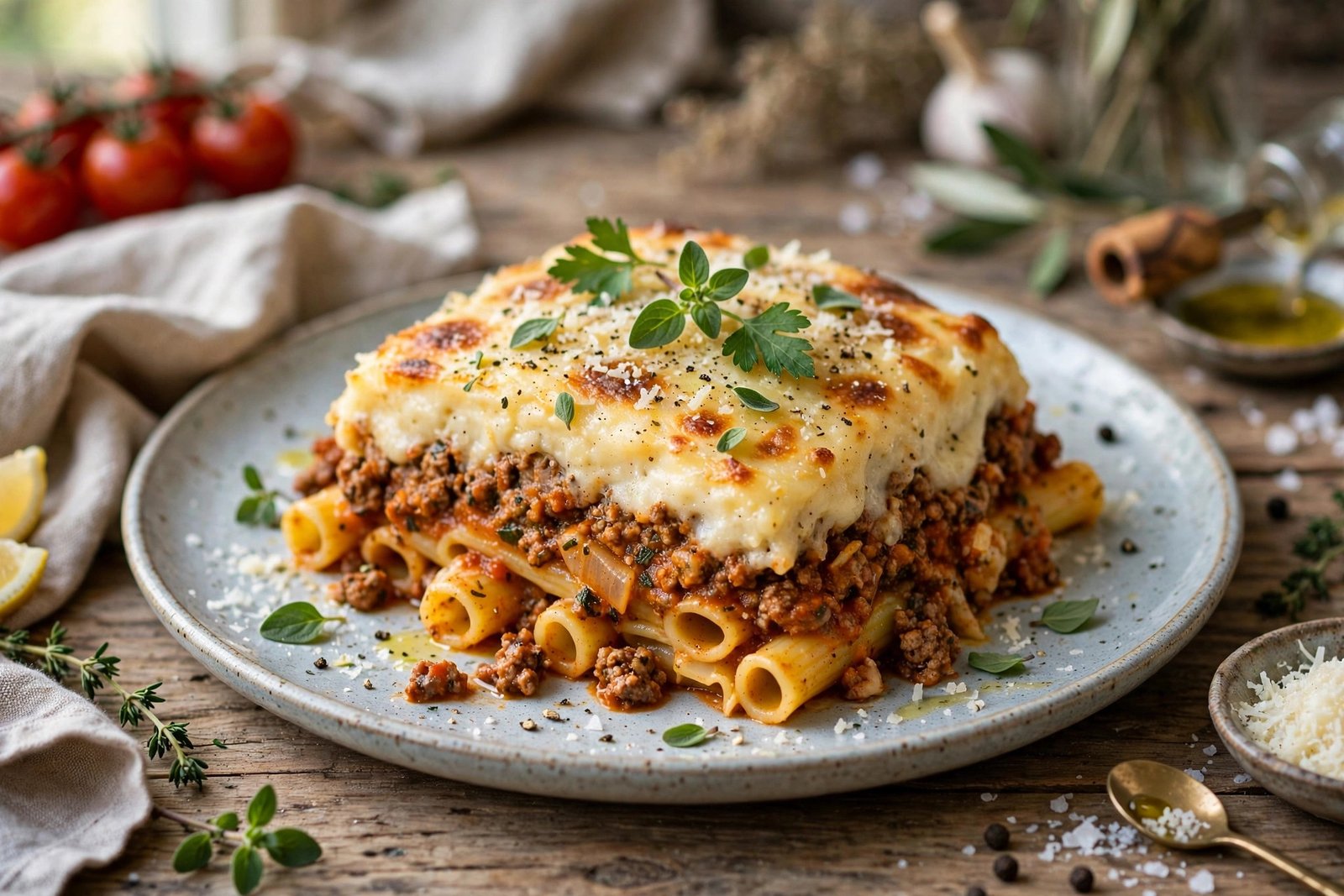
Pastitsada is Corfu's Sunday dish: beef or rooster slow-cooked for hours in a tomato sauce spiced with cinnamon, cloves, and nutmeg, then served over thick, hollow pasta that soaks up every drop. The meat falls apart, the sauce smells warm and sweet-spiced, and a snowfall of grated cheese finishes it. It is the kind of meal that makes a house smell like a celebration.
The story behind Pastitsada
Pastitsada is the signature dish of Corfu, and on the island it is the taste of Sunday. The dish is beef, or traditionally rooster, cooked slowly in a rich tomato sauce with red wine and a blend of warm spices: cinnamon, cloves, nutmeg, and the local spice mix called spetseriko. It is served over thick, hollow pasta, the kind that holds the sauce inside as well as outside, with plenty of grated cheese on top. The name comes from the Italian pastissada, a reminder of the centuries of Venetian rule that shaped Corfiot cooking.
In Corfu, pastitsada is a dish for gathering. It is cooked in a big pot, often starting in the morning, and eaten at a long lunch with family. The spices are the legacy of the Venetian spice trade, when cinnamon, cloves, and nutmeg arrived on the island from the east and found their way into the local kitchen. The result is a sauce that smells sweet and warm, more like a winter stew than a tomato sauce, and it perfumes the whole house as it cooks. The spices are the legacy of the Venetian spice trade, and they are what set this sauce apart from any other tomato sauce: warm, sweet, and faintly exotic, without ever tasting like dessert.
What makes pastitsada special is time. The meat simmers for hours until it is so tender it falls apart at the touch of a fork, and the sauce thickens and darkens as the spices mellow into it. The pasta is cooked separately and served underneath, so each strand soaks up the sauce without going soft in the pot. It is a dish that cannot be rushed, and that is the point. The waiting is part of the cooking.
Cook pastitsada when you have an afternoon to spare and people to feed. It suits cold weather, holidays, and any day that deserves a proper lunch. Make it for a family meal in Canada on a slow Sunday, start the pot after breakfast, and let the smell build while everyone waits. Serve it in deep bowls, with plenty of cheese, and do not be surprised when the pot comes back empty.
- Prep time
- 25 mins
- Cook time
- 2 hrs
- Total time
- 2 hrs 25 mins
- Servings
- 4 servings
- Calories
- 620
Ingredients
- 900 g beef chuck, cut into large chunks, or 1 whole rooster, jointed
- 3 tablespoons olive oil
- 2 onions, finely chopped
- 5 garlic cloves, finely chopped
- 2 tablespoons tomato paste
- 1 can (800 g) crushed tomatoes
- 180 ml dry red wine
- 2 bay leaves
- 1 cinnamon stick, 3 cloves, 1/2 teaspoon ground nutmeg, and 1/4 teaspoon ground allspice
- 400 g thick pasta (bucatini, penne, or rigatoni)
- 1 teaspoon fine sea salt, plus more to taste, and 1/2 teaspoon black pepper
- 80 g grated kefalotyri or Parmesan cheese, to serve
- 2 tablespoons chopped fresh parsley, to serve
Instructions
- Pat the beef dry with paper towels and season with salt and black pepper. Heat the olive oil in a heavy pot over medium-high heat until it shimmers. Brown the beef in batches, letting each piece sit 3 to 4 minutes per side until deeply browned. Lift the browned meat out onto a plate and set it aside.
- Turn the heat down to medium and add the chopped onions to the same pot. Cook for 7 to 8 minutes, stirring often, until they are soft and golden. Scrape the bottom of the pot as you stir, because the browned bits from the beef will dissolve into the sauce and give it depth.
- Stir in the garlic and cook for 1 minute, just until it smells fragrant. Then add the tomato paste and cook it for 2 minutes, stirring constantly, until it darkens a shade and smells sweet rather than sharp. This short fry takes the raw edge off the paste and deepens the tomato flavour.
- Pour in the red wine and let it bubble for 2 to 3 minutes, scraping the bottom of the pot. The wine will hiss and steam, and the browned bits will lift off and melt into the liquid. Let it reduce by about half, until the sharp alcohol smell fades and the liquid looks glossy.
- Return the beef and any juices to the pot. Add the crushed tomatoes, the cinnamon stick, cloves, nutmeg, allspice, and bay leaves. Stir everything together and bring the pot to a gentle simmer. You want a few slow bubbles breaking the surface, not a rolling boil.
- Put the lid on slightly ajar and cook on the lowest heat for 1 hour 45 minutes to 2 hours, stirring every 20 minutes or so. The beef should grow very tender and the sauce should thicken, darken, and smell warmly spiced. If the sauce gets too thick, add a splash of water. If it is too thin near the end, take the lid off for the last 20 minutes.
- After about 1 hour 45 minutes, test a piece of beef with a fork. It should fall apart with gentle pressure. Fish out the cinnamon stick, the cloves, and the bay leaves. Taste the sauce and adjust the salt and black pepper. The sauce should taste rich and warmly spiced, with the cinnamon present but not overpowering.
- While the stew finishes, cook the pasta in a pot of well-salted boiling water until just tender, a minute less than the packet says. Drain it, saving a cup of the pasta water. Toss the pasta with a ladleful of the sauce so every strand is coated.
- Serve the pasta in deep bowls, spoon the beef and plenty of sauce over the top, and finish with a snowfall of grated cheese and a scatter of parsley. If the sauce seems thick, loosen it with a splash of the saved pasta water before serving. Bring extra cheese to the table.
Pro tips
- Brown the beef properly and in batches. A deep brown crust is the foundation of the sauce, and crowded meat steams instead of browning. Give each piece room and time.
- Do not skip the tomato paste fry. Two minutes in the hot pot takes the raw, tinny edge off the paste and gives the sauce a deeper, sweeter tomato flavour.
- Keep the simmer gentle for the full two hours. A hard boil tightens the meat and burns the sauce on the bottom, while a slow simmer lets the beef relax and the spices mellow. Stir every 20 minutes so nothing catches on the bottom, and keep the lid ajar so a little steam escapes and the sauce thickens slowly.
- Fish out the whole spices before serving. A stray clove or a piece of cinnamon stick is unpleasant to bite into, so count them in and count them out. Count them in and count them out before serving.
- Cook the pasta separately and slightly underdone. It finishes in the hot sauce, and pasta cooked in the stew itself would go soft and soak up too much liquid.
Variations & serving ideas
Rooster is the traditional meat for pastitsada in Corfu, and it gives a deeper, gamier flavour than beef. If you can find a stewing hen or rooster at a butcher, joint it and cook it the same way, allowing about 2 hours. Chicken thighs are a quicker option: they need only about 1 hour of simmering, and the dish is lighter but still rich with spice. Beef chuck is the easiest choice in Canada and gives a rich, deep sauce, while a stewing hen, if your butcher has one, gives the gamier flavour the dish is known for in Corfu.
The spice mix can bend to your cupboard. The classic blend is cinnamon, cloves, and nutmeg, but some Corfiot cooks add a pinch of cumin, a little allspice, or a dried chilli for warmth. The local spetseriko mix often includes cinnamon, clove, nutmeg, and black pepper. Start with the recipe amounts, taste the sauce near the end, and adjust by small pinches. Taste the sauce near the end and adjust by small pinches, since the spices mellow as they cook and a heavy hand early on is hard to undo.
For a vegetarian version, use large chunks of mushroom and a tin of chickpeas, simmered in the same spiced tomato sauce for about 45 minutes. The mushrooms give the sauce body and the chickpeas add substance. Serve it over the same pasta with plenty of cheese, and it holds its own at the table. Serve it over the same pasta with plenty of cheese, and it holds its own at the table even next to the meat version, and nobody misses the beef.
Serve pastitsada as a Sunday lunch with a green salad and crusty bread, or as a dinner-party main that feeds a crowd easily. A full-bodied red wine is the natural partner, and the pot is even better the next day, when the spices have settled further into the sauce. Make a double batch and freeze half for a busy evening. A double batch freezes well, and a portion pulled from the freezer on a busy evening tastes like a meal you planned all day, which in a way you did.
Getting it right
The long simmer is the technique that matters most. Two hours on low heat does work that no shortcut can match: the connective tissue in the beef breaks down into gelatin, which gives the sauce its silky body, and the spices have time to mellow from sharp and distinct into one warm, rounded flavour. Keep the heat low, keep the lid ajar so a little steam escapes, and stir every 20 minutes so nothing catches on the bottom.
Browning is the second key skill. The beef needs a hot pan, dry surfaces, and room to breathe. Pat each piece dry, season it, and let it sit undisturbed for 3 to 4 minutes per side. If you move the meat too soon, it sticks and tears; if you crowd the pan, it steams and turns grey. The dark crust you build here becomes the deep colour and flavour of the finished sauce.
The most common mistake is under-seasoning the sauce. Tomatoes and a long simmer both dull salt, so taste at the end and adjust. Another common slip is serving the pasta too soft. Cook it a minute less than the packet says, drain it, and toss it with sauce straight away, so it finishes in the heat of the stew rather than going limp in the pot. If the sauce tastes sharp at the end, a pinch of sugar or a longer simmer will round it out; the tomatoes mellow with time, so patience fixes more than seasoning does. Season at the end, not the start.
Storing & reheating
Pastitsada keeps in the fridge for up to 4 days in a sealed container, and the flavour improves overnight as the spices settle into the sauce. Store the meat and sauce separately from the pasta if you can, since pasta left in sauce goes soft. Reheat the stew gently in a covered pot over low heat, adding a splash of water if it has thickened. Reheat the stew gently in a covered pot over low heat, adding a splash of water if it has thickened, and cook fresh pasta while it warms.
For longer storage, freeze the meat and sauce in portions for up to 3 months. Thaw overnight in the fridge and reheat slowly on the stove. Cook fresh pasta to serve with it. Leftover pasta can be tossed with a little of the sauce and kept for a day, but it is best eaten fresh.
Frequently asked questions
What pasta should I use for pastitsada?
Thick, hollow pasta is traditional, because it holds the sauce inside as well as outside. Bucatini is the classic choice. Penne and rigatoni also work well. Avoid thin spaghetti, which goes soft quickly and does not carry the rich sauce as well.
Can I make pastitsada with chicken instead of beef?
Yes. Rooster is the traditional meat in Corfu, and chicken thighs are a good substitute. Brown them the same way, then simmer for about 1 hour instead of 2, until the meat is tender and falling off the bone. The spiced tomato sauce stays exactly the same.
Can I cook pastitsada in a slow cooker?
Yes. Brown the beef and soften the onions on the stove first, then transfer everything to a slow cooker with the wine, tomatoes, and spices. Cook on low for 6 to 7 hours or on high for 3 to 4 hours, until the beef falls apart. Cook the pasta separately just before serving.
What is spetseriko in pastitsada?
Spetseriko is the traditional Corfiot spice mix used in pastitsada, usually built around cinnamon, cloves, nutmeg, and black pepper, sometimes with allspice or cumin. The recipe here uses those same spices in measured amounts, so you get the classic flavour without needing a special blend.
Why is my pastitsada sauce too thin?
The sauce usually needs the full two hours to thicken, so give it time. If it is still thin at the end, take the lid off and simmer for another 15 to 20 minutes. Cooking the pasta separately also helps, since pasta cooked in the pot would soak up liquid and turn the sauce starchy.
Can I make pastitsada ahead of time?
Yes, and it is better for it. Cook the meat and sauce a day ahead, cool it, and keep it in the fridge. The spices settle overnight and the flavour deepens. Reheat it gently on the stove and cook fresh pasta just before serving, so the pasta stays firm.