Kritharaki Recipe
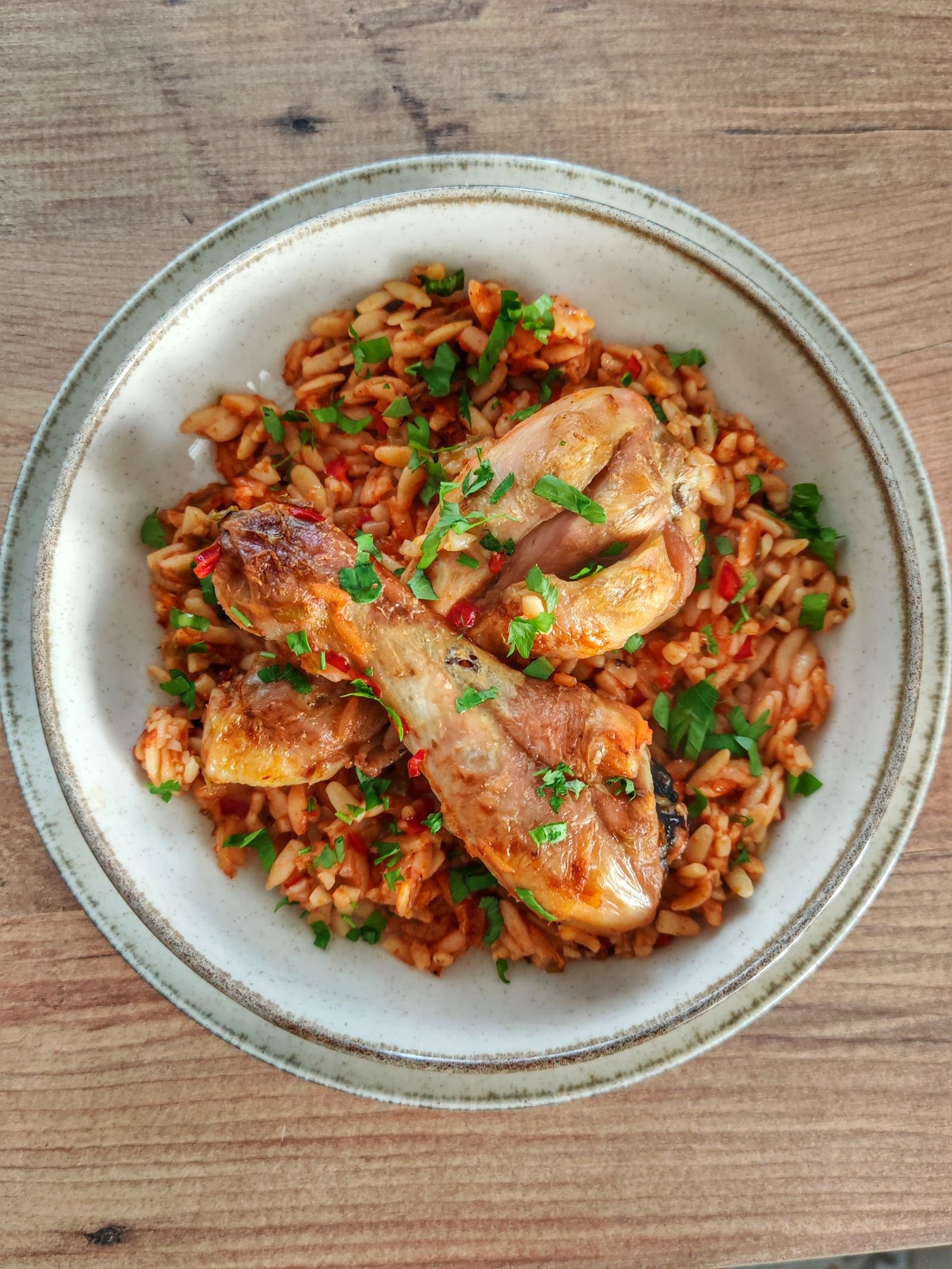
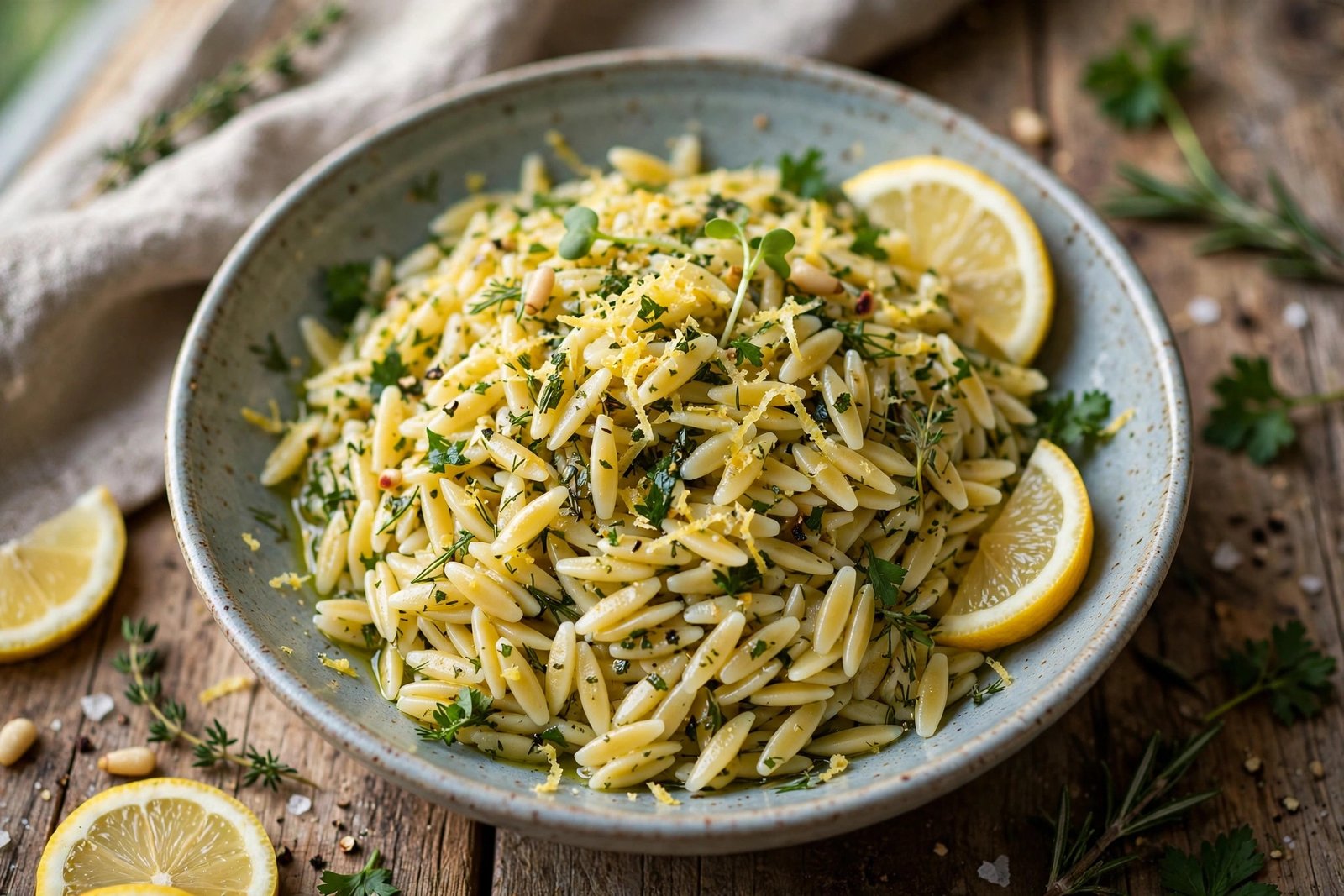
Kritharaki is the Greek name for orzo pasta, and this baked dish is one of the finest things you can do with it. Chicken thighs braise slowly in a tomato and cinnamon sauce, then the orzo goes in and the whole pan finishes in the oven under a golden blanket of cheese. The top turns crisp at the edges, the pasta underneath stays soft and rich, and the smell alone is enough to bring everyone to the table.
The story behind Kritharaki
Kritharaki is the Greek word for orzo, the small pasta shaped like grains of rice. The name comes from krithari, meaning barley, because the little pasta pieces look like barley grains. It is one of the most loved pastas in Greece, stirred into soups, baked with chicken, and served beside roasts. Wherever it appears, it soaks up the sauce around it and turns a simple meal into something generous and deeply satisfying for the whole table.
The baked version of this dish has its roots in the yiouvetsi tradition, the family of Greek oven dishes where meat and pasta cook together in a clay pot. In village homes the pot went into the wood oven after the bread, and the slow, even heat did the work while the family got on with the day. Chicken with kritharaki became a Sunday dish, the kind of meal that marks the week and brings everyone to the table at the same time, with the pan set down in the middle and the spoons handed round to all. It is still the dish Greek families cook when they want the house to smell like Sunday.
What makes this dish special is the way the oven changes it. The orzo cooks in the tomato sauce and drinks up the chicken juices, while the cheese on top melts into a golden crust. The edges of the pasta turn crisp where they catch the heat, and the chicken skin, browned first on the stove, crisps up again in the dry heat of the oven. It is one pan, but it eats like a feast, and the smell that fills the kitchen while it bakes is half the pleasure of making it.
Cook it on a Sunday, when you have time to let the oven do its slow work, or on any evening when you want a meal that looks after itself. It suits a family gathering, a dinner with friends, or a cold night when only something baked and golden will do. Put the pan in the middle of the table, hand out the spoons, and let people take what they want, seconds included, while the pan is still warm.
- Prep time
- 20 mins
- Cook time
- 55 mins
- Total time
- 75 mins
- Servings
- 4 servings
- Calories
- 560
Ingredients
- 8 bone-in, skin-on chicken thighs (about 900 g)
- 350 g orzo pasta (kritharaki)
- 3 tablespoons olive oil
- 1 large onion, finely chopped
- 4 garlic cloves, finely chopped
- 2 tablespoons tomato paste
- 400 g tin chopped tomatoes
- 1 tablespoon red wine vinegar
- 900 ml hot chicken stock
- 1 teaspoon dried oregano and 1/2 teaspoon ground cinnamon
- 1 bay leaf
- 120 g kefalotyri or Parmesan, finely grated
- 2 tablespoons chopped fresh parsley
- 1 teaspoon fine sea salt and 1/2 teaspoon freshly ground black pepper
Instructions
- Heat the oven to 190 C. Pat the chicken thighs dry with kitchen paper and season them well with salt and pepper on both sides. Dry skin is the secret to crisp skin, so take a moment over this step while the pan heats.
- Warm the olive oil in a large, ovenproof pan or casserole over medium-high heat until it shimmers. Lay the thighs in skin-side down and leave them alone for 5 to 6 minutes, until the skin turns deep gold and crackles. Turn them over and brown the other side for 3 minutes, then lift them out onto a plate.
- Lower the heat to medium and add the onion to the same pan, stirring to pick up the browned bits left by the chicken. Cook for 5 minutes until the onion softens and smells sweet, then add the garlic and cook for one minute more.
- Stir in the tomato paste and cook it for 2 minutes, pressing it into the pan until it darkens a shade and smells rich. Pour in the red wine vinegar and let it bubble for 30 seconds, scraping the bottom of the pan as it hisses. This lifts all the browned flavour into the sauce.
- Add the chopped tomatoes, hot stock, oregano, cinnamon and bay leaf, then season with salt and pepper. Bring the sauce to a steady simmer, with bubbles breaking gently across the surface, and taste it. It should be bold and well seasoned, since the orzo will soak up a lot of the salt as it bakes.
- Return the chicken thighs to the pan, skin-side up, nestling them into the sauce so the skin stays above the liquid. Tip in the orzo and stir gently so the pasta spreads through the sauce without disturbing the chicken too much. The sauce should cover the pasta by about a centimetre; add a splash more stock if it looks short.
- Cover the pan tightly with a lid or foil and slide it into the oven. Bake for 30 minutes, then take the pan out and check the orzo. The pasta should be nearly tender and the sauce thick but still loose, since the orzo will keep absorbing liquid as it rests.
- Take the lid off, scatter the grated cheese evenly over the top, and return the pan to the oven uncovered for 10 to 12 minutes. The cheese should melt into a golden, bubbling crust, and the chicken skin should turn crisp again. If the top needs more colour, slide it under a hot grill for 2 minutes, watching it closely so it does not burn.
- Take the pan out of the oven and let it rest for 10 minutes before serving. The orzo will settle, the sauce will thicken, and the cheese will firm up just enough to slice into. Scatter the parsley over the top and serve straight from the pan, giving each person a thigh and a generous spoonful of pasta.
Pro tips
- Pat the chicken thighs dry before they hit the pan. Wet skin steams instead of browning, and crisp skin is one of the best parts of this dish. Use kitchen paper and press firmly, then season right away so the salt has time to settle.
- Use an ovenproof pan with a tight lid so the dish goes from stove to oven without a transfer. A cast-iron casserole or a deep enamelled pan is ideal, and a heavy base keeps the sauce from catching while the pasta bakes.
- Keep the chicken skin above the sauce when the orzo goes in. Skin that sits under the liquid turns soft and pale, while skin above it crisps up in the oven.
- Hold the cheese back until the last 10 minutes of baking. Added too early, it burns before the pasta is tender, and a burnt cheese crust tastes bitter.
- Rest the dish for 10 minutes before serving. The orzo settles, the sauce thickens, and the cheese firms up enough to serve in generous spoonfuls. Cutting into it too soon leaves a loose, soupy pan, so give it the time it needs.
Variations & serving ideas
Lamb is the classic partner for baked orzo in Greece, and it works beautifully here. Brown lamb shoulder pieces the same way as the chicken, then bake them a little longer, about 45 minutes under the lid, until the meat is tender enough to pull apart with a fork. The cinnamon in the sauce suits lamb even better than chicken, and a little extra oregano rounds it out. Ask your butcher to cut the shoulder into generous chunks, and keep the bone in where you can, since it adds body to the sauce and keeps the meat moist through the long bake.
For a vegetarian version, leave the meat out and use vegetable stock, adding a tin of chickpeas and a handful of sliced mushrooms for body. Aubergine works well too: roast cubes of it in olive oil until golden, then stir them through the sauce before the orzo goes in. The baked cheese top gives the dish the richness that the meat would otherwise provide, so be generous with it, and a spoonful of tomato paste extra in the sauce deepens the flavour nicely for a meat-free table.
Serve kritharaki as a main course with a Greek salad, warm bread and a bowl of olives, and let the pan sit in the middle of the table. A simple plate of roasted vegetables or a cucumber and tomato salad cuts through the richness. A glass of red wine such as Xinomavro suits the tomato and cinnamon, and a cold lager is a fine match on a warm evening. Keep the salad dressing sharp, with plenty of lemon, to balance the rich pasta and the salty cheese.
You can also change the cheese to suit your cupboard. Kefalotyri is the Greek classic, sharp and salty, but Parmesan, Pecorino or a mature Cheddar all melt into a good golden crust. A mix of two cheeses often works best: one for sharpness and one for stretch. Sprinkle a little extra over each serving at the table for those who want more, and keep a wedge of feta nearby for crumbling over the top.
Getting it right
Browning the chicken well is the foundation of this dish, and it is worth taking your time over. Dry skin browns; wet skin steams. Pat the thighs dry, season them, and lay them skin-side down in properly hot oil without moving them. Five to six minutes of stillness gives you deep golden skin that crackles. If you crowd the pan, the temperature drops and the skin turns pale and rubbery, so brown in two batches if your pan is small, and let the oil come back up to heat between batches.
The oven stage needs the sauce to be right before the pan goes in. The orzo will absorb a surprising amount of liquid, so the sauce should look slightly too loose when you add the pasta. If it looks just right on the stove, it will be dry by the time it reaches the table. Keep the lid on tight for the first bake, since the trapped steam cooks the pasta evenly, then take it off for the cheese crust and the final crisping.
The most common mistake is adding the cheese too early, so it burns before the pasta is ready. Hold it back until the last 10 to 12 minutes, when the orzo is nearly tender. If the top colours too fast, cover it loosely with foil and let the pasta finish underneath. And always rest the dish for 10 minutes after baking, since the orzo needs that time to settle and the sauce to thicken properly before you serve it.
Storing & reheating
Leftover kritharaki keeps in the fridge for up to 3 days in a sealed container. The orzo will firm up as it cools, so reheat it covered in the oven at 160 C for about 20 minutes, with a splash of stock or water stirred through first. A little extra cheese on top before reheating gives it a fresh, golden finish.
This dish does not freeze well, since cooked orzo turns soft and grainy after thawing. If you want to get ahead, make the chicken and tomato sauce, cool it and freeze that on its own for up to 3 months. Thaw it overnight in the fridge, bring it to a simmer, and add fresh orzo for the oven bake when you are ready to eat.
Frequently asked questions
What is the difference between kritharaki and manestra?
Kritharaki is the Greek word for the pasta itself, the small rice-shaped orzo. Manestra is a stovetop one-pot dish built around that pasta, usually cooked quickly in tomato sauce. This recipe bakes the chicken and orzo together in the oven, which gives it a crisp top and a deeper, slower flavour.
Can I make kritharaki without an oven?
Yes, though you lose the golden crust. You can cook the whole thing on the stove in a deep pan, keeping the heat low and the lid on, but you will miss the golden, crisp edges. If you skip the oven, scatter the cheese over the top and let it melt under the lid for 5 minutes.
Should I use bone-in or boneless chicken?
Bone-in, skin-on thighs give the best result, since the bones add body to the sauce and the skin turns crisp in the oven. If you prefer boneless, use thighs rather than breast, which can dry out during the long bake. Reduce the oven time by about 10 minutes for boneless pieces.
How do I reheat leftover kritharaki?
The orzo keeps absorbing liquid as it sits, so the dish firms up. Reheat it covered in the oven at 160 C for 20 minutes, adding a splash of stock or water first, or warm it gently in a pan with a little extra liquid. A fresh scattering of cheese on top helps it feel newly made.
Is kritharaki gluten-free?
Yes, though it is a wheat pasta, so it is not gluten-free. A gluten-free orzo made from rice or corn will work, but it cooks faster and softens quickly, so add it later in the bake and check it early. The chicken and sauce on their own are naturally gluten-free.
What should I serve with kritharaki?
It is a complete meal on its own, but a Greek salad and warm bread make it feel like a feast. A plate of roasted vegetables or a simple cucumber and tomato salad cuts through the richness nicely. A glass of red wine such as Xinomavro is a natural match for the tomato sauce.