Garides Saganaki Recipe
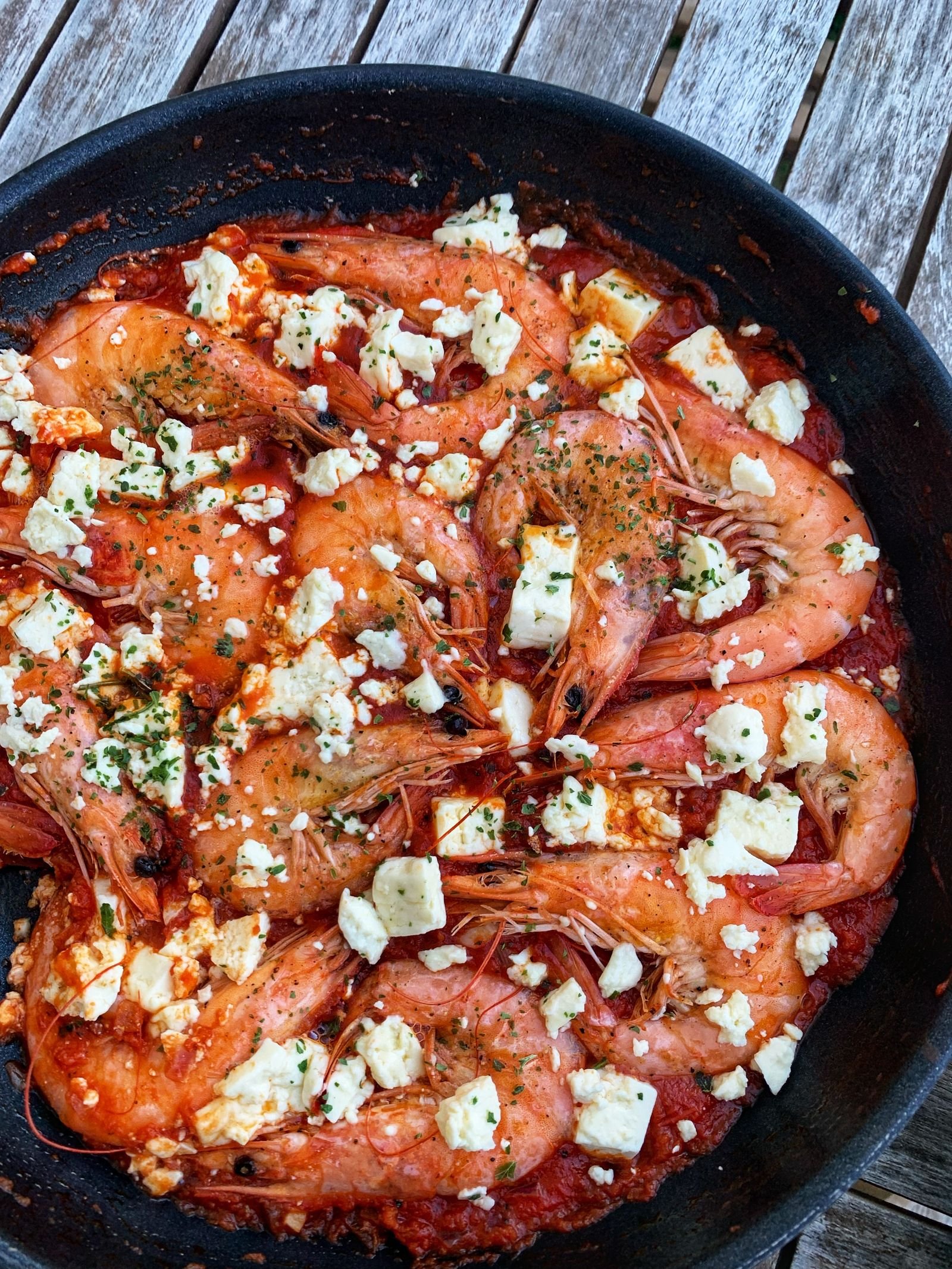
Plump prawns simmer in a rich tomato sauce with garlic, a splash of ouzo and crumbled feta that melts into creamy pockets. This Greek taverna favourite tastes like a seaside holiday, and it comes together in one pan with crusty bread for mopping up every last drop. Serve it straight from the pan while the sauce is still bubbling, with warm bread and a simple green salad on the side.
The story behind Garides Saganaki
Saganaki is the name of the small two-handled pan the dish is cooked in, and over time the word came to describe a whole family of Greek dishes finished in that pan. Garides saganaki, prawns in tomato and feta, is one of the best known. It grew out of the tavernas of the Greek islands and the mainland coast, where the day's catch met tomatoes, olive oil and the white cheese every kitchen kept on hand. The pan itself matters too: its wide, shallow shape lets the sauce reduce quickly while the prawns cook gently in the heat around them.
In Greece this is mezze food, made to share. A pan arrives at the middle of the table still bubbling, and everyone reaches in with bread while the prawns are hot. It shows up at seaside lunches that stretch into the afternoon, at family gatherings, and on menus from Athens to Crete. The dish is casual by nature, and that is exactly the point: good ingredients, cooked simply, eaten together. You will also find it on winter menus, served as a warming starter before grilled fish, and at name-day celebrations where a table full of small dishes is the whole point of the evening.
What makes it special is the contrast in the pan. The prawns stay sweet and tender, the tomato sauce turns rich and slightly sweet as it cooks down, and the feta softens without fully melting, so you get salty, creamy bites against the bright sauce. A small splash of ouzo adds a faint aniseed note that ties the seafood and tomato together, and it cooks off quickly, leaving flavour without any harsh alcohol edge. A good squeeze of lemon at the end lifts everything, cutting through the richness of the cheese and brightening the tomato in a way that salt alone cannot.
Cook it when you want something that feels generous with very little work. It suits a weekend lunch, a starter for friends, or a light supper with a green salad and plenty of bread. The whole dish takes about half an hour, most of it hands-off while the sauce simmers, so you can pour a glass of wine, set the table, and let the pan do its work. It also works well as part of a larger mezze spread, where its warm, saucy character balances cooler dishes like tzatziki and salads.
- Prep time
- 15 mins
- Cook time
- 20 mins
- Total time
- 35 mins
- Servings
- 4 servings
- Calories
- 420
Ingredients
- 500 g large raw prawns, peeled and deveined, tails left on, thawed if frozen and patted dry
- 3 tablespoons extra-virgin olive oil, plus a little more for drizzling
- 1 medium onion, finely chopped
- 3 garlic cloves, thinly sliced
- 1 teaspoon dried oregano
- 1/2 teaspoon chilli flakes
- 400 g tin chopped tomatoes
- 1 tablespoon tomato paste
- 60 ml ouzo
- 150 g feta cheese, from a block, crumbled into large chunks
- 2 tablespoons chopped flat-leaf parsley
- 1 lemon, cut into wedges, to serve
- Crusty bread, to serve
- Salt and black pepper, to taste
Instructions
- Warm the olive oil in a large frying pan or saganaki pan over medium heat until it shimmers. Add the onion with a pinch of salt and cook for 4 to 5 minutes, stirring often, until soft and pale gold. You want it sweet and translucent, not browned, so the flavours build from the very start.
- Stir in the garlic, oregano and chilli flakes and cook for 30 seconds until the garlic smells fragrant and the oil turns lightly golden. Keep the heat gentle here, because garlic burns fast and turns bitter in seconds.
- Add the tomato paste and stir for 1 minute so it darkens a shade and loses its raw, tinny taste. Pour in the chopped tomatoes, rinse the tin with a splash of water and add that too, then season lightly with salt and pepper, and let it cook until it smells sweet and toasty.
- Bring the sauce to a steady simmer, then lower the heat and cook for 10 to 12 minutes until it thickens enough to coat a spoon and the oil begins to separate at the edges. Taste and adjust the salt; the feta coming later is salty, so go easy.
- Pour in the ouzo and let it bubble for 1 minute. You will smell a brief wave of aniseed, then it fades into the sauce. If you prefer to skip the ouzo, use 60 ml of dry white wine instead, and give the pan a gentle stir.
- Lay the prawns in the sauce in a single layer and spoon a little sauce over each one. Cook for 2 to 3 minutes until the undersides turn pink, then turn them over with tongs and cook 2 minutes more until they curl into a loose C shape and look opaque all through.
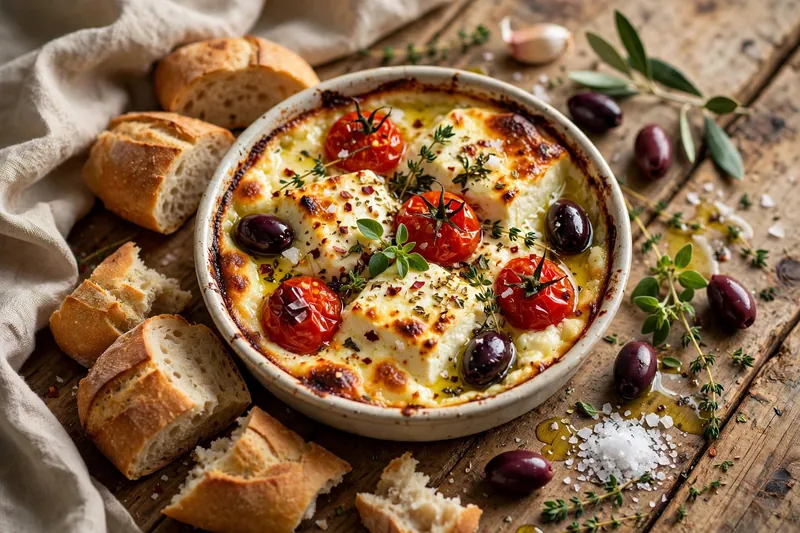
- Scatter the feta over the top in chunky pieces, pushing some down into the sauce and leaving some on the surface. Cover the pan and cook for 2 minutes more, just until the feta softens at the edges but still holds its shape, and listen for a soft sizzle as the cheese warms.
- Sprinkle over the parsley, squeeze one lemon wedge over the pan, and take it straight to the table. Serve at once with the remaining lemon wedges and lots of crusty bread for the sauce.
- Check one prawn by cutting into the thickest part before serving: it should be white and opaque with no grey, translucent centre. If any prawn still looks underdone, give the pan one more minute on the heat, and trust your eyes more than the clock.
Pro tips
- Buy the biggest prawns you can find, since small ones overcook in seconds and turn rubbery in the hot sauce. Large prawns also look far more generous on the plate. Look for prawns that smell of the sea, not of ammonia.
- Pat the prawns dry before they go in the pan so they sear gently in the sauce instead of watering it down. A quick blot with kitchen paper takes only a minute.
- Use a good feta that comes in a block and crumble it yourself; pre-crumbled feta dries out and melts into grainy bits. The difference in flavour and texture is easy to taste. A block of feta keeps for weeks in brine in the fridge.
- Taste the sauce before adding the feta and under-salt it slightly, because the cheese brings plenty of salt on its own. Remember that the sauce reduces as it cooks, which concentrates the salt.
- Serve the pan on a board or folded cloth at the table, since it stays hot for a long time and keeps the sauce bubbling. A folded tea towel underneath keeps the hot pan steady.
Variations & serving ideas
For a richer version, stir a tablespoon of butter into the sauce just before the prawns go in, which rounds out the tomato and gives the sauce a soft shine. Some cooks add a pinch of sugar if their tomatoes are sharp, while others add a handful of capers for a briny lift. A version with a splash of cream is not traditional, but it turns the sauce silky and suits people who find tomato sauces too sharp. A pinch of smoked paprika deepens the colour and adds a gentle warmth that suits the tomato base well. A little extra garlic deepens it further.
If prawns are hard to find, the same sauce works well with large scallops, chunks of firm white fish, or even a mix of seafood. Scallops need about 2 minutes per side, and fish needs 3 to 4 minutes until it flakes. Mussels are another good swap: add them with the feta, cover the pan, and cook until they open, throwing away any that stay shut. If you use fish, choose a firm variety such as cod and cut it into chunky pieces so it holds together in the sauce.
Serve garides saganaki as a shared starter with bread, olives and a simple salad, or make it a main course with rice, orzo or boiled potatoes to catch the sauce. A crisp white wine such as Assyrtiko or a dry rosé matches the tomato and the sea flavours well, and sparkling water with lemon works just as nicely. For a heartier main, spoon the prawns and sauce over creamy polenta or buttered orzo, which catch the sauce just as well as rice.
To pair it with a larger spread, put it beside grilled octopus, a Greek salad, or fried courgette with tzatziki. Keep the rest of the meal light and let the prawns be the star. Any leftover sauce is worth saving on its own: it makes a quick pasta sauce the next day, tossed with spaghetti and a little extra feta. A small bowl of marinated olives and sliced cucumber with lemon and olive oil round out the spread nicely.
Getting it right
The key technique is building the sauce before the prawns ever touch the pan. Prawns cook in minutes, so the sauce must already taste finished, thick and well seasoned, before they go in. Rushing this step leaves you with watery tomato and overcooked prawns, while a patient 10-minute simmer gives the sauce body and lets the onion and garlic melt into it. If your tomatoes are very acidic, a small pinch of sugar stirred in during the simmer takes the sharp edge off.
Heat control matters at two moments. Keep the garlic on medium-low so it turns golden without catching, and keep the sauce at a gentle simmer rather than a hard boil, which would spit and reduce too fast. When the prawns go in, the sauce should be bubbling lightly; a fierce boil toughens them, while a lazy simmer lets them cook through evenly in about 4 minutes. Watch the surface of the sauce: a lazy blip every second or two is right, while a rolling boil means the heat is too high.
The most common mistake is leaving the prawns in too long. Pull them the moment they curl into a loose C and turn opaque; a tight O means they are overdone and will feel tough. If the sauce looks thin at the end, lift the prawns out, simmer the sauce for 2 more minutes, then return them. If the feta melts away completely, the pan was too hot, so next time add the cheese off the heat and let the residual warmth soften it. Taste the sauce again after the feta goes in, since the cheese changes the seasoning, and add lemon if the pan tastes flat.
Storing & reheating
Leftovers keep in a sealed container in the fridge for up to 2 days. The sauce actually improves overnight as the flavours settle, though the prawns will firm up a little. Reheat gently in a pan over low heat for 4 to 5 minutes until just warmed through, adding a splash of water if the sauce has thickened too much. Stir gently when you reheat, since the prawns are delicate and break apart if you stir hard.
This dish does not freeze well, because prawns turn tough and the feta goes grainy after thawing. If you must freeze it, freeze the sauce on its own for up to 2 months and cook fresh prawns when you reheat it. Always let leftovers cool before covering them, and never reheat prawns more than once.
Frequently asked questions
Can I make garides saganaki without ouzo?
Yes, use 60 ml of dry white wine or leave it out and add a splash of water. The ouzo adds a faint aniseed note, but the dish still tastes rich and complete without it, so do not worry if your cupboard is bare. If you skip it, a splash of lemon juice at the end adds a similar lift.
Should I use fresh or frozen prawns?
Either works well as long as frozen prawns are fully thawed and patted dry first. Thaw them overnight in the fridge or under cold running water for 15 minutes, then drain them well so they do not water down the sauce. Dry them well, since wet prawns steam instead of cooking in the sauce.
What size prawns work best?
Large prawns, about 16 to 20 per 500 g, are ideal because they stay juicy while the sauce finishes. Small prawns cook in under 2 minutes and can turn rubbery before the feta has even softened. They also look far more generous on the plate.
Can I use cherry tomatoes instead of tinned?
Yes, use 500 g of halved cherry tomatoes and cook them a few minutes longer until they collapse into a sauce. They taste sweeter and fresher, though tinned tomatoes give a more consistent result all year round. Add them a little earlier, since fresh tomatoes release more water.
What bread should I serve with it?
A crusty white loaf or sourdough is perfect, since it soaks up the sauce without falling apart. Warm the bread in the oven for 5 minutes before serving so it is crisp outside and soft inside. Tear it into chunks rather than slicing it, so it soaks up more sauce.
Is this dish spicy?
Only mildly, from the half teaspoon of chilli flakes, which warms the sauce without real heat. Leave the flakes out for a gentle version, or add a little more if you like a noticeable kick. Children usually enjoy the gentle version with the flakes left out.