Tarte aux Fraises Recipe
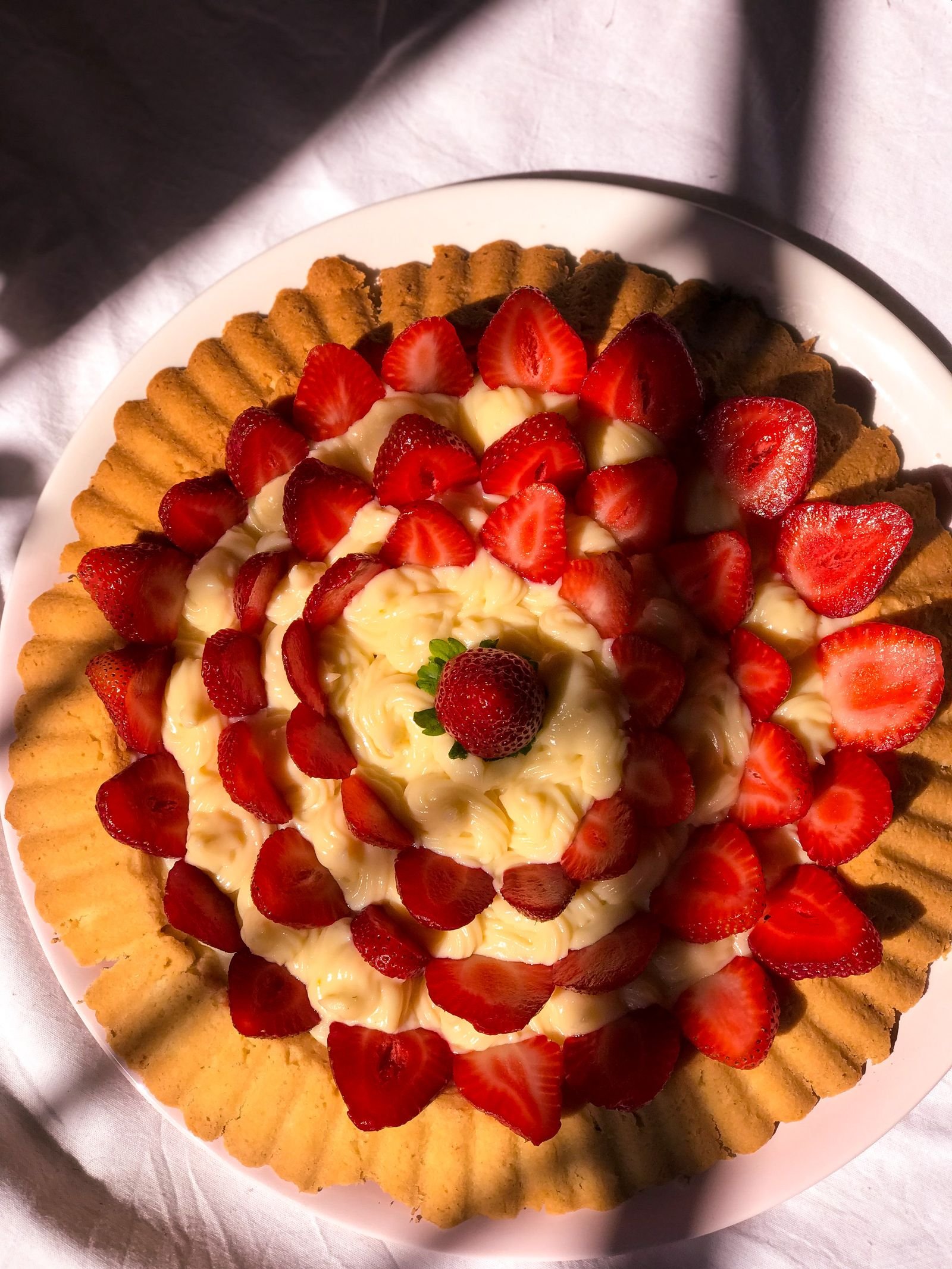
A proper Tarte aux Fraises is one of the prettiest things you can put on a table. Crisp, buttery pastry holds a layer of silky vanilla custard, and the whole surface is covered in fresh strawberries arranged in neat, overlapping rings. It looks like a patisserie window and tastes like the first warm weeks of summer. Serve it chilled, with a spoonful of lightly whipped cream if you like, and watch it disappear.
The story behind Tarte aux Fraises
The strawberry tart is a fixture of French patisserie, and it appears in bakery windows the moment strawberries come into season. The combination is an old one: sweet pastry, vanilla custard, and ripe fruit. In the nineteenth century, as French pastry chefs refined their craft, the tart became a test of skill. A good one shows a crisp shell, a smooth custard that holds its shape, and fruit arranged with care, nothing more and nothing less. The tart tin itself is part of the craft, because a fluted metal ring conducts heat quickly and gives the shell its crisp, golden edge.
In France this tart is the cake of spring birthdays, Sunday lunches, and family gatherings. Home cooks buy the best strawberries they can find and build the tart the same morning it will be eaten, because the pastry is at its crispest in the first few hours. It is the kind of dessert that makes people pause before the first slice, and it usually disappears fast once someone does cut it. In Paris the tart appears in bakery windows from the first warm days of April, and the price of strawberries drops week by week as the season builds toward June.
What makes this tart special is the contrast in every bite. The pastry shatters gently, the custard is cool and soft, and the strawberries are juicy and just tart enough to keep the whole thing from feeling too sweet. The vanilla in the custard ties it together, and a light apricot glaze gives the fruit a shine without adding any flavour of its own. No single part is complicated, but together they feel like something far grander. The glaze is the final touch, and it is purely practical: it keeps the berries from drying out in the air and stops the cut surfaces from turning dull before the tart is served.
Make this tart when strawberries are at their best, which is late spring into early summer. It suits a lunch with friends, a birthday, or any day you want the table to look a little celebrated. The pastry and custard can be made ahead, so the final assembly takes only fifteen minutes, and you can arrange the berries calmly instead of rushing. If you are making it for a celebration, build it in the morning and keep it chilled until the meal, so the pastry is still crisp when you carry it to the table.
- Prep time
- 45 mins
- Cook time
- 25 mins
- Total time
- 1 hr 10 mins
- Servings
- 8 servings
- Calories
- 385
Ingredients
- 250 g plain flour, plus extra for dusting
- 125 g cold unsalted butter, cubed
- 80 g caster sugar
- 1 medium egg yolk
- 2 tablespoons cold water
- 500 ml whole milk
- 1 vanilla pod, split, or 2 teaspoons vanilla extract
- 4 egg yolks
- 100 g caster sugar
- 40 g cornflour
- 500 g fresh strawberries, hulled
- 3 tablespoons apricot jam, warmed
Instructions
- Rub the cold butter into the flour with your fingertips until the mixture looks like fine breadcrumbs. Stir in the sugar, then add the egg yolk and cold water and bring it together into a soft dough. Do not knead it, because overworking makes the pastry tough instead of crisp.
- Flatten the dough into a disc, wrap it, and chill it in the fridge for 30 minutes. Cold pastry is easier to roll and shrinks less in the oven. While it chills, you can start the custard, which also needs time to cool.
- Warm the milk with the split vanilla pod in a pan until it just reaches a simmer, then take it off the heat and leave it for 10 minutes. This short rest lets the vanilla flavour soak into the milk. If you are using extract, stir it in after the milk comes off the heat.
- Whisk the egg yolks, sugar, and cornflour in a bowl until pale and smooth. Pour the warm milk in slowly, whisking all the time so the yolks do not scramble. Pour the mixture back into the pan and cook over medium heat, whisking constantly, until it thickens and bubbles gently.
- Keep whisking for 1 minute once it bubbles, so the cornflour cooks out fully and the custard loses any starchy taste. Scrape it into a clean bowl, press cling film directly onto the surface to stop a skin forming, and chill it until completely cold.
- Roll the chilled pastry on a floured surface to about 3 mm thick and line a 23 cm tart tin, pressing it into the corners. Trim the edge, prick the base with a fork, and chill the lined tin for 15 minutes. A cold shell holds its shape better in the oven.
- Line the pastry with baking paper, fill it with baking beans or dried rice, and bake at 180°C for 15 minutes. Remove the paper and beans and bake for 10 more minutes until the base is golden and dry. Let the shell cool completely in the tin. If the pastry puffs up in places, press it down gently with the back of a spoon while it is still hot, and it will settle flat as it cools.
- Stir the cold custard until smooth and spoon it into the cooled shell, spreading it evenly with the back of a spoon. The layer should be about 2 cm deep, thick enough to hold the berries without spilling when you slice it.
- Arrange the strawberries on top, starting from the outside edge and working inward in overlapping rings, cut side down. Brush them gently with the warmed apricot jam for a shine. Chill the tart for 30 minutes before slicing, and serve it the same day.
Pro tips
- Chill the pastry at every stage. Cold butter makes a crisp shell, and a chilled lined tin barely shrinks in the oven, so your tart keeps its neat shape. Work quickly when you rub in the butter, because warm hands melt it and the pastry loses its lightness.
- Whisk the custard without stopping once it goes back on the heat. It thickens suddenly, and a few seconds of standing still is all it takes for lumps to form.
- Choose strawberries that are ripe but still firm, and roughly the same size. Soft, overripe berries will weep juice onto the custard and make the tart soggy.
- Assemble the tart on the day you serve it. The shell and custard can wait in the fridge, but once the berries go on, the clock starts on the pastry staying crisp. A tart built too early in the day will still be eaten happily, but the shell will never be as crisp as one assembled an hour before serving.
- Warm the apricot jam and push it through a sieve before brushing. That gives you a smooth, clear glaze instead of lumps of fruit stuck to the berries.
Variations & serving ideas
Swap the strawberries for raspberries, blueberries, or a mix of summer berries, keeping the same custard and shell. Raspberries look lovely piled in a dome, while sliced peaches or nectarines make a good late-summer version. A few mint leaves tucked between the berries add colour, though the classic tart keeps the fruit alone. A few drops of rosewater in the custard give the tart a gentle floral note that suits strawberries well, though you should use it sparingly or it will overpower the vanilla.
For a change of flavour, stir a spoonful of lemon zest into the custard, or fold two tablespoons of mascarpone through it once it is cold for a richer, softer filling. A thin layer of strawberry jam spread on the base before the custard adds an extra hit of fruit. Almond pastry, made by swapping 50 g of the flour for ground almonds, gives the shell a nutty note. A thin layer of crushed pistachios scattered over the custard before the berries go on adds a green crunch that looks lovely against the red fruit.
Serve the tart well chilled, in thin slices, with nothing more than a cup of coffee or tea. If you want to dress it up, a spoonful of lightly whipped cream on the side works, but the tart does not need it. A small jug of extra custard on the table is a nice touch for anyone who wants seconds. A few drops of orange blossom water in the custard give a gentle floral note, though it should be used sparingly so the vanilla still shines through.
A dry white wine or a glass of champagne suits this tart at a celebration, while a pot of green tea keeps things light at an afternoon gathering. Keep the drink simple and a little sharp, because the tart itself is already rich and sweet. For a children's party, serve the tart with a jug of cold milk or a bowl of vanilla ice cream, and let everyone take the slice with the most berries. A glass of champagne or a light, fruity white wine suits the tart at a celebration, while a pot of green tea keeps an afternoon serving feeling light.
Getting it right
The pastry is the foundation, and the skill is keeping it cold and handling it gently. Cold butter creates tiny pockets in the dough that turn to steam in the oven, and that is what makes the shell crisp rather than hard. Rub the butter in quickly with cool hands, add only as much water as the dough needs, and stop the moment it comes together. Roll the pastry out on a cool surface and turn it a quarter turn after each roll, so it stays even and does not stick to the board.
Blind baking is the step that protects the base. The baking beans hold the pastry against the tin so it cannot puff up or slide down the sides, and the second bake without them dries the base out. Watch the colour closely in the last few minutes: pale gold means crisp and buttery, while deep brown means the shell will taste bitter.
The custard needs constant whisking and a confident hand. Cook it until it bubbles, because the cornflour must reach a boil to thicken properly and lose its raw taste. If lumps do appear, push the hot custard through a sieve into a clean bowl and it will be smooth again. Chill it with film touching the surface, or a skin will form and ruin the texture. If the custard is too thin after cooking, it simply needs another minute on the heat, whisking all the time, until it coats the back of a spoon.
Storing & reheating
This tart is best eaten the day it is made, within about 6 hours of assembly. Keep it in the fridge, uncovered if you can, so the berries stay dry and the pastry stays as crisp as possible. Once cut, cover the exposed custard with cling film to keep it from drying out. If you must keep a finished tart overnight, cover it loosely with cling film and accept that the pastry will soften; it will still taste good, just less crisp.
Do not freeze the finished tart, because the custard turns watery and the berries go soft. The empty baked shell freezes well for up to a month, wrapped tightly, and the custard keeps in the fridge for 2 days. Bake the shell, make the custard, and assemble fresh on the day.
Frequently asked questions
How do I stop the pastry base going soggy?
Blind bake it fully until the base is golden and dry, and let it cool completely before adding the custard. Assemble the tart on the day you serve it, and use firm, dry strawberries so no juice soaks into the shell. A shell baked the morning of serving stays crispest.
Can I make Tarte aux Fraises the day before?
You can make the pastry shell and the custard a day ahead and keep them in the fridge, but assemble the tart on the day you serve it. The pastry starts to soften once the custard and berries go on, so a tart built the night before loses its crispness.
What can I use instead of a vanilla pod?
Two teaspoons of good vanilla extract work well. Stir it into the milk after it comes off the heat, since boiling can dull the flavour. Vanilla bean paste is another good choice, and it gives the custard the same pretty speckles as a pod.
Can I use frozen strawberries for this tart?
No, frozen strawberries go soft and release a lot of juice as they thaw, which would flood the custard and soften the pastry. This tart depends on fresh, firm berries. Save frozen strawberries for sauces, smoothies, or baking into cakes.
Why did my custard go lumpy?
Lumps happen when the eggs get too hot too fast or the custard sits still on the heat. Add the hot milk slowly while whisking, and keep whisking constantly once it is back on the stove. If it still lumps, push it through a sieve while it is hot.
How do I get the strawberries to look neat?
Use berries of a similar size and start from the outer edge, placing them cut side down in a ring. Overlap each ring slightly and work inward, finishing with one berry in the centre. It takes a few minutes, but the pattern is what makes the tart look professional.