Saucisson Brioché Recipe
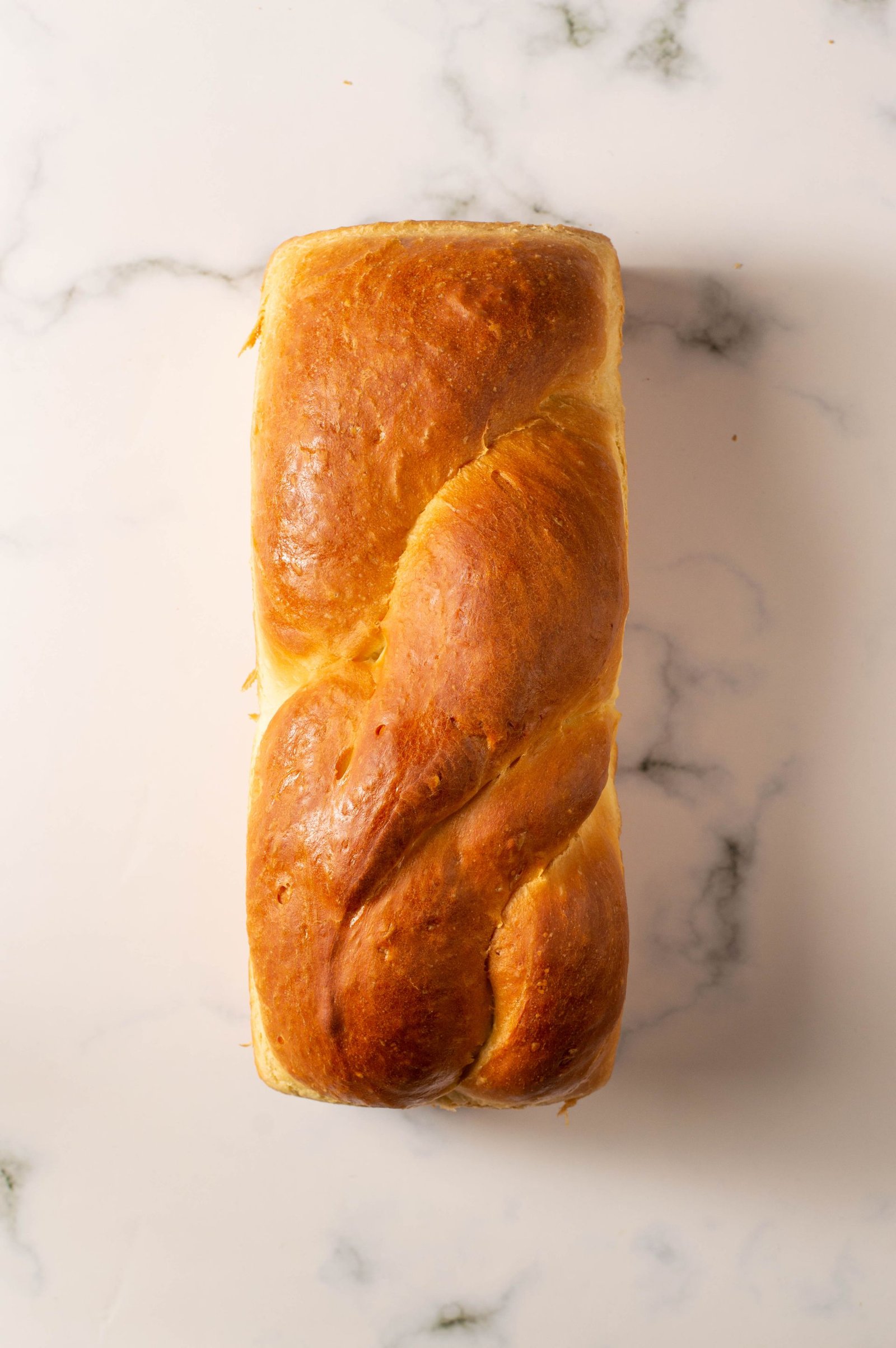
Saucisson brioché is Lyon's famous sausage baked inside a soft, buttery brioche loaf. Slice it warm and you get a golden crust, a tender crumb, and a juicy, garlicky pork sausage running right through the middle. It looks like something from a French bouchon because it is, and it tastes just as good at a kitchen table in Canada. Serve it with mustard, a green salad, and no apologies.
The story behind Saucisson Brioché
Saucisson brioché comes from Lyon, a city in eastern France that takes its food seriously and its sausage even more so. The dish starts with a saucisson à cuire, a fresh pork sausage made for cooking, often studded with pistachios. Cooks poach it gently, wrap it in a rich brioche dough, and bake the whole thing until the crust turns deep gold. It is charcuterie and bakery in one loaf, and it has been a fixture of Lyon's bouchons, the small, hearty restaurants the city is known for, for generations.
In Lyon, saucisson brioché is usually served as a first course, cut into thick slices while still warm. A spoonful of grainy mustard goes on the side, sometimes a red wine sauce, and always a simple green salad to cut through the richness. It also turns up at market stalls and family lunches, where a whole loaf lands in the middle of the table and everyone cuts their own slice. Nobody measures portions. The loaf just gets smaller until it is gone.
What makes this dish special is the contrast. The brioche is soft and buttery, almost sweet, and the sausage inside is salty, garlicky, and firm. As it bakes, the juices from the sausage seep into the crumb around it, so every slice has a ring of bread that tastes faintly of pork and spice. The pistachios, when your sausage has them, add little green flecks and a gentle crunch. It looks impressive on the table, yet the work is mostly waiting while dough rises. Cut the loaf at the table and the steam rises for a moment, carrying the smell of butter and pork across the room before anyone has taken a bite.
This is a weekend dish, the kind you make when the kitchen is warm and there is nowhere else to be. It suits cold weather and hungry people. Make it for a slow Saturday family lunch in Canada, put the whole loaf on a board, and let everyone slice their own piece while it is still warm enough to steam a little. Leftovers, if there are any, make a fine cold lunch the next day.
- Prep time
- 1 hr 30 mins
- Cook time
- 40 mins
- Total time
- 2 hrs 10 mins
- Servings
- 4 servings
- Calories
- 520
Ingredients
- 350 g all-purpose flour, plus extra for dusting
- 7 g instant yeast (1 packet)
- 180 ml warm whole milk
- 2 large eggs, at room temperature
- 60 g unsalted butter, softened and cut into cubes
- 1 tablespoon sugar
- 1 teaspoon fine sea salt
- 1 cooking pork sausage, about 400 g (saucisson à cuire, or a good garlic pork sausage)
- 1 egg yolk, beaten with 1 tablespoon milk, for the egg wash
- 1 teaspoon flaky sea salt, for sprinkling
- 2 tablespoons grainy Dijon mustard, to serve
- 1 small green salad, to serve
Instructions
- Warm the milk until it feels just warm to your finger, about 35°C, then stir in the yeast and sugar and leave it for 5 minutes until foamy. Tip the flour and fine salt into a large bowl, add the eggs and the milky yeast mixture, and stir with a wooden spoon until a shaggy dough forms. It will look rough and sticky at this stage, and that is fine.
- Turn the dough onto a lightly floured counter and knead for 5 minutes until it starts to smooth out. Now add the soft butter a few cubes at a time, kneading it in before adding more. Keep going for another 5 minutes until the dough is smooth, soft, and stretchy, and stretches thin without tearing. Shape it into a ball.
- Put the dough in a lightly oiled bowl, cover with a clean cloth or plastic wrap, and leave it somewhere warm for about 1 hour, until it has doubled in size. While it rises, the dough will smell faintly sweet and yeasty, and the surface will look puffy and relaxed.
- While the dough rises, poach the sausage. Put it in a saucepan, cover with cold water, and bring it up to the gentlest simmer you can manage. Cook for 20 minutes, then lift it out and let it cool on a plate. Never let the water boil hard, or the casing can split and the juices escape.
- When the dough has doubled, tip it onto a floured counter and press flat to knock out the air. Roll it into a rectangle 30 cm long and wide enough to wrap around the sausage with a little overlap. Lay the cooled sausage along one long edge, then roll the dough around it snugly, pinching the seam closed and tucking the ends under.
- Place the roll seam-side down in a buttered 900 g loaf tin. Cover it loosely and leave it to rise again for 30 to 40 minutes, until it looks puffy and springs back slowly when poked. Heat the oven to 180°C (350°F) while it rises.
- Brush the top with the beaten egg yolk and milk, taking care not to deflate the dough, and sprinkle over the flaky salt. Slide the tin into the middle of the oven and bake for 35 to 40 minutes. The crust should turn gold, and the loaf should sound hollow when tapped.
- If the top is browning too fast after 25 minutes, lay a loose sheet of foil over it and carry on baking. When the loaf is done, leave it in the tin for 10 minutes, then lift it out onto a wire rack. This rest matters: cut it too soon and the soft crumb squashes and tears under the knife.
- Slice the loaf with a serrated knife, about 2 cm a slice, and serve while warm. A slice should show a neat round of pink sausage in the middle of golden bread, with the crumb around it glistening slightly from the sausage juices.
Pro tips
- Use a sausage made for cooking, not a dry cured saucisson. A dry sausage will dry out further in the oven and turn tough, while a fresh cooking sausage stays juicy and flavours the bread around it. Ask the butcher for one with pistachios if you want the classic look.
- Keep the poaching water at a bare simmer. Boiling makes the casing burst and the fat run out into the water, which leaves you with a dry sausage and a greasy pot.
- Let the loaf rest for 10 minutes before slicing. Hot brioche is soft and fragile, and a serrated knife will saw right through a warm loaf if you rush it.
- If the top colours too quickly, tent it loosely with foil. Brioche browns fast because of the butter, eggs, and sugar, so check it at the 25-minute mark. Check it at the 25-minute mark and tent loosely if the crust is darkening too fast.
- A pistachio-studded sausage is the classic Lyon choice and looks wonderful sliced. If yours has no pistachios, scatter a spoonful of chopped pistachios over the sausage before rolling it up.
Variations & serving ideas
The sausage is where you can play. A garlic pork sausage is the classic, but a mild veal sausage works well, and a chicken sausage keeps things lighter. In Canada, a good-quality fresh sausage from a butcher or a European deli is your best bet. Ask for one made for cooking, not a cured salami. A vegetarian version is possible too: use a large plant-based sausage, poach it the same way, and add a spoonful of wholegrain mustard inside the roll for extra flavour.
You can also change the shape. Instead of one loaf, divide the dough into four pieces and wrap a small sausage in each one for individual rolls. They bake faster, about 25 minutes, and they make a handsome lunch served one per person. Or roll the dough out, spread a thin layer of grainy mustard over it before adding the sausage, so each slice carries a little sharpness inside. Individual rolls bake in about 25 minutes and make a handsome lunch served one per person, with mustard and salad on the side.
A red wine sauce is the traditional bouchon accompaniment and it is simpler than it sounds. Simmer 250 ml of red wine with a chopped shallot, a sprig of thyme, and a knob of butter until it thickens slightly, then spoon it over each slice. If that feels like too much work, a spoonful of grainy mustard and a few cornichons do the same job with no cooking at all. If red wine sauce feels like too much, a spoonful of wholegrain mustard stirred into a little crème fraîche makes a quick, tangy sauce that takes seconds and suits the rich sausage well.
Serve it as a first course with a green salad, or make it the main event with a bigger salad, some pickled vegetables, and a loaf of crusty bread for mopping up. It pairs well with a light red wine, a cold lager, or sparkling water with lemon. Cold slices, wrapped and packed, are also excellent picnic food, which is how many Lyon families eat it on a Sunday. A cold lager or a glass of Beaujolais both work well.
Getting it right
The dough is the part that worries people, but brioche dough is forgiving if you treat it gently. The butter must be soft, not melted and not fridge-cold. Soft butter kneads into the dough smoothly; melted butter makes it greasy and cold butter leaves lumps. Knead until the dough passes the windowpane test: pinch off a small piece and stretch it between your fingers. If it stretches thin enough to see light through without tearing, it is ready. If it tears straight away, knead for another few minutes.
Heat control matters at two points. First, the milk for the yeast must be warm, not hot. Hot milk kills yeast, and then nothing rises. Test it on the inside of your wrist: it should feel like warm bathwater. Second, the oven should be a true 180°C. Brioche browns quickly because of the sugar and egg, so if your oven runs hot, the crust will darken before the middle is cooked. An oven thermometer is a cheap fix for a hot oven.
The most common mistake is slicing the loaf while it is still steaming hot. The crumb is soft and the structure is still setting, so the knife drags and the slices collapse. Ten minutes of rest lets the crumb firm up. Another common slip is rolling the dough too loosely around the sausage, which leaves a gap between meat and bread. Roll it snug, pinch the seam firmly, and tuck the ends under so the sausage stays centred as it bakes. If the seam opens during baking, the sausage can peek out, so pinch it firmly and place the roll seam-side down in the tin before the second rise.
Storing & reheating
Leftover saucisson brioché keeps well in the fridge for up to 3 days. Wrap the loaf tightly in plastic wrap or beeswax wrap, or slice it first and store the slices in a sealed container. Cold slices are good on their own, but a quick warm-up brings the brioche back to life. Keep it whole when you can; slices dry out faster.
To reheat, warm slices in a 160°C (325°F) oven for 8 to 10 minutes until the crust crisps and the sausage is hot through. Avoid the microwave, which makes brioche rubbery. For longer storage, freeze slices in a single layer, then bag them for up to 2 months. Thaw at room temperature for an hour, then warm in the oven as above.
Frequently asked questions
Can I use store-bought brioche dough for saucisson brioché?
Yes, if you can find fresh brioche dough at a bakery, it works well and saves about an hour. Roll it out, wrap the poached sausage, and bake as directed. Avoid sweet, pre-sliced sandwich brioche, which is too soft and thin to hold a sausage.
What sausage should I use if I cannot find saucisson à cuire?
Any good fresh pork sausage made for cooking will work, ideally one with garlic and a coarse texture. A pistachio-studded sausage is the classic choice. Ask your butcher for a cooking sausage rather than a cured or smoked one, and avoid very lean sausages, which dry out.
Can I make saucisson brioché ahead of time?
Yes. Bake it the day before, let it cool fully, and wrap it tightly. Reheat the whole loaf in a 160°C oven for 12 to 15 minutes before serving. You can also prepare the dough the night before and let it rise slowly in the fridge overnight.
Why did my brioche split open during baking?
Splitting usually means the seam was not pinched firmly enough, or the second rise was too short and the dough expanded too fast in the oven. Pinch the seam well, tuck the ends under, and give the loaf a full 30 to 40 minutes to rise before baking.
Can I freeze saucisson brioché?
Yes, it freezes well for up to 2 months. Slice the cooled loaf first, freeze the slices in a single layer on a tray, then pack them into a freezer bag. Thaw at room temperature for about an hour, then warm in a 160°C oven for 8 to 10 minutes.
What should I serve with saucisson brioché?
A simple green salad with a sharp vinaigrette is the classic partner, plus grainy Dijon mustard and cornichons. For a fuller meal, add pickled vegetables and a light red wine. A red wine sauce is the traditional bouchon touch if you want to go further.