Easy Palak Paneer Recipe in 30 Minutes
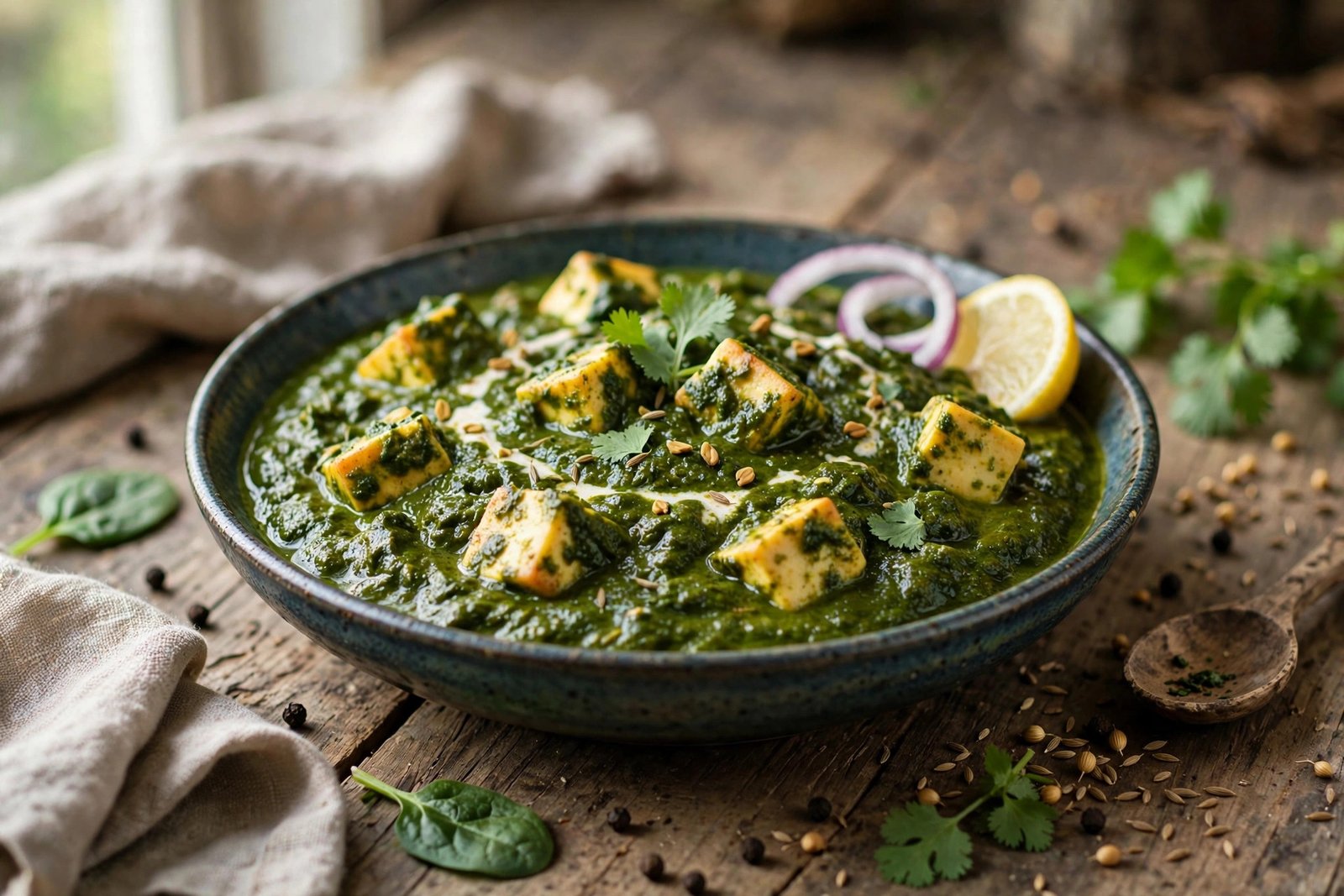
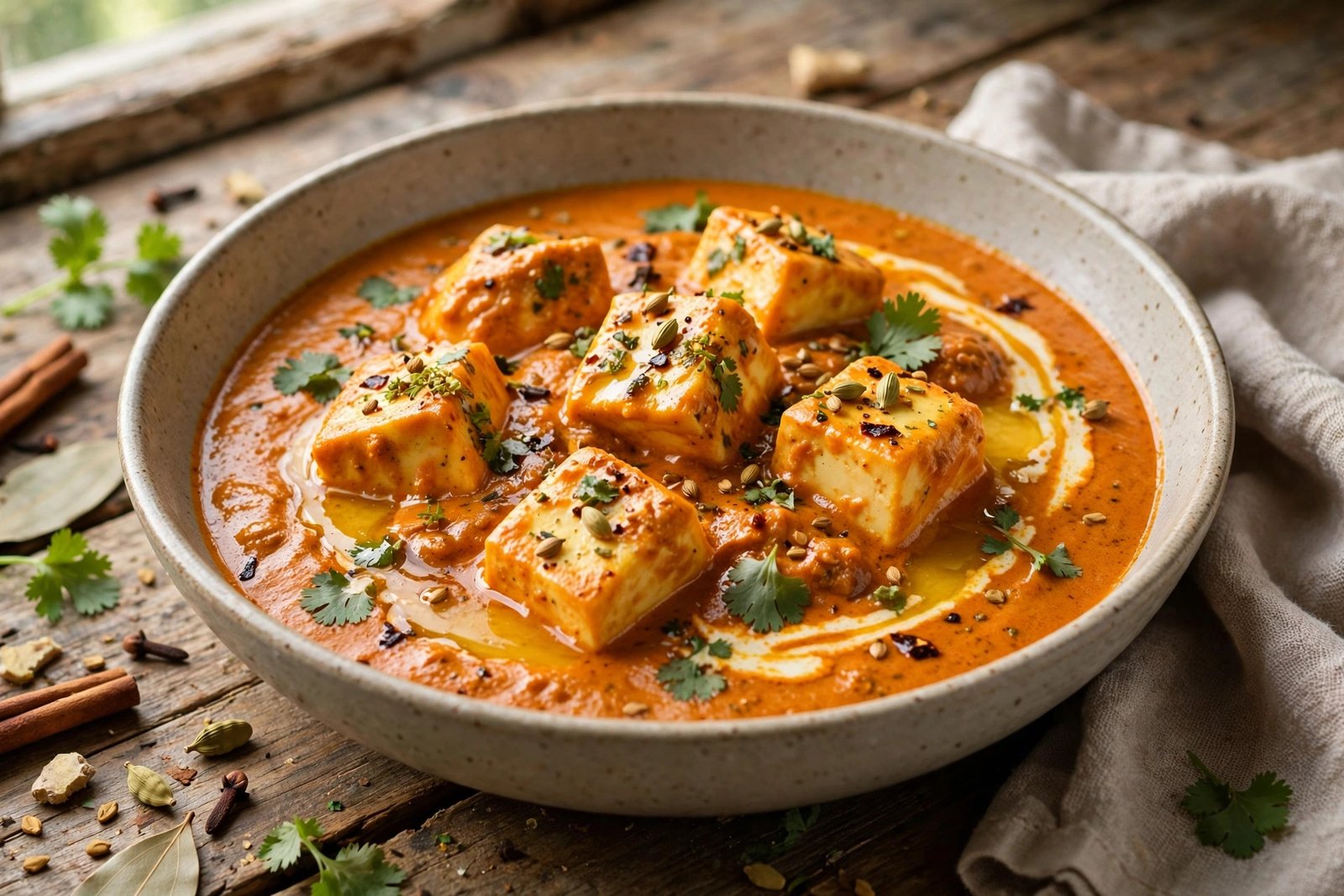
Fresh spinach, blanched until it turns a deep green and blended smooth, makes the base of this palak paneer — a North Indian classic built on garlic, ginger, cumin and a little cream. Soft cubes of paneer soak in the sauce until they turn tender and rich. It comes together in about 40 minutes, feeds four, and tastes like the kind of food that makes a plain weeknight feel looked after. Serve it with warm roti, naan or a bowl of basmati rice.
The story behind Palak Paneer
Palak paneer comes from the kitchens of North India, where spinach grows through the cool months and paneer has been made in homes for generations. The dish is simple at heart: greens cooked down, blended smooth, and seasoned with the spices that sit in every Indian pantry. It shows up on weekday tables and in restaurants alike, because it asks for little and gives back a lot — a deep green sauce, soft cheese, and a warmth that builds slowly rather than shouting.
In Punjab, where the dish is most at home, spinach is a winter crop, and palak paneer is the kind of cooking that follows the seasons. Markets fill with big bunches of spinach, and the dish appears again and again, sometimes with a little mustard greens mixed in, sometimes richer with cream, sometimes kept lean. Every household has its own version, and that is part of the point. The recipe bends to what is in the fridge and who is eating.
What sets a good palak paneer apart is the colour and the texture. The spinach should stay green — bright, fresh-looking, almost alive in the bowl — and the sauce should be smooth without feeling heavy. The paneer gives it substance, little pale cubes that soak up the spiced greens and turn soft at the edges. Garlic and ginger do the quiet work underneath, and garam masala adds a warm finish. Nothing here needs to be fancy. The dish works because each part is cooked with care.
Cook it on a weeknight when you want something nourishing without a long list of steps, or make it for guests with a stack of warm breads and a pot of rice. It also cooks well ahead, which makes it a useful dish for a busy day — the sauce only gets better after an hour or two. Pair it with dal and a simple salad and you have a full meal. Or keep it simple: one pan, one pot of rice, and a quiet evening.
- Prep time
- 15 mins
- Cook time
- 25 mins
- Total time
- 40 mins
- Servings
- 4 servings
- Calories
- 380
Ingredients
- 1 lb (450 g) fresh spinach, washed
- 8 oz (225 g) paneer, cut into 3/4-inch cubes
- 2 tablespoons ghee or neutral oil
- 1 teaspoon cumin seeds
- 1 large onion, chopped
- 4 cloves garlic, roughly chopped
- 1 tablespoon fresh ginger, chopped
- 2 green chilies, slit
- 1 teaspoon ground coriander
- 1/2 teaspoon garam masala
- 1/2 cup heavy cream, plus more to serve
- 1 teaspoon salt
Instructions
- Bring a large pot of water to a rolling boil and drop in the spinach. It will look like far too much, then collapse within seconds. Give it two minutes, until every leaf has turned a deep, bright green, then scoop it out and plunge it straight into a bowl of ice water. That cold shock is what keeps the colour. Once it is cool, squeeze the spinach dry in handfuls — really squeeze, until almost no water comes out — then blend it with a quarter cup of water until completely smooth.
- Heat one tablespoon of ghee in a wide pan over medium heat. When it shimmers, lay the paneer cubes in a single layer and leave them alone for two minutes, until the undersides turn golden. Turn each cube and brown the other side, about two minutes more. Lift them out onto a plate. You want colour on the outside and a soft centre, not a hard crust.
- Add the remaining ghee to the same pan and drop in the cumin seeds. They should sizzle and crackle right away — that sound tells you the oil is hot enough. Give them twenty seconds, no more, because burnt cumin turns bitter fast. Keep the heat at medium and watch them closely.
- Tip in the chopped onion and cook, stirring now and then, for about six minutes. You are looking for soft, golden edges, not browned and not raw. If the onion starts to catch, turn the heat down a notch and add a splash of water. Then add the garlic, ginger and green chillies and cook for two minutes more, until the raw smell fades and the kitchen smells warm and savoury.
- Stir in the ground coriander and garam masala and let them cook in the oil for thirty seconds. The spices will darken slightly and smell fragrant — this short fry is what wakes them up. Then pour in the spinach purée and the salt, and stir everything together until the sauce is one even green.
- Turn the heat to low and let the sauce simmer gently for eight minutes, stirring now and then so it does not stick. It should thicken just enough to coat a spoon, and the surface will go from bright to a deeper green. If it splutters, put the lid on partway and turn the heat down. Taste and add a little more salt if it needs it.
- Stir in the cream and watch the colour soften to a pale, silky green. Slide the browned paneer back into the pan and let it simmer for three minutes, spooning sauce over the cubes so they soak it up. The paneer should be heated through and tender, not boiled hard.
- Take the pan off the heat and taste once more. A squeeze of lemon lifts the whole dish if the spinach tastes flat, and a pinch of garam masala adds warmth if it feels muted. The sauce should be smooth, creamy and generously seasoned.
- Serve hot, with a swirl of cream over the top, beside warm roti, naan or basmati rice. Palak paneer is best eaten right away, while the paneer is still soft and the sauce is at its brightest.
Pro tips
- The ice-water shock after blanching is what keeps the sauce green instead of dull olive. Skip it and the spinach will keep cooking in its own heat and lose its colour before it ever reaches the pan.
- Do not simmer the purée for a long time. Eight minutes is enough — longer cooking dulls both the colour and the fresh taste, and the sauce starts to taste flat instead of bright.
- Soak shop-bought paneer in warm salted water for ten minutes before cooking. It softens the cubes from the inside, so they stay tender instead of turning chewy in the sauce.
- Brown the paneer lightly and stop. Deep browning makes a hard crust that never softens again, no matter how long it simmers. Golden on two sides is all you need.
- Taste the sauce before the cream goes in. Salt and spice are harder to judge once the cream softens everything, so season first, then finish with cream and lemon.
Variations & serving ideas
For a richer version, swap half the cream for a spoonful of butter stirred in at the end, and finish with a drizzle of cream over the top. It turns the dish into something closer to restaurant style. For a lighter version, leave the cream out entirely and use a splash of milk, or a few spoonfuls of whisked yoghurt stirred in off the heat. The sauce stays silky, just less rich.
Mustard greens, fenugreek leaves or a handful of kale can join the spinach, though the colour will darken and the taste will turn a little more bitter and earthy. That is the saag style, and it works well with the same spice base. Baby spinach needs no stemming and blends the smoothest, while mature spinach has a stronger taste and needs the stems removed.
Swap the paneer for cubes of extra-firm tofu if you want a vegan version, browning them the same way, and use coconut cream instead of dairy cream. The taste shifts a little — coconut brings its own sweetness — but the structure of the dish stays the same. Chickpeas also work, stirred in at the end instead of paneer, for a heartier bowl.
Serve palak paneer with more than just bread. It goes well over a bowl of jeera rice, next to a simple dal, or as part of a spread with a dry vegetable dish and a pickle. A crisp salad of onion, tomato and lemon cuts through the richness. And if you have leftovers, the sauce makes a good filling for a wrap or a topping for toast the next day.
Getting it right
The single most important technique in this dish is blanching the spinach properly. Two minutes in boiling water is enough to wilt it and set the colour; any longer and it starts to lose both. The ice bath stops the cooking instantly, which is why the sauce stays green. Squeeze the spinach hard before blending — water left in the leaves thins the sauce and dulls the taste. A smooth blend matters too: run the blender a full minute, scraping down the sides, until there are no flecks left.
Heat control is the second thing to get right. The cumin seeds need medium heat to crackle without burning, the onion needs a steady medium heat to soften and turn golden without catching, and the sauce needs a low, gentle simmer. High heat on the sauce makes it spit and stick, and it can turn the spinach bitter. Keep the lid half on if it splutters, and stir every couple of minutes so the bottom does not scorch.
The common mistakes are easy to spot and easy to fix. If the sauce turns olive, it was cooked too long or the spinach was not shocked in ice water — next time, shorten the simmer and keep the ice bath ready. If the paneer is rubbery, it was browned too hard or boiled in the sauce; soak it first and give it only three gentle minutes. If the sauce tastes flat, it usually needs salt or lemon, not more spice. Taste at the end, adjust, and trust your palate over the clock.
Storing & reheating
Palak paneer keeps well in the fridge for three to four days in a sealed container. The colour will darken slightly overnight — that is normal, and the taste actually improves as the spices settle. Let it cool fully before covering, and keep the cream swirl for serving rather than storing it in.
It also freezes well for up to two months, though the paneer can turn a little firmer after thawing. Freeze the sauce on its own if you want the best texture, and add fresh paneer when you reheat. To reheat, warm it gently in a pan over low heat with a splash of water or milk, stirring until hot through. Skip the microwave if you can — it heats unevenly and can toughen the paneer.
Frequently asked questions
What is the difference between palak paneer and saag paneer?
Palak paneer is made specifically with spinach (palak). Saag paneer uses a mix of greens — often mustard greens and bathua — and has a more rustic, earthy flavor. The cooking method is similar, but the taste is deeper and less smooth.
Can I use frozen spinach?
Yes. Thaw 10 oz of frozen spinach completely and squeeze out all the water before blending. The color will be slightly less vivid but the taste is still great. Skip the blanching step entirely, since frozen spinach is already cooked.
How do I stop paneer from going rubbery?
Brown it quickly and do not boil it hard in the sauce — a gentle 3-minute simmer is enough. Soaking firm paneer in warm water first also helps. If your paneer is very fresh and soft, you can even skip browning and add it straight to the sauce.
Is palak paneer healthy?
It is one of the healthier Indian curries: spinach brings iron, folate, and fiber, while paneer adds protein. Using less cream keeps it lighter without losing much richness. Serve it with roti instead of buttery naan and it stays a genuinely balanced meal.
Can I make palak paneer vegan?
Yes. Swap the paneer for extra-firm tofu, browned the same way, use oil instead of ghee, and finish with coconut cream or a cashew cream. The dish will taste a little different, but the method and the spinach base stay exactly the same.
Why did my spinach sauce turn brown?
The spinach was cooked too long, or it was not cooled quickly after blanching. Long simmering and slow cooling both turn the colour from green to olive. Next time, use the ice bath, squeeze the spinach dry, and keep the simmer to eight minutes.