Daal Makhani Recipe (Desi Style)
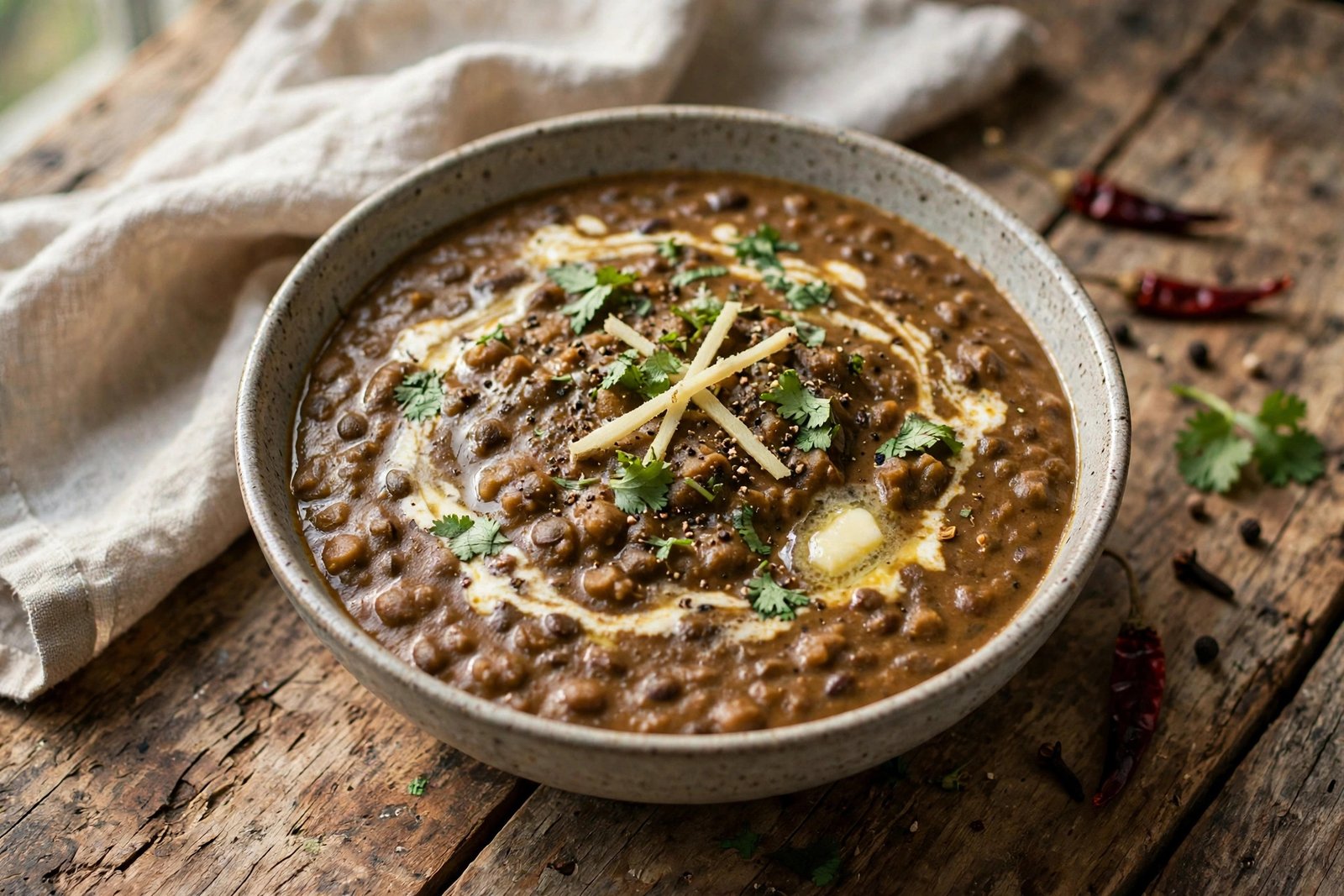
This daal makhani recipe, desi style, is the Pakistani home version of the famous black-lentil dal: whole black lentils and kidney beans simmered low and slow with butter, cream and garam masala until they turn velvety and rich. It is the dal that anchors a dawat table, served hot with naan and rice.
The story behind Daal Makhani
Daal makhani is the dal that turned a humble lentil into a celebration dish. Its roots run through Punjab, on both sides of the border, where whole black lentils, known as urad dal, were simmered overnight on slow embers with butter and cream. The dish travelled from home kitchens into the tandoor restaurants of Delhi, and from there into Pakistani kitchens, where it became a fixture of dawat tables and Sunday lunches alike.
What sets daal makhani apart from every other dal is time. Most dals cook in half an hour; this one asks for an overnight soak and a long, gentle simmer, and it pays you back with a texture no quick dal can match. The black lentils break down slowly into a creamy, almost silky base, while the kidney beans hold their shape just enough to give each spoonful something to bite into. Butter and cream go in at the end, and the whole pot turns glossy and rich.
In Pakistani homes, daal makhani is the dish you make when people are coming over. It sits at the center of the table next to naan, jeera rice and a kebab or two, and it is the pot everyone goes back to for a second helping. It is also a quiet, practical dish: lentils are cheap, the pot feeds six easily, and the leftovers taste even better the next day, after the flavours have had a night to settle together.
Cook it when you have an afternoon to spare and a table to fill. The work is mostly waiting: the soak happens overnight while you sleep, and the simmer needs little more than an occasional stir. What comes out of the pot is the kind of food that makes people ask for the recipe, and the kind of recipe that becomes a regular in your kitchen once you have made it twice.
- Prep time
- 15 mins (+ overnight soak)
- Cook time
- 1 hour
- Total time
- 1 hour 15 mins (+ soak)
- Servings
- 6 servings
- Calories
- 480
Ingredients
- 1 cup (200 g) whole black lentils (urad dal), rinsed
- 1/4 cup (50 g) red kidney beans (rajma), rinsed
- 4 cups water, plus more as needed
- 1 teaspoon salt, plus more to taste
- 2 tablespoons butter, plus 1 tablespoon for finishing
- 2 tablespoons oil
- 1 large onion, finely chopped
- 2 tablespoons ginger-garlic paste
- 2 large tomatoes, pureed (about 400 g)
- 1 teaspoon cumin seeds
- 1 teaspoon red chili powder
- 1/2 teaspoon turmeric powder
- 1 teaspoon garam masala
- 1/2 cup heavy cream, plus extra for drizzling
- 1 teaspoon dried fenugreek leaves (kasuri methi), crushed
- Fresh cilantro, for garnish
Instructions
- Soak the lentils and beans overnight. Put the whole black lentils and the kidney beans together in a large bowl, cover them with plenty of water, and leave them to soak for 8 hours or overnight. Drain and rinse them well before cooking. The soak is not a step you can skip: it softens the lentils so they cook up creamy instead of grainy.
- Simmer the lentils until completely soft. In a heavy pot, combine the soaked lentils and beans with 4 cups of water and 1 teaspoon of salt. Bring it to a boil, skim off any foam that rises to the surface, then reduce the heat to a gentle simmer. Cook partially covered for 50 to 60 minutes, until the lentils are completely soft and turn creamy when you press one between your fingers. Top up the water if the pot starts to look dry.
- Start the masala while the lentils cook. In a separate pan, heat the oil and 2 tablespoons of butter over medium heat. Add the cumin seeds and wait until they sizzle and pop, then add the finely chopped onion. Cook for about 8 minutes, stirring now and then, until the onion turns deep golden. That colour is where the flavour comes from, so do not rush it.
- Cook the ginger, garlic and tomatoes. Stir in the ginger-garlic paste and cook for 2 minutes, until the raw smell fades. Add the tomato puree, red chili powder and turmeric, and cook for about 8 minutes, stirring often, until the oil separates and glistens at the edges of the masala. When you can see the oil, the masala is ready.
- Combine the masala with the lentils. Pour the tomato masala into the pot of cooked lentils and stir it through. Add the garam masala, then simmer everything together on low heat for 20 minutes, stirring often. As it cooks, press a few lentils against the side of the pot with the back of your spoon to mash them; this is what gives the dal its extra creaminess.
- Finish with cream, butter and kasuri methi. Stir in the heavy cream, the crushed dried fenugreek leaves and the remaining tablespoon of butter. Simmer for 5 more minutes so everything comes together. Taste and adjust the salt. The dal should be thick enough to coat a spoon, glossy from the butter, and fragrant from the fenugreek.
- Serve hot with naan or rice. Ladle the dal into a serving bowl, drizzle a little extra cream over the top in a swirl, and scatter the fresh cilantro on top. Serve right away, alongside warm naan, jeera rice or tandoori roti, and let everyone help themselves.
Pro tips
- The overnight soak is non-negotiable. It is what makes the lentils cook up creamy instead of grainy, and no amount of extra simmering fully makes up for skipping it.
- Mash a spoonful of lentils against the pot near the end. This natural thickener beats any cornstarch, because it adds body and flavour at the same time.
- Do not rush the final 20-minute simmer. This is where the smoky, restaurant-style depth develops, as the masala and the lentils melt into each other.
- Kasuri methi goes in at the very end so its aroma stays bright instead of cooking off. Crush the leaves between your palms as you add them to release the oils.
- Keep the heat low once the cream goes in. A hard boil after adding cream can split the sauce, so let it simmer gently and stir often.
Variations & serving ideas
A pressure cooker or Instant Pot cuts the simmering down to about 25 minutes at high pressure, which makes this a weeknight dish instead of a weekend project. Cook the soaked lentils and beans with the water and salt, then make the masala in a separate pan and stir it in, finishing with the cream and butter as usual. The slow stovetop method still gives the best depth, but pressure cooking works well on busy days.
For a vegan version, replace the butter with oil and the cream with coconut cream or cashew cream. The result is still rich and satisfying, though the classic dairy version has a deeper flavour. A spoonful of cashew paste blended smooth gives the closest match to the creamy finish that dairy cream provides.
The spice level is easy to tune. Leave out the chili powder for a mild pot that kids can eat, or add a slit green chili to the simmer for a fresher heat. A pinch of smoked paprika or a tiny piece of charcoal, placed in a small bowl inside the pot and covered for a minute, gives the dal a smoky, dhaba-style note that suits the dish well.
For serving, naan and jeera rice are the classic partners, but daal makhani is just as good spooned over plain basmati or scooped up with tandoori roti. A simple kachumber salad of onion, tomato and cucumber on the side cuts through the richness. Make a double batch when guests are coming: the dal reheats beautifully and tastes better the next day.
Getting it right
The first technique to learn is the soak and the slow simmer. Whole black lentils are dense and stubborn, and they need both water and time to soften. The overnight soak starts the work, and the long, gentle simmer finishes it. If the heat is too high, the water boils away before the lentils are soft; if it is too low, they sit in warm water and never break down. A lazy, steady simmer with the lid half on is the sweet spot.
The masala is the second skill. Onions must cook until they are deep golden, not just soft and pale, because that colour is flavour. Then the tomato puree needs its own time on the heat until the oil separates at the edges. Rushing either stage leaves the dal tasting raw and flat, while cooking them fully gives it the rounded, savoury base that makes the dish taste like it came from a good restaurant.
The most common mistake is adding the cream too early and then boiling the pot hard, which can split the sauce into an oily mess. Cream and butter go in at the very end, over low heat, with gentle stirring. The second mistake is under-salting: lentils absorb a lot of salt, so taste at the end and adjust. If the dal feels too thick, loosen it with a splash of water or milk; if it is too thin, mash more lentils against the pot and simmer for five minutes longer.
Storing & reheating
Leftover daal makhani keeps in the fridge for up to 4 days in an airtight container, and it thickens as it sits, so loosen it with a splash of water or milk when reheating. It also freezes beautifully for up to 3 months in portions, which makes it a good dish to cook in bulk. Thaw overnight in the fridge before reheating.
Reheat gently on the stove over low heat, stirring often, until it is hot all the way through. Add a knob of butter and a swirl of cream at the end to bring the richness back. The microwave works too, but heat it in short bursts and stir between them so the edges do not overcook while the center stays cold. If the dal has thickened a lot, add the water a little at a time until it reaches the consistency you like. A swirl of fresh cream and a few cilantro leaves on top make reheated dal look and taste freshly made.
Frequently asked questions
Can I substitute the black lentils (urad dal)?
Urad dal, whole black gram, is essential. It breaks down into the creamy base that defines the dish. In a pinch, use whole brown lentils, but the texture will be lighter and less luxurious, and the cooking time will be shorter, so check them early.
Can I make daal makhani vegan?
Yes. Replace the butter with oil and the cream with coconut cream or cashew cream. The result is still rich, though the classic dairy version has a deeper flavour. A spoonful of cashew paste blended smooth gives the closest finish to the dairy version.
Can I speed it up with a pressure cooker?
Yes. A pressure cooker or Instant Pot cuts the simmering to about 25 minutes at high pressure. The slow stovetop method still gives the best depth, but pressure cooking works well on busy days. Make the masala separately and stir it in after the pressure cooking.
How do I store leftover daal makhani?
Refrigerate for up to 4 days in an airtight container. It thickens as it sits, so loosen it with a splash of water or milk when reheating. It also freezes beautifully for up to 3 months in portions; thaw overnight in the fridge before reheating.
Why is my daal makhani grainy instead of creamy?
The lentils were under-soaked or undercooked. Soak them for a full 8 hours or overnight, and simmer until they are completely soft and creamy when pressed. Mashing a few lentils against the pot near the end also smooths the texture out.
What should I serve with daal makhani?
Warm naan, jeera rice or tandoori roti are the classic partners. A simple kachumber salad of onion, tomato and cucumber adds freshness and crunch. It also sits well next to kebabs or a chicken curry on a dawat table.