Chicken Nihari Recipe
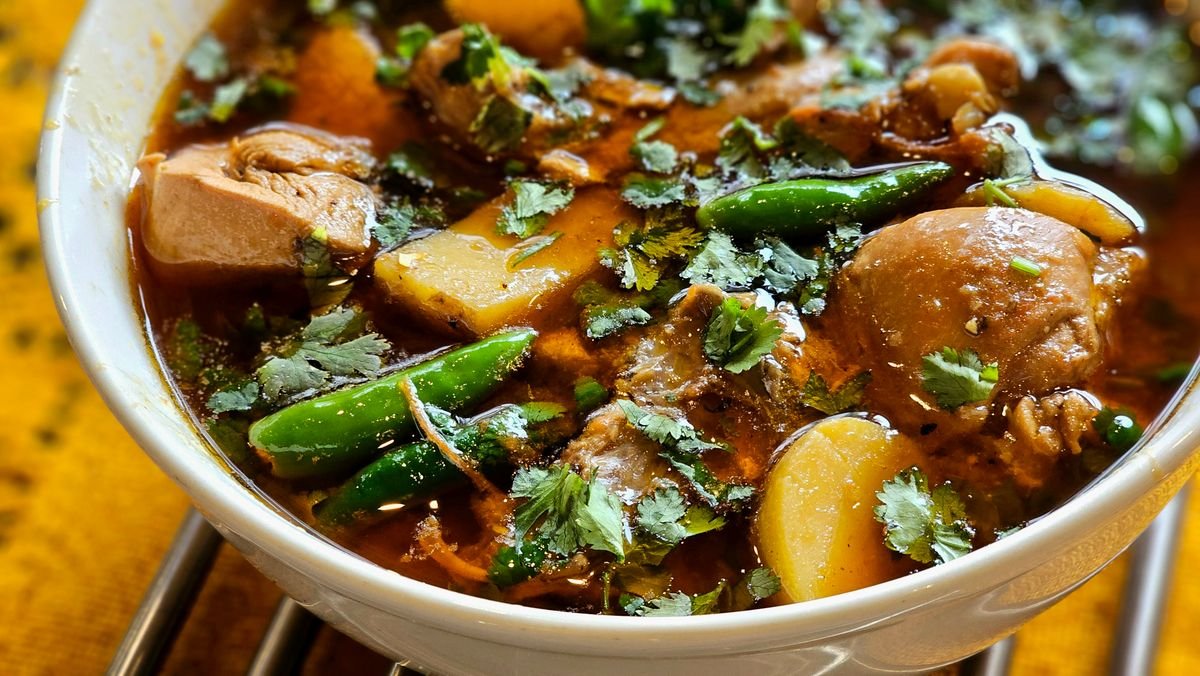
Chicken nihari is a slow-cooked stew where bone-in chicken simmers for hours in a rich, spiced gravy until the meat falls off the bone. The sauce turns silky and deep with ginger, garam masala and a whisper of wheat flour, finished with lemon, fresh coriander and slivers of ginger. Scoop it up with warm naan and you will understand why this dish has been a celebration breakfast for centuries.
The story behind Chicken Nihari
Nihari began in the kitchens of Mughal Delhi, where cooks slow-cooked meat overnight so it would be ready at dawn. The name comes from the Arabic word nahar, meaning morning, because the stew was eaten as a rich breakfast after the early prayers. When the royal courts moved to Lucknow and Hyderabad, the dish travelled with them, and each city shaped it in its own way. Beef and lamb were the classic meats, but chicken nihari became a beloved home version, quicker to cook and easier on the pocket, without losing any of the slow, deep flavour.
In desi homes, nihari is celebration food. It is cooked for Eid mornings, for wedding breakfasts and for weekends when the whole family is home. The pot goes on the stove early, the onions brown slowly, and the house fills with the smell of ginger, garam masala and ghee. Nobody hurries nihari — the long simmer is the point. When it is ready, the family gathers round with warm naan, and the first spoonful of gravy is always tasted straight from the pot, with a piece of bread torn off and dipped in.
What makes nihari special is the gravy. It is not a thin curry but a silky, clinging sauce, thickened with a little wheat flour and enriched by hours of gentle cooking. Bone-in chicken gives the sauce its body, as the bones release their flavour into the pot. The finish matters too: fresh ginger slivers, green chillies, coriander and lemon are added at the end, so their brightness cuts through the richness and every spoonful has both depth and lift.
Cook chicken nihari when you have an afternoon to spare and a table full of people to feed. It is a natural family feast, and it suits Nigerian tastes beautifully — turn the chillies up a little, keep the gravy generous and peppery, and serve it as a spicy one-pot centrepiece with plenty of warm naan for scooping. Make a double batch if you can, because the leftovers taste even better the next day, and a pot of nihari in the fridge is one of the best things a home cook can have waiting.
- Prep time
- 20 mins
- Cook time
- 1 hr 45 mins
- Total time
- 2 hrs 5 mins
- Servings
- 4 servings
- Calories
- 640
Ingredients
- 1 kg bone-in chicken pieces, skin removed
- 1 cup onions, finely sliced
- 1 tablespoon ginger-garlic paste
- 3 tablespoons nihari masala (or mixed ground spices)
- 1 teaspoon red chilli powder
- 1 teaspoon ground cumin
- 1 teaspoon ground coriander
- 2 tablespoons wheat flour, mixed with 4 tablespoons cold water
- 4 tablespoons ghee or oil
- 1 teaspoon salt
- 4 green chillies, slit lengthways
- 1 tablespoon fresh ginger, cut into thin slivers
Instructions
- Heat the ghee in a heavy, deep pot over medium heat and add the sliced onions. Cook them slowly for 10 to 12 minutes, stirring often, until they turn a deep golden brown and smell sweet and caramelised. This is the base of the whole dish, so do not rush it — pale onions give a pale, flat gravy, while well-browned onions give the nihari its colour and depth.
- Add the ginger-garlic paste and cook for 2 minutes until the raw smell disappears and the paste turns fragrant. You will hear the sizzle soften as the paste fries in the ghee. Stir in the nihari masala, red chilli powder, cumin and ground coriander, and cook for another minute until the spices darken slightly and the oil starts to separate at the edges of the pot.
- Add the chicken pieces and turn them in the spice mixture until every piece is coated and the meat starts to colour. Cook for 6 to 8 minutes, turning the pieces often, until the chicken is lightly browned on the outside. This searing step builds flavour into the gravy and helps the meat hold together during the long simmer.
- Pour in 4 cups of hot water and add the salt, scraping the bottom of the pot to lift up any browned bits. The liquid should just cover the chicken. Bring it to a gentle boil, then turn the heat down to the lowest setting, cover the pot and let it simmer. The surface should barely bubble — a hard boil will toughen the chicken and cloud the gravy.
- Simmer the nihari for 1 hour and 30 minutes, lifting the lid every 20 minutes to stir gently and check the water level. The chicken should be growing tender and the gravy deepening in colour. If the liquid drops too low, add half a cup of hot water. The kitchen will fill with the smell of slow-cooked spices, ginger and ghee.
- Stir the wheat flour slurry once more so it is smooth, then pour it into the pot in a slow stream while stirring all the time. The flour thickens the gravy and gives nihari its signature silky body. Turn the heat up slightly and simmer for another 15 minutes, stirring now and then, until the sauce coats the back of a spoon and leaves a clean line when you draw a finger through it.
- Add the slit green chillies and half the ginger slivers, then cook for 5 more minutes so the chillies soften slightly and their heat blooms into the gravy. Taste and adjust the salt — the gravy should be rich, warmly spiced and well seasoned, with the chicken so tender it nearly falls off the bone when you nudge it with a spoon.
- Take the pot off the heat and rest the nihari for 10 minutes with the lid on. This short rest lets the gravy settle and the flavours come together. Skim off any excess oil from the surface with a spoon if you like, though a little sheen of ghee on top is part of the dish and traditional.
- Serve the nihari in deep bowls, spooning plenty of gravy over each piece of chicken. Scatter the remaining ginger slivers, fresh coriander and lemon wedges over the top, and set out warm naan for tearing and scooping. Eat it slowly, while the gravy is still steaming and the spices are at their warmest.
Pro tips
- Brown the onions properly, right to a deep golden colour. This single step gives nihari its colour, its sweetness and its depth, and no amount of spice can make up for pale onions. Stir often, keep the heat at medium, and be patient — 10 to 12 minutes is normal.
- Keep the simmer low and slow for the full time. A gentle bubble is all you need, and a hard boil will toughen the chicken and make the gravy cloudy. Set a timer, lift the lid every 20 minutes to stir, and top up with hot water if the level drops too low.
- Mix the wheat flour with cold water before it goes anywhere near the pot. Flour stirred straight into hot gravy turns lumpy in seconds, while a smooth slurry poured in slowly blends in cleanly and gives you that silky, clinging sauce nihari is known for.
- Use bone-in chicken, even if it takes a little longer. The bones release flavour and body into the gravy as they simmer, and the meat stays juicier than boneless pieces. Thighs and drumsticks work best, as they can handle the long cooking without drying out.
- Add the fresh garnish only at the end. Ginger slivers, green chillies, coriander and lemon lose their brightness if they simmer for an hour, so stir them in during the last few minutes and scatter more over the top when you serve. That fresh lift is what balances the rich, slow-cooked gravy.
Variations & serving ideas
For the classic version, swap the chicken for beef shank or lamb and simmer for 3 to 4 hours until the meat is meltingly soft. The method stays the same, just longer. A lamb nihari is especially rich, and a little bone marrow stirred into the gravy at the end makes it deeply savoury. If you prefer a lighter stew, use chicken breast, but cut the simmering time to about an hour so it does not dry out.
You can adjust the heat to suit your table. For a milder nihari, use half the green chillies and leave out the red chilli powder. For a hotter pot, add an extra chilli or two and a pinch more chilli powder at the end, tasting as you go. A spoonful of yogurt stirred in at the finish softens the spice and adds a gentle tang that many families love.
Serve nihari with warm naan or khameeri roti, torn into pieces for scooping up the gravy. In Nigeria, make it a spicy one-pot family feast: set the pot in the middle of the table with a stack of naan, sliced onions and lemon wedges, and let everyone help themselves. Plain steamed rice works well too, especially if you like the gravy spooned over the top.
Pair nihari with a simple onion and tomato salad, a cool raita and a glass of lassi to balance the richness. A pot of masala chai afterwards is the traditional finish. Leftover gravy is never wasted — spoon it over rice, use it as a base for a quick stew, or warm it with a fried egg on top for a hearty breakfast the next morning.
Getting it right
The key technique is patience with the onions. They need a full 10 to 12 minutes over medium heat to reach a deep golden brown, and that colour becomes the colour of the whole gravy. Pale onions give a pale, thin-tasting nihari, while onions taken too far turn bitter. Stir them often, watch the edges of the pot, and pull them off the heat the moment they smell sweet and look the colour of light caramel.
Heat control during the simmer is the second skill. Nihari should barely bubble — a gentle, lazy simmer where a bubble breaks the surface every few seconds. A rolling boil toughens the chicken, clouds the gravy and drives off the delicate top notes of the spices. Keep the lid on, the heat low, and stir every 20 minutes so nothing catches on the bottom of the pot.
The most common mistakes are rushing the simmer, adding the flour too fast and overcooking the chicken. A short simmer gives thin gravy and tough meat, so give it the full time. Flour poured in too quickly makes lumps, so mix it smooth with cold water first and pour it in a slow stream while stirring. And if the chicken starts to fall apart completely, take it out, finish thickening the gravy, and return the pieces gently at the end.
Storing & reheating
Chicken nihari keeps in the fridge for up to 3 days in a sealed container, and it genuinely tastes better the next day once the spices have settled into the gravy. For longer storage, cool it completely and freeze it in portions for up to 2 months, leaving a little room in the container for the gravy to expand.
To reheat, warm the nihari gently over low heat with a splash of water, stirring now and then until it bubbles softly. Do not boil it hard, or the chicken will dry out and the gravy can split. Add the fresh garnish of ginger, coriander and lemon only after reheating, so it stays bright and crisp.
Frequently asked questions
Why is my nihari gravy too thin?
A thin gravy usually means the flour slurry was too weak or the stew did not simmer long enough. Mix 2 tablespoons of wheat flour with a little cold water, stir it in slowly, and simmer for another 15 minutes until the sauce coats the back of a spoon.
Can I use boneless chicken?
You can, but bone-in chicken gives a much richer gravy because the bones release flavour and body as they simmer. If you use boneless thigh, cut the cooking time to about an hour and add a little extra stock or water to keep the sauce generous.
Can I use a ready-made nihari masala?
Yes, a good store-bought nihari masala works well and saves time. Use about 3 tablespoons for this recipe, taste as you go, and add fresh ginger and green chillies at the end so the flavour still feels homemade and bright.
Can I make nihari the day before?
Nihari tastes even better the next day, so cook it ahead and keep it in the fridge for up to 3 days. Reheat it gently over low heat with a splash of water, and add the fresh garnish of ginger, coriander and lemon only when you serve it.
My nihari turned out too spicy — how do I fix it?
Stir in a spoonful of yogurt or a splash of cream to soften the heat, and serve it with plenty of naan and raita. Next time, hold back half the green chillies and add them at the end, so you can control the heat to taste.
What bread do I serve with nihari?
Warm naan or khameeri roti is the classic partner, torn into pieces to scoop up the gravy. Plain steamed rice works too, and a simple onion salad with lemon adds crunch and freshness against the rich sauce.