Chicken Bhuna Recipe
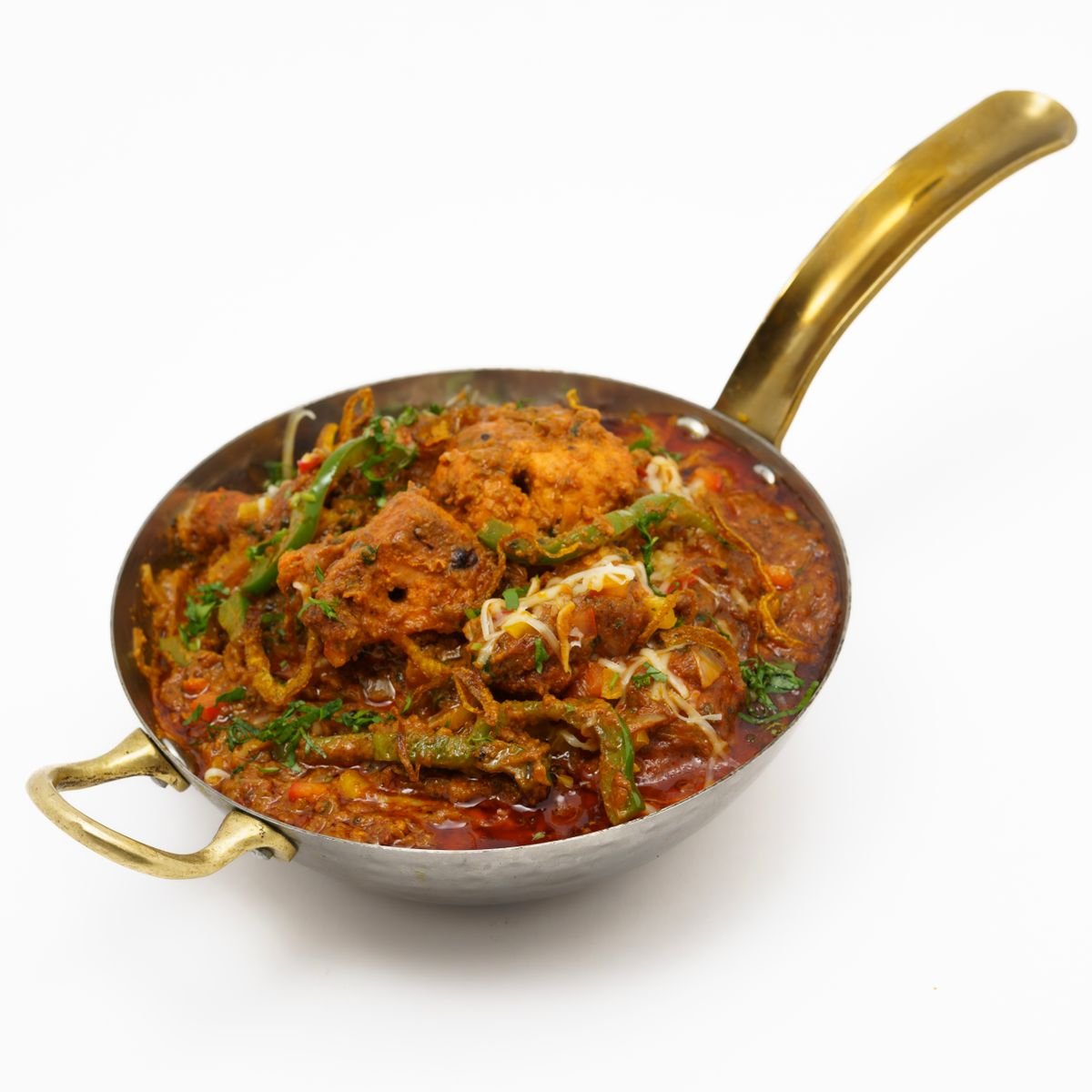
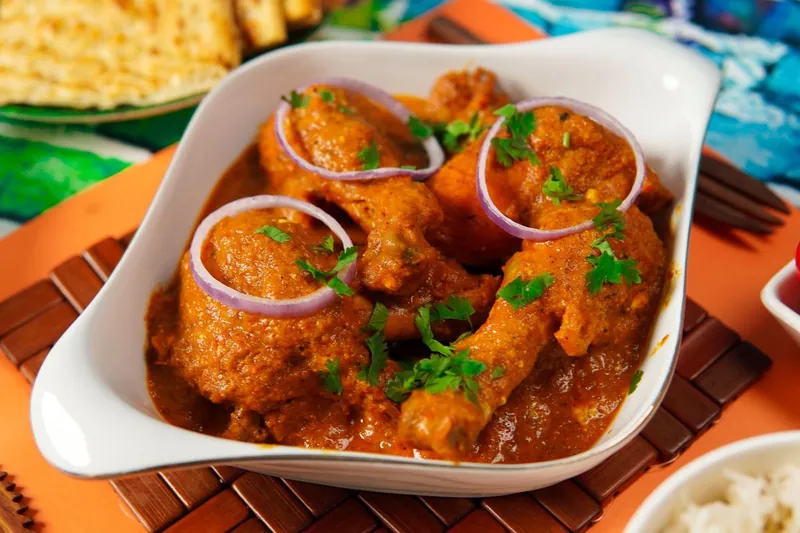
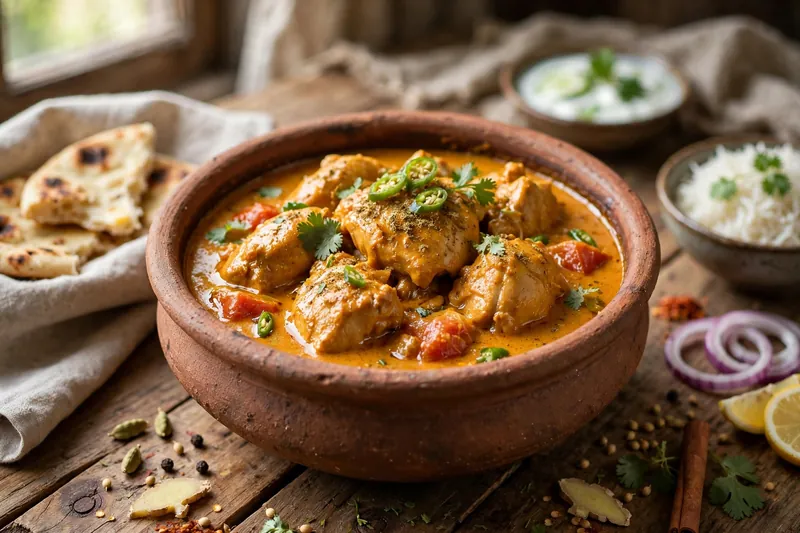
Chicken bhuna is a thick, bold Desi chicken curry with almost no runny gravy — the spiced masala is fried down until it clings to every piece of chicken like a rich paste. Tomatoes, onions and whole spices cook low and slow until the oil separates and the flavour turns deep and warm. It is hearty, punchy and made for scooping up with hot naan.
The story behind Chicken Bhuna
Bhuna means fried or roasted, and the name tells you exactly how this curry is made. Instead of simmering chicken in a thin, soupy gravy, the cook fries the onions, tomatoes and spices down until the mixture turns thick and dark, then fries the chicken in that masala until it is coated in flavour. The dish comes from the kitchens of Bengal and the wider Desi region, where cooks learned that a curry does not need a lot of liquid to taste rich — it needs time, heat and patience with the masala. The word itself comes from the Hindi and Urdu verb for frying, and it describes the cooking method rather than any single spice.
In Desi homes bhuna is a Friday or weekend dish, the one you make when there is time to stand at the stove and fry the masala properly. It shows up at family dinners and small gatherings, usually with hot naan or roti, because the thick masala is made for scooping. It is also a favourite in Desi restaurants and takeaways, where its bold, reduced flavour stands out next to lighter curries. It is the curry you make when there is time to stand at the stove and fry the masala properly, rather than rushing dinner.
What makes bhuna special is its intensity. Because there is so little liquid, every spoonful tastes concentrated — the sweetness of the browned onions, the warmth of the whole spices, the gentle heat of the chillies, all packed into a paste that clings to the chicken. The oil that separates at the end is not a flaw; it is the sign that the masala is properly cooked, and it carries the flavour of the spices into every bite.
Cook this curry when you want a Desi dinner with real punch. It suits a cold evening, a gathering of friends, or any night when plain chicken feels too plain. It also cooks well in a bigger batch — the masala only gets better as it sits — so make extra and enjoy it again the next day. Serve it with plenty of hot bread and let the masala do the talking.
- Prep time
- 20 mins
- Cook time
- 40 mins
- Total time
- 1 hr
- Servings
- 4 servings
- Calories
- 480
Ingredients
- 750 g chicken, bone-in pieces
- 3 medium onions, finely chopped
- 3 medium tomatoes, finely chopped
- 1 tablespoon ginger-garlic paste
- 3 green chillies, slit lengthwise
- 1 teaspoon cumin seeds
- 2 bay leaves
- 4 green cardamom pods
- 1 cinnamon stick, 5 cm
- 1 tablespoon Kashmiri red chilli powder
- 1 teaspoon turmeric powder
- 1 tablespoon ground coriander
- 1 teaspoon garam masala
- 4 tablespoons mustard oil or vegetable oil
Instructions
- Heat the oil in a heavy pot over medium heat until it shimmers, then add the cumin seeds, bay leaves, cardamom pods and cinnamon stick. Let them sizzle for 30 seconds until the kitchen smells warm and spiced and the cumin turns a shade darker. This quick bloom in hot oil wakes the spices up.
- Add the chopped onions with a pinch of salt and cook for 10 to 12 minutes, stirring often, until they turn soft and golden brown at the edges. You want real colour here — the browned onions are the backbone of the dish — so do not rush this step. The pan should smell sweet and toasty.
- Stir in the ginger-garlic paste and fry for 1 minute until the raw smell disappears. Add the tomatoes and green chillies, then cook for 6 to 8 minutes, pressing the tomatoes with the back of a spoon, until they break down into a thick, pulpy mass and the oil starts to show at the edges.
- Add the turmeric, red chilli powder and ground coriander with 2 tablespoons of water so the spices do not burn. Fry for 4 to 5 minutes, stirring constantly, until the masala turns deep red-brown and the oil separates around the edges.
- Add the chicken pieces and turn them over in the masala until every piece is coated. Cook on medium-high heat for 5 minutes, stirring now and then, until the chicken changes colour and the masala clings to it. You should hear a steady sizzle and see the masala darkening around the chicken.
- Turn the heat down to low, cover the pot, and cook for 20 minutes. Stir once halfway through and scrape the bottom of the pot so nothing sticks. The chicken will release its own juices, and the masala will loosen slightly, then tighten again as it cooks.
- Lift the lid and check the chicken — the juices should run clear when you pierce the thickest piece. The masala should be thick enough to coat the chicken with almost no free liquid in the pot. If it still looks wet, cook uncovered for 3 to 4 minutes until it tightens up.
- Stir in the garam masala and cook for 2 more minutes. Taste and adjust the salt — the flavours keep deepening as the curry rests. The dish should look dark, glossy and thick, with oil glistening at the edges.
- Rest the bhuna, covered, for 5 minutes, then spoon it into a warm bowl and scatter over the coriander leaves. Serve straight away with hot naan, roti or plain rice, and let people mop up every last bit of masala with the bread.
- Serve the bhuna in a wide, shallow bowl so the thick masala spreads out and everyone can see the glossy, dark-red coating on the chicken. A final drizzle of the separated oil over the top is traditional, and it carries the flavour of the spices into the last bite.
Pro tips
- Do not rush the onions. Bhuna stands or falls on a properly browned onion base, and that takes a full 10 to 12 minutes of patient stirring. Pale onions give a pale, thin-tasting curry.
- Fry the masala until the oil separates — this is the whole point of a bhuna. If the masala still looks wet and dull, keep frying. The separated oil is your sign that the spices are cooked and the raw taste is gone.
- Use bone-in chicken if you can. The bones give the masala a deeper flavour and the meat stays juicier through the long fry. Boneless thigh is the best substitute if you prefer it.
- Add the ground spices with a splash of water. Dry spice powder hits a hot pan and burns in seconds, turning bitter. A little water buys you time and lets the spices bloom instead of scorching.
- Scrape the bottom of the pot when you stir. The browned bits that stick there are pure flavour — loosen them with a wooden spoon and fold them back into the masala rather than letting them burn.
Variations & serving ideas
Swap the chicken for lamb and you get a gosht bhuna that needs a longer, slower cook — give it 45 to 50 minutes on low heat until the meat turns tender. Beef works the same way, and a pressure cooker can cut the time to about 20 minutes. For a meat-free version, use chickpeas or paneer; add them after the masala is fried and cook just long enough for them to soak up the flavour. A spoonful of yogurt stirred in at the very end softens the heat and gives the thick, dark masala a gentle, cooling tang.
Turn the heat up or down to suit your table. An extra green chilli or a pinch of chilli flakes lifts the warmth without changing the dish, while a spoonful of yogurt stirred in at the end softens it. Kashmiri chilli powder gives colour with mild heat, so if you want the deep red look without much fire, use it generously and go easy on the green chillies. If you prefer a milder bhuna, use Kashmiri chilli powder generously for its deep red colour and hold back the green chillies.
The dish is at its best with bread. Naan, roti or paratha all work, and the flaky layers of a paratha are especially good for scooping up the thick masala. Plain basmati rice is a fine partner too, and a simple salad of sliced onion, cucumber and lemon gives the plate a fresh, sharp contrast to the rich curry. A flaky paratha is especially good for scooping, and its crisp, buttery layers catch the thick masala better than plain bread.
For a full meal, pair bhuna with a cooling raita and a simple dal. The raita calms the heat and the dal adds a gentle, soupy note next to the thick, intense curry. A cold lassi or a glass of salted buttermilk is the traditional drink, and a pot of chai after the meal rounds off a proper Desi dinner. A simple salad of sliced onion, cucumber and lemon on the side adds the fresh, sharp crunch the rich, intense curry needs.
Getting it right
The key technique in bhuna is frying the masala until the oil separates, and it is worth learning to read the signs. After the tomatoes go in, the mixture looks wet and loose. As you fry it, the water cooks off, the colour deepens from orange-red to a dark red-brown, and the oil starts to glisten around the edges of the pan. That separation is your signal — the spices are cooked, the raw taste is gone, and the flavour is concentrated. A heavy pan holds its heat and lets the masala fry evenly, while a thin pan cools down and leaves the spices raw.
Heat control runs through the whole dish. The onions need medium heat and time to brown evenly; the spices need a lower heat and a splash of water so they bloom without burning; the chicken needs a hot start so it sears, then a low, covered simmer so it cooks through gently. If the masala starts to stick, turn the heat down and add a spoonful of water — never let it sit and scorch.
The most common mistakes are easy to fix. A thin, watery bhuna means the masala was not fried long enough — keep frying until the oil separates and the mixture holds its shape. A bitter taste means the ground spices burned; add the water with the spices next time and keep the pan moving. Chicken that turns dry means the pot cooked too hot or too long; keep the flame low, keep the lid on, and check at 20 minutes.
Storing & reheating
Chicken bhuna keeps in an airtight container in the fridge for up to 4 days, and the flavour deepens overnight as the spices settle into the chicken. Let it cool before you put the lid on, and store it in a shallow container so it cools quickly and evenly. A shallow container cools the curry quickly and evenly, which keeps it fresher for longer in the fridge.
You can freeze bhuna for up to 3 months — it freezes better than most curries because the masala is thick and there is little liquid to turn watery. Thaw it overnight in the fridge, then reheat gently in a covered pan over low heat with a splash of water. Stir in a pinch of garam masala at the end to freshen the flavour.
Frequently asked questions
What makes a bhuna different from other curries?
A bhuna has almost no runny gravy. The onions, tomatoes and spices are fried down into a thick paste that clings to the meat, giving a much more concentrated flavour than a curry with a thin, soupy sauce. The thick masala clings to the meat instead of pooling around it, so every bite tastes concentrated.
How do I know when the masala is properly fried?
Watch for the oil separating around the edges of the pan and the colour turning a deep red-brown. The masala should look glossy and hold its shape, and the raw smell of the spices should be gone. If the oil never appears, keep frying and add a splash of water now and then to stop the spices catching.
Can I make chicken bhuna with boneless chicken?
Yes, boneless thigh is the best choice — it stays juicy through the long fry. Reduce the covered cooking time to about 15 minutes and check that the juices run clear before serving. Bone-in pieces also stay juicier, and the bones give the masala a deeper, rounder flavour as it cooks.
Is chicken bhuna very spicy?
It is warm and bold rather than fiery. Kashmiri chilli powder gives it colour with mild heat, and you control the real heat with the green chillies — use two for a gentle version or four for more punch. Kashmiri chilli is mostly about colour, so the green chillies are where the real heat lives in this dish.
What oil should I use for bhuna?
Mustard oil is traditional in Bengal and adds a sharp, warm note, but you need to heat it until it just starts to smoke first. Vegetable oil or ghee work well if you prefer a milder base. Heat the mustard oil until it just begins to smoke, then let it cool slightly before the spices go in.
Can I make bhuna ahead of time?
Yes, it is one of the best curries to make ahead — the flavour deepens overnight. Make it a day early, keep it in the fridge, and reheat it gently with a splash of water before serving. Let it cool fully before refrigerating, and reheat it gently with a splash of water to loosen the masala.