Zha Jiang Mian Recipe
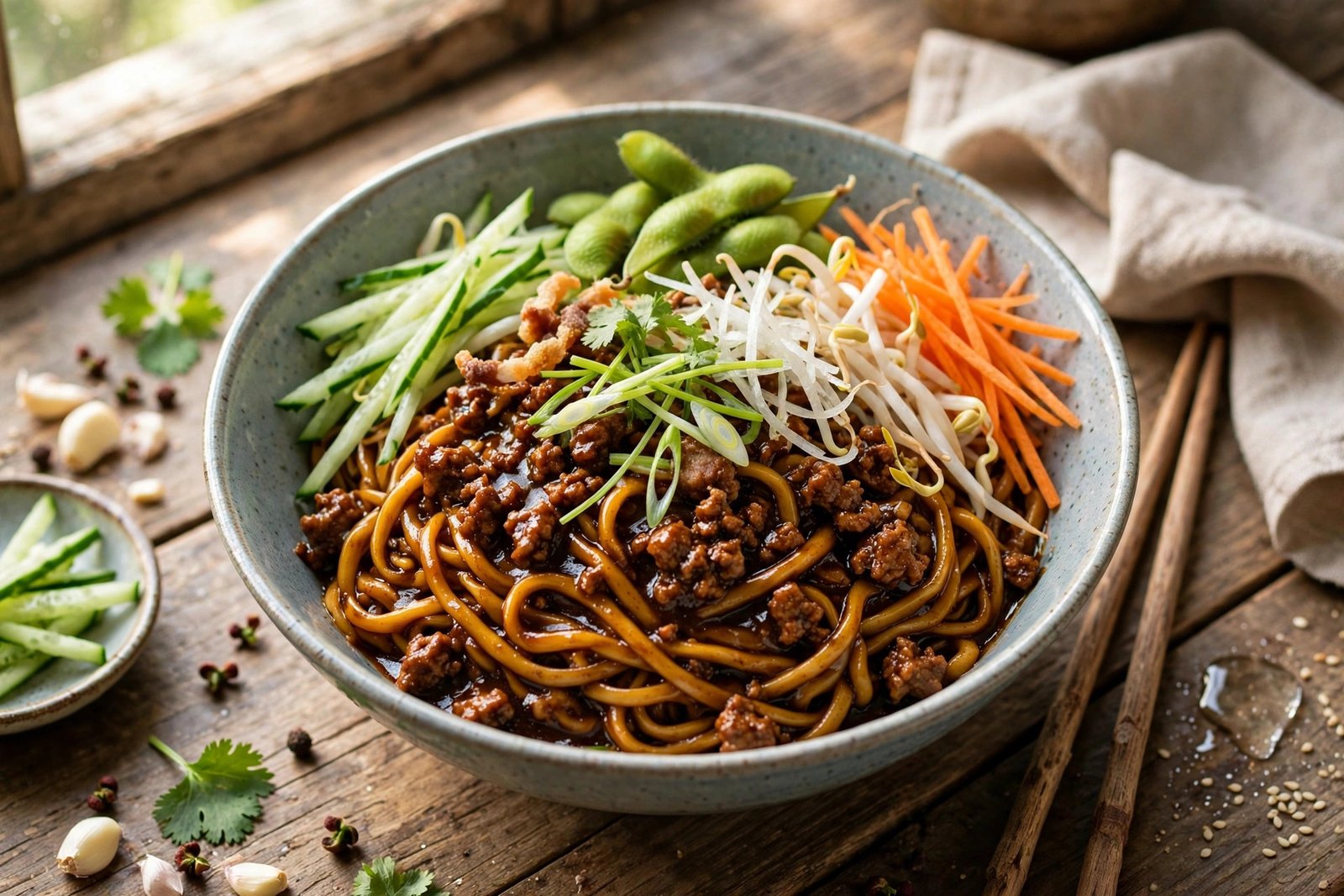
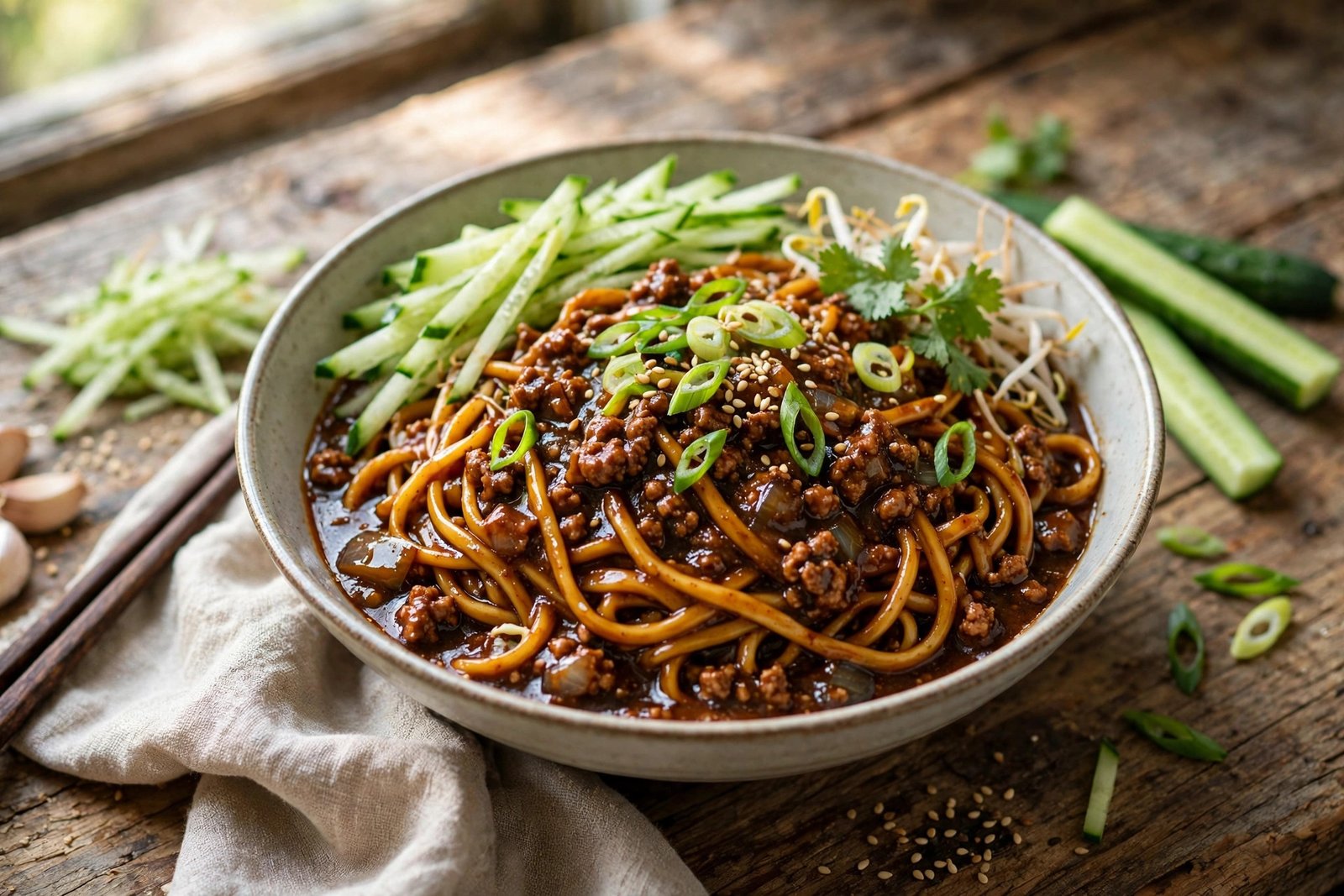
Zha jiang mian is a classic Chinese noodle dish of wheat noodles topped with a rich, savoury black bean and pork sauce and a colourful tangle of fresh vegetables. The sauce is deeply umami with a hint of sweetness, and the crisp vegetables balance it perfectly. It is a beloved weeknight bowl across northern China.
The story behind Zha Jiang Mian
In Beijing, zha jiang mian is not restaurant food. It is home food, the bowl that appears on the table when the week has been long and nobody wants a complicated dinner. The name says exactly what it is: zha means fried, jiang means sauce, mian means noodles. Fried-sauce noodles. Nothing fancy, nothing hidden. A dark, glossy sauce spooned over wheat noodles, with a pile of raw vegetables on top, and everyone at the table tossing their own bowl together.
The dish belongs to northern China, where wheat, not rice, is the staple grain. Hand-pulled or machine-cut wheat noodles are the base, and the sauce is the point of the whole thing. It is built on tian mian jiang, a sweet bean paste made from fermented wheat, fried in oil with minced pork until it turns almost black and shines. The flavour is deep and savoury with a gentle sweetness underneath, the kind of taste that makes you go back for a second bowl even when you planned not to.
What makes the bowl work is contrast. The sauce is hot, rich and salty-sweet. The noodles are soft and springy. And the toppings, called cai ma in Beijing, are cold, raw and crisp: cucumber, carrot, bean sprouts, spring onion, sometimes blanched green soybeans or shredded radish. You mix everything at the table, so every mouthful has a bit of all three. Skip the vegetables and you have a different dish, heavier and flatter. They are not decoration. They are half the recipe.
Every family has its own version. Some add a spoonful of yellow soybean paste for a saltier edge. Some use a little more sugar, some none at all. The Korean noodle dish jjajangmyeon grew out of this same bowl, carried to Incheon by Chinese cooks and adapted over the years with a sweeter black bean sauce. But the Beijing original stays close to its roots: a simple sauce, good noodles, and whatever fresh vegetables the season gives you. Cook it once and it tends to become a regular in the rotation, the way it has in northern Chinese homes for generations.
- Prep time
- 20 mins
- Cook time
- 30 mins
- Total time
- 50 mins
- Servings
- 4 servings
- Calories
- 580
Ingredients
- 300 g fresh wheat noodles
- 250 g minced pork
- 3 tbsp sweet bean paste (tian mian jiang)
- 1 tbsp soy sauce
- 1 tbsp Shaoxing wine
- 1 tsp sugar
- 2 tbsp vegetable oil
- 3 spring onions, finely chopped
- 1 tbsp grated ginger
- 2 garlic cloves, minced
- 1 cucumber, julienned
- 1 carrot, julienned
- 100 g bean sprouts
- 1 tbsp chilli oil, to serve
Instructions
- Get everything ready before the wok gets hot. Julienne the cucumber and carrot into thin matchsticks, rinse the bean sprouts, and finely chop the spring onions. Measure out the sweet bean paste, soy sauce, Shaoxing wine and sugar into small bowls. This dish moves fast once the cooking starts, and you do not want to be hunting for the soy sauce while the pork is burning.
- Heat the vegetable oil in a wok or large frying pan over medium-high heat until it shimmers. Add the grated ginger, minced garlic and half the spring onions. Stir-fry for about 30 seconds, just until the kitchen smells fragrant. Do not let the garlic brown, or it will turn bitter and the bitterness will follow the whole sauce.
- Add the minced pork and spread it out in the pan. Leave it alone for a minute so it can actually brown, then break it up with a spatula and keep cooking for about 5 minutes. You want golden, slightly crisped edges on the meat, not grey steamed pork. If the pan looks crowded and wet, turn the heat up and let the liquid cook off before you move on.
- Pour in the Shaoxing wine. It will hiss and bubble. Let it cook for 30 seconds until the sharp alcohol smell is gone. Now add the sweet bean paste, soy sauce and sugar. Stir everything together and keep frying for another minute. This is the zha step, frying the sauce, and it matters: the paste darkens, the oil starts to separate at the edges, and the raw fermented taste cooks into something deep and rounded.
- Turn the heat down low and let the sauce simmer gently for 10 to 12 minutes, stirring often. It should thicken slowly and turn a dark, glossy brown, almost black. If it starts to catch on the bottom, add a splash of water, a tablespoon at a time, and keep stirring. Taste it near the end: it should be savoury first, sweet second, with a long umami finish. Add a pinch more sugar only if it tastes harsh.
- While the sauce simmers, bring a large pot of water to a rolling boil. Cook the noodles according to the packet instructions, usually 3 to 4 minutes for fresh wheat noodles. Drain them, then rinse briefly under cold water to stop the cooking and wash off surface starch. This keeps the noodles springy and stops them clumping into a solid block in the bowl.
- Divide the noodles between four bowls. If you like, warm the bowls first with hot water and dry them, so the noodles do not go cold while you assemble. Spoon the sauce generously over each portion. Be generous here. A stingy spoonful of sauce makes a bland bowl, and this sauce is the reason the dish exists.
- Arrange the cucumber, carrot and bean sprouts on top of each bowl, and scatter over the remaining spring onions. The vegetables go on cold and raw, straight from the chopping board. That temperature contrast, hot noodles and sauce against cool crisp vegetables, is the whole pleasure of the dish, so do not warm them through.
- Serve immediately with chilli oil on the side. Everyone tosses their own bowl at the table, mixing the sauce through the noodles and vegetables until everything is coated. Taste and adjust: a little more soy sauce if it needs salt, a few drops of black vinegar if you want brightness, more chilli oil if you like heat.
Pro tips
- Sweet bean paste is the heart of this dish; do not substitute black bean sauce, which tastes quite different. Tian mian jiang is wheat-based, thick and sweet. Black bean sauce is saltier, chunkier and made from soybeans, and it will give you a different dish entirely.
- Brown the pork properly before adding anything wet. Grey, steamed mince makes a flat sauce. Golden, crisped edges make a rich one. If your pan is small, brown the pork in two batches rather than crowding it.
- Simmer the sauce slowly so it darkens and the flavours deepen. Rushing it on high heat will scorch the sugar in the paste and turn the sauce bitter. Low heat, patience, and a stir every minute or so is all it needs.
- Rinsing the noodles stops them sticking and keeps them springy. But rinse briefly, a few seconds under cold water is enough. Over-rinsing leaves them cold and wet, and the sauce will slide off instead of coating them.
- Prepare all the vegetables before you start cooking; the dish comes together fast. Cut them thin and even so they mix through the noodles properly. Thick chunks sit on top and never really become part of the bowl.
Variations & serving ideas
The easiest variation is vegetarian, and it works well because the sauce carries the dish. Swap the pork for 200 g of finely diced mushrooms, shiitake if you can get them, plus 150 g of firm tofu crumbled small. Fry the mushrooms first until they brown and give up their water, then add the tofu and treat it exactly like the pork. Check the sweet bean paste label, since most are vegetarian but some contain flavourings worth confirming.
Other proteins fit the same method. Minced chicken or turkey cook a little faster than pork, so watch them and pull the pan off the heat as soon as they brown, or they dry out. Minced beef gives a deeper, heavier sauce that suits a cold evening. A few cooks add a spoonful of finely diced lap cheong, Chinese sausage, along with the pork, which adds a sweet smoky note. Keep the sauce method the same in every case: brown the meat, fry the paste, simmer low.
The toppings are where you can cook with the seasons. In spring, add blanched edamame or shredded radish. In summer, cucumber and bean sprouts are at their best. In autumn, try blanched spinach or shredded cabbage. Pickled vegetables, a little pickled mustard green or kimchi on the side, cut through the richness nicely if you like that sharp-sour contrast. Whatever you choose, keep the vegetables raw or barely cooked and cut thin.
For serving, family style works as well as individual bowls: put the noodles in one big bowl, the sauce in another, and the vegetables in small piles around the table so everyone builds their own. If wheat noodles are hard to find, dried wheat noodles are fine, and spaghetti works in a pinch, though the texture is firmer. For heat, chilli oil is the classic, but a spoonful of chilli crisp with its crunchy bits is just as good, and a few drops of black vinegar wake the whole bowl up.
Getting it right
The one technique that defines this dish is frying the paste. Tian mian jiang straight from the jar tastes raw and one-dimensional. Fried in oil with the pork, it changes completely: the colour deepens, the oil separates and glistens at the edges, and the flavour turns round and savoury. You know it is ready when the sauce looks glossy and dark, almost black, and smells rich rather than sharp. That change takes a good minute of frying after the paste goes in, and then a slow simmer to finish. Skip it and the sauce will taste flat no matter what else you do.
Heat control is the second skill. The sauce has sugar in it, from the paste and from the teaspoon you add, and sugar burns fast. That is why the simmer stays low and the stirring stays regular. If the sauce starts to stick, do not scrape harder, add a splash of water and stir it through. The sauce should move like thick honey when you drag a spoon through it: it holds a line for a second, then slowly closes. Too thin and it slides off the noodles. Too thick and it clumps. A tablespoon of water either way fixes it.
The common mistakes are all easy to avoid once you know them. A watery sauce means the paste was never fried properly, or the simmer was too short, so give it the full 10 to 12 minutes. A bland bowl usually means too little sauce, not too little seasoning, so be generous with the spoon. Gluey noodles mean they were not rinsed, or they sat in the pot too long after draining, so rinse briefly and serve straight away. And a bitter sauce almost always means the garlic browned at the start or the sugar scorched, so keep the heat moderate in those first two minutes and the rest of the dish takes care of itself.
Storing & reheating
The sauce keeps far better than the finished bowl. Let it cool completely, then store it in a sealed container in the fridge for up to 4 days, or freeze it for up to 2 months. A thin layer of oil on top is normal and actually helps it keep. Freeze it in portions if you like, so you can defrost exactly one dinner's worth. Cooked noodles do not store well: they go soft and clump together, so always cook noodles fresh and keep them separate from the sauce.
To reheat, warm the sauce gently in a pan over low heat, adding a splash of water to loosen it back to its glossy thickness. It will look stiffer straight from the fridge, which is normal. Taste it after reheating and adjust with a drop of soy sauce if it needs salt. The vegetables should always be cut fresh on the day you serve, since cut cucumber and bean sprouts lose their crunch within hours in the fridge.
Frequently asked questions
What is zha jiang mian?
Zha jiang mian is a northern Chinese noodle dish of wheat noodles topped with a savoury sauce of fried sweet bean paste and minced pork, served with fresh julienned vegetables. The name means fried-sauce noodles. You toss everything together at the table before eating, so each mouthful has noodles, sauce and crisp vegetables.
What is the difference between sweet bean paste and black bean sauce?
Sweet bean paste, tian mian jiang, is made from fermented wheat. It is thick, dark, sweet and smooth. Black bean sauce is made from fermented soybeans, saltier and chunkier, with whole or half beans in it. They are not interchangeable here: black bean sauce will give you a saltier, rougher sauce that misses the sweet depth of the real dish.
Where do I find sweet bean paste?
Look for tian mian jiang in the sauce aisle of an Asian supermarket or online. It usually comes in a jar or tub and keeps for months in the fridge after opening. If your local shop does not carry it, online Asian grocers stock several brands, and one jar will make this dish many times over.
Can I make it vegetarian?
Yes, replace the pork with finely diced mushrooms and crumbled firm tofu, and use a vegetarian sweet bean paste. Fry the mushrooms until they brown properly before adding the tofu, so the sauce still gets its deep savoury base. The rest of the method stays exactly the same.
What noodles should I use?
Fresh wheat noodles are best, since their soft springy texture is the classic match for the sauce. Dried wheat noodles are a good second choice. Spaghetti works in a pinch, though it is firmer and less absorbent. Avoid rice noodles, which are too delicate and slippery for a sauce this thick.
Can I make the sauce ahead of time?
Yes, the sauce is ideal for making ahead. It keeps 4 days in the fridge and 2 months in the freezer, and many cooks say it tastes even better the next day as the flavours settle. Reheat it gently with a splash of water, cook fresh noodles, cut fresh vegetables, and dinner is ready in minutes.