Tofu Stir-Fry Recipe
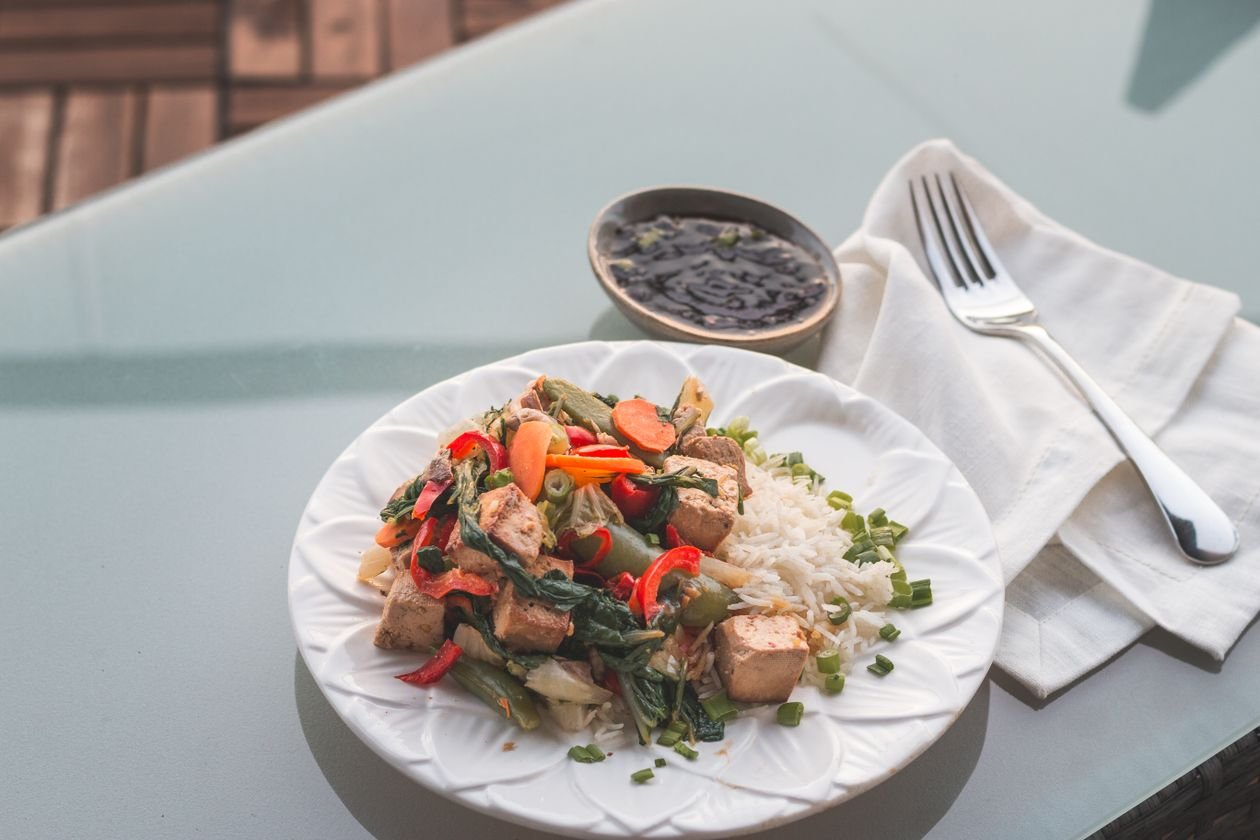
Golden, crisp-edged tofu tossed with crunchy vegetables in a glossy garlic and ginger sauce, this stir-fry comes together in about half an hour. It is the kind of weeknight cooking that rewards a hot wok and a little prep: everything chopped, sauce mixed, tofu pressed and ready. Serve it over steamed rice or noodles and dinner is done before the rice cooker clicks off.
The story behind Tofu Stir-Fry
Stir-frying is one of the oldest cooking methods in China, and tofu has been at its centre for centuries. Tofu first appeared in China around 2,000 years ago, made by curdling fresh soy milk, and it spread through Chinese kitchens because it was cheap, filling, and took on the flavour of whatever it cooked with. The stir-fry itself grew out of necessity: a hot wok, a little oil, and a short blast of heat turned a handful of vegetables and a block of tofu into dinner fast, using far less fuel than a long simmer. That same logic still makes it the go-to weeknight meal in homes across China today.
In Chinese home cooking, tofu is not a meat substitute; it is an ingredient in its own right, with its own place on the table. A family meal might pair a tofu stir-fry with a soup, a green vegetable, and rice, each dish balanced against the others. The tofu is valued for its soft centre and crisp edges, and for the way it soaks up a good sauce. Mapo tofu, braised tofu, and cold dressed tofu all show the same idea from different angles: tofu is a blank page, and the cook is the writer.
What makes a great tofu stir-fry is the contrast between the tofu and the vegetables. The tofu should be golden and crisp on the outside with a creamy, steaming centre, while the vegetables stay bright and just barely cooked, still snapping when you bite them. The sauce ties it together, a glossy coat of soy, garlic, and ginger that clings to every piece instead of pooling at the bottom of the bowl. Getting there depends on two things: pressing the tofu so it can crisp, and cooking over properly high heat in small batches.
Cook this on a busy evening when you want something fresh and fast, or as part of a larger spread for friends. It takes about 35 minutes from start to finish, and most of that is pressing the tofu and chopping. Once you have the rhythm of it, you can swap the vegetables for whatever is in the fridge, change the sauce, and still land a good dinner. That flexibility is the whole point of a stir-fry, and it is why the dish has lasted two thousand years.
- Prep time
- 20 mins
- Cook time
- 15 mins
- Total time
- 35 mins
- Servings
- 4 servings
- Calories
- 420
Ingredients
- 400 g extra-firm tofu, pressed and cut into 2 cm cubes
- 3 tablespoons vegetable oil
- 1 red pepper, deseeded and cut into strips
- 1 head broccoli, cut into small florets
- 2 carrots, peeled and sliced thinly on the diagonal
- 100 g sugar snap peas, trimmed
- 3 garlic cloves, finely chopped
- 1 tablespoon fresh ginger, grated
- 3 spring onions, cut into 3 cm pieces
- 3 tablespoons light soy sauce
- 1 tablespoon oyster sauce or mushroom sauce
- 1 tablespoon Shaoxing wine
- 1 teaspoon sesame oil
- 1 teaspoon sugar and 1 teaspoon cornflour mixed with 2 tablespoons water
Instructions
- Press the tofu first. Wrap the block in a clean tea towel, put it on a plate, and set a heavy pan or a few tins on top. Leave it for 20 minutes while you prep everything else. Cut the pressed tofu into 2 cm cubes and pat them dry with kitchen paper; dry cubes crisp, wet cubes steam.
- Mix the sauce in a small bowl: soy sauce, oyster sauce, Shaoxing wine, sesame oil, sugar, and the cornflour slurry. Stir it well and set it beside the stove. Having the sauce ready matters, because the cooking moves fast once the wok is hot and you will not have time to measure mid-stir-fry.
- Heat 2 tablespoons of the oil in a large wok or frying pan over high heat until it shimmers and a wisp of smoke appears. Add the tofu in a single layer, leaving space between the cubes. Fry for 2 minutes without moving them, then turn each piece and fry another 2 minutes until two or three sides are golden and crisp.
- Lift the tofu out onto a plate and set it aside. Add the last tablespoon of oil to the wok. Tip in the broccoli and carrots first, because they need the most time, and stir-fry for 2 minutes. You should hear a lively sizzle and see the broccoli turn a brighter green at the edges.
- Add the red pepper and sugar snap peas and stir-fry for another 2 minutes. The vegetables should still be firm and bright, not soft. Push everything to the sides of the wok and drop the garlic and ginger into the cleared centre. Fry for 30 seconds until the garlic smells sweet and fragrant, then toss everything together.
- Pour the sauce around the edges of the wok, not straight into the middle, so it hits the hot metal and thickens quickly. Stir everything for about 1 minute as the sauce turns glossy and coats the vegetables. It should cling rather than pool at the bottom of the wok.
- Return the tofu to the wok and toss gently for 1 minute, just long enough to coat the cubes and heat them through. Be gentle with the spatula here; the tofu is crisp on the outside and you do not want to break the pieces. Taste a piece of broccoli and add a splash of soy sauce if the seasoning needs lifting.
- Tip in the spring onions and give the wok one final toss. The residual heat will soften them slightly while they stay fresh and green. Take the wok off the heat right away, because the vegetables keep cooking in the hot pan and you want them to stay crisp.
- Serve the stir-fry straight from the wok over steamed jasmine rice or egg noodles. Spoon over any sauce left in the pan, and finish with a few drops of chilli oil or a sprinkle of toasted sesame seeds if you like a little heat or crunch.
Pro tips
- Press the tofu for a full 20 minutes, then pat the cubes dry. Dry tofu is the difference between golden and crisp, and pale and soggy.
- Get the wok properly hot before the tofu goes in. The oil should shimmer and send up a wisp of smoke; if it does not, wait another minute.
- Cook the tofu in a single layer with space between the cubes. If your pan is small, fry it in two batches rather than crowding it.
- Mix the sauce before you start cooking. A stir-fry moves too fast to measure soy sauce while the garlic is already in the pan.
- Add the spring onions last, off the heat. They only need the residual warmth to soften, and they stay bright green and fresh that way.
Variations & serving ideas
Swap the vegetables for whatever is in season or in your fridge. Mushrooms, baby corn, courgette, green beans, and pak choi all work well in this dish, and each one changes the texture a little. Add mushrooms early, with the broccoli, so they have time to brown. Add pak choi or spinach at the very end, with the spring onions, because leafy greens only need a minute to wilt. The sauce and the method stay the same, so the dish is endlessly flexible.
For a richer version, toss the pressed tofu in a tablespoon of cornflour before frying. The coating turns extra crisp and golden, and it helps the sauce cling even better. For a lighter version, skip the frying and add the tofu straight to the wok with the sauce, letting it simmer for 2 minutes until it is heated through and soaked with flavour. Both are good; the fried version is crunchier, the simmered version is silkier.
Serve this over steamed jasmine rice, egg noodles, or brown rice, and it is a complete meal on its own. For a bigger spread, add a simple cucumber salad and a bowl of egg drop soup, and you have a proper Chinese family dinner. The leftovers make a good lunch too: pack them over cold rice in a lunchbox, and they reheat well in the office microwave or a hot pan.
Pair the stir-fry with flavours that balance the salty, savoury sauce. A splash of rice vinegar or a squeeze of lime at the end brightens everything. Chilli oil, sriracha, or a few dried chilli flakes add heat for those who want it. A cold beer or a pot of green tea both sit happily alongside, and toasted sesame seeds or chopped peanuts on top add a final bit of crunch.
Getting it right
The key technique is pressing and drying the tofu. Tofu is mostly water, and water is the enemy of crisping. Pressing squeezes that water out, and patting the cubes dry finishes the job. When dry tofu hits hot oil, the surface sears and browns; when wet tofu hits hot oil, the water turns to steam and the surface stays pale and soft. Give the press a full 20 minutes, and do not rush the patting dry. It is the least glamorous step in the recipe and the most important one.
Heat control is the second skill. A stir-fry needs a genuinely hot wok: the oil should shimmer and just start to smoke before the tofu goes in. Cook the tofu in a single layer with space between the pieces, and do not move them until the underside has browned. Crowding the pan drops the temperature and turns frying into steaming. Cook the vegetables in order of how long they take, hardest first, and keep them moving so they cook evenly without burning.
The common mistakes are easy to spot. Tofu that falls apart usually went in unpressed or was stirred too roughly; let it sit still and turn it once. A watery sauce means the cornflour was not stirred in before pouring, or the wok was not hot enough to thicken it. Vegetables that go limp have cooked too long; pull them off the heat while they still look a touch underdone, because they keep cooking in the residual heat of the pan.
Storing & reheating
Leftover stir-fry keeps in the fridge for up to 3 days in a sealed container. The tofu softens a little and the vegetables lose their snap, but the flavour holds up well. Reheat it in a hot pan with a splash of water for 2 to 3 minutes, stirring often, until it is heated through. The microwave works in a pinch, though the texture is better from the pan.
This dish does not freeze well, because the vegetables turn limp and watery when thawed. If you need to cook ahead, freeze only the sauce and the pressed, cubed tofu separately, then stir-fry fresh vegetables on the day. Cooked rice freezes fine on its own, so you can still have most of dinner ready in the freezer without sacrificing the crunch.
Frequently asked questions
Do I really need to press the tofu?
Pressing removes water so the tofu can crisp instead of steam. Wrap the block in a clean towel, set a heavy pan on top, and leave it for 20 minutes. If you skip this step the cubes will stay soft and will fall apart in the wok.
Which tofu should I use for a stir-fry?
Extra-firm tofu holds its shape best and crisps up nicely. Firm tofu works too, but handle it gently. Silken or soft tofu will break apart in a stir-fry, so save those for soups, smoothies, and steamed dishes.
What is in the stir-fry sauce?
The sauce is soy sauce, oyster sauce (or a vegetarian mushroom sauce), Shaoxing wine, sesame oil, and a little sugar and cornflour. Mixed ahead of time, it goes in at the end and thickens into a glossy coat in under a minute. Taste and adjust the salt before you add it.
Can I make this vegan?
Yes, and it is an easy swap. The sauce is already the same; just use the vegetable oil in the wok instead of lard or chicken fat. Serve it over rice or noodles, and add a handful of roasted peanuts or cashews on top for extra richness.
Why is my tofu soggy instead of crisp?
The wok is probably not hot enough, or the pan was too crowded. Wait until the oil shimmers and just starts to smoke, then add the tofu in a single layer without touching the pieces. Give each side a full minute before you turn it.
How do I reheat leftovers?
Reheat it in a hot pan with a splash of water for 2 to 3 minutes, just until warmed through. The microwave works too, but the tofu will soften and the vegetables will lose their snap, so the pan is worth the extra minute.