Steamed Pork Buns Recipe
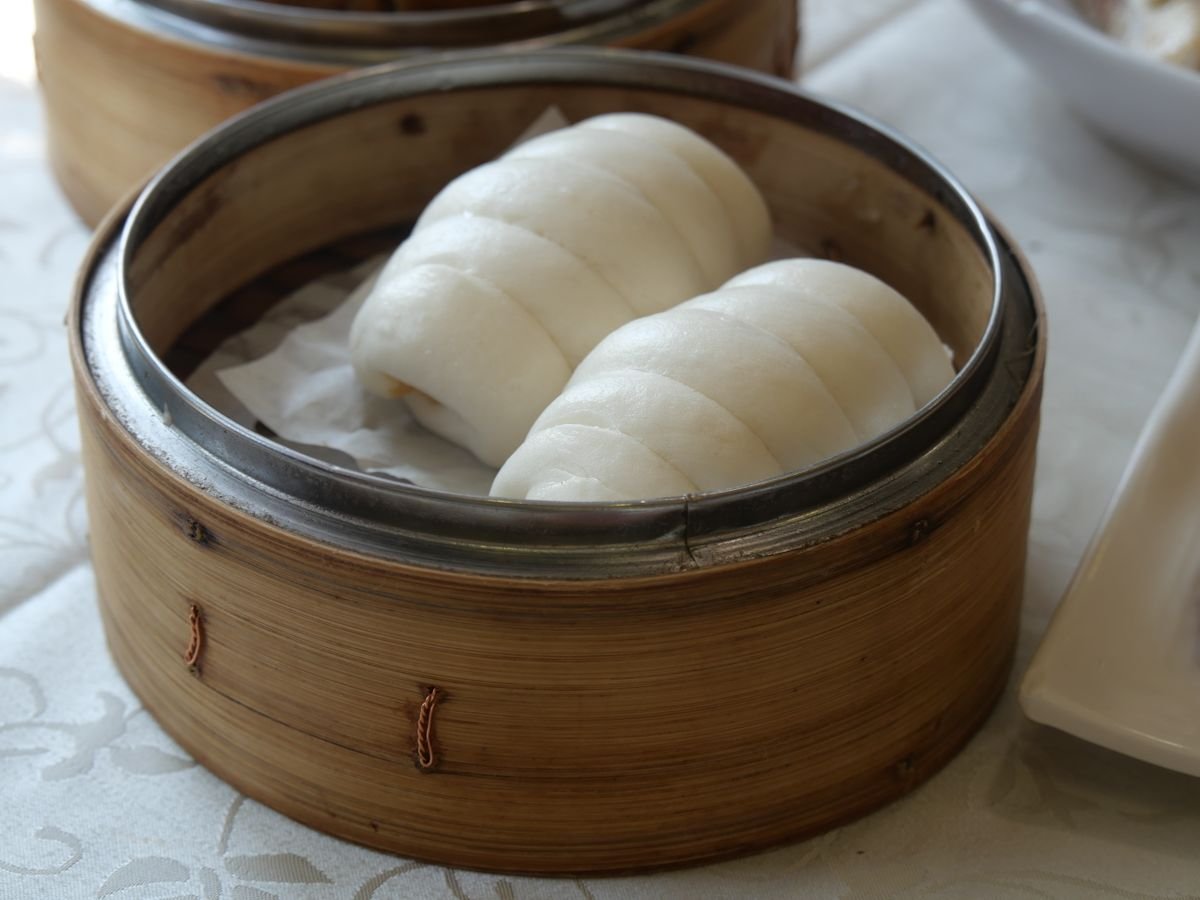
Steamed Pork Buns are pillowy, cloud-soft buns wrapped around savoury pork and a sticky-sweet glaze. The dough rises twice for a light, airy crumb, the filling stays juicy inside, and each bun comes out of the steamer pale, smooth and warm. Make a batch on a slow afternoon and freeze the extras. The dough is simple, the filling is quick, and the steamer does the rest while you set the table.
The story behind Steamed Pork Buns
Steamed buns have been part of Chinese cooking for centuries, and legend credits the military strategist Zhuge Liang with their invention during a campaign in the third century. Whatever their true origin, baozi became a staple across China: a yeasted wheat dough wrapped around a filling, cooked by steam so the outside stays pale, soft and slightly chewy. Pork is the classic filling, seasoned with soy, ginger and spring onion, and shaped into neat pleated rounds.
In China, steamed buns are everyday food as much as celebration food. Street vendors sell them from bamboo steamers in the early morning, families make them in large batches for the freezer, and dim sum restaurants serve smaller versions with delicate pleats. A bun is a complete little meal in itself, warm in the hand, juicy inside, and easy to carry, which is why they turn up at breakfast tables, lunch counters and festival gatherings alike.
What makes this version special is the dough. A little milk and a spoonful of sugar give it a soft, faintly sweet crumb, and a proper rest lets the yeast build the airy structure that makes a good bun feel like a cloud. The filling is juicy but not wet, so the dough stays intact, and the sticky glaze brushed on top gives each bun a gentle shine. When you break one open, the steam carries the smell of pork, ginger and soy straight up to your face.
Make them when you have a slow afternoon and want a project worth the time. They suit a weekend cooking session with family, a batch-cooking day for the freezer, or a party where guests can pick up a warm bun and eat it with their hands. The hands-on shaping is the fun part, and the smell of the steamer filling the kitchen is its own reward. Children love helping with the pleating, and even lopsided buns taste wonderful, so let everyone join in and enjoy the messy, hands-on fun of shaping dough. A bamboo steamer stacked in two layers lets you cook a whole batch at once, which is handy when you are making buns for a crowd.
- Prep time
- 45 mins
- Cook time
- 20 mins
- Total time
- 1 hr 5 mins
- Servings
- 8 buns
- Calories
- 320
Ingredients
- 400 g plain flour, plus extra for dusting
- 7 g fast-action dried yeast
- 2 tablespoons caster sugar
- 180 ml warm milk
- 1 tablespoon vegetable oil
- 300 g pork mince
- 3 spring onions, finely chopped
- 1 tablespoon soy sauce
- 1 tablespoon oyster sauce
- 1 teaspoon fresh ginger, grated
- 1 teaspoon sesame oil
- 1/2 teaspoon five-spice powder
- 1 tablespoon honey
- 1 teaspoon rice vinegar
Instructions
- Whisk the flour, yeast and sugar in a large bowl, then pour in the warm milk and the vegetable oil. Stir until a shaggy dough forms, then knead on a floured surface for 8 to 10 minutes until it feels smooth, soft and slightly springy. The dough should bounce back slowly when you press it with a fingertip.
- Place the dough in a lightly oiled bowl, cover it with a damp cloth, and leave it in a warm spot for 1 hour until it has doubled in size. You should see it puff up and feel it light and airy when you press it. While it rises, mix the filling and leave it in the fridge.
- Make the filling by mixing the pork mince, spring onions, soy sauce, oyster sauce, ginger, sesame oil and five-spice powder in a bowl. Stir in one direction for about 2 minutes until the mixture looks sticky and slightly stringy, which helps the filling hold together and stay juicy inside the bun.
- Knock the risen dough back gently and divide it into 8 equal pieces, about 75 g each. Roll each piece into a ball, then flatten it with a rolling pin into a circle about 10 cm across, keeping the centre a little thicker than the edges. Thick centres stop the filling from bursting through the base.
- Spoon about 2 tablespoons of filling into the centre of each circle. Gather the edges up and around the filling, pleating as you go, then twist the top closed and pinch it firmly. Set each bun seam-side down on a small square of baking paper, and repeat with the rest.
- Cover the shaped buns with a damp cloth and leave them to rise for 20 minutes until they look puffy and feel light when you lift one. Meanwhile, bring a large pot of water to a boil and line a bamboo or metal steamer with baking paper, leaving gaps around the edges for the steam to rise.
- Place the buns in the steamer with space between them, since they will swell as they cook. Steam over medium-high heat for 15 minutes without lifting the lid, because a sudden rush of cold air can make the buns wrinkle and collapse. The buns should look smooth, white and puffed when done.
- Mix the honey and rice vinegar, then brush it lightly over the hot buns for a gentle shine. Let them rest for 2 minutes before serving, so the filling settles and the first bite does not burn your mouth. Serve warm, with extra soy sauce or chilli oil on the side. Set the steamer basket in the middle of the table and let everyone take a hot bun straight from it.
Pro tips
- Use warm milk, not hot, because milk above 45 C kills the yeast and the dough will never rise; it should feel comfortable on your wrist. Test it with your wrist, as you would a baby's bottle, and you will get it right.
- Knead until the dough is truly smooth, since under-kneaded dough makes dense, heavy buns instead of the soft, airy crumb you want. The dough is ready when it feels like a soft earlobe and springs back slowly.
- Keep the filling cold until shaping, because warm mince softens the dough and makes the buns hard to seal and prone to leaking. Mix the filling the night before and keep it chilled, so shaping day goes faster.
- Leave gaps between buns in the steamer, since they expand by about a third and will stick together if they touch while cooking.
- Never lift the steamer lid during cooking, because the sudden drop in temperature and steam can collapse the buns and wrinkle their tops. If your kitchen is cold, let the dough rise inside the oven with just the light on, which gives it a warm, draught-free spot.
Variations & serving ideas
You can swap the pork mince for chicken mince, which cooks a little faster and tastes lighter, or for a mix of finely chopped mushrooms, cabbage and tofu for a vegetarian bun. Add a little more soy sauce and a pinch of sugar to the vegetarian filling, since mushrooms need extra seasoning to taste as savoury as pork. A few cooked shrimp chopped into the pork filling add a lovely sweetness.
Change the flavour by adding a teaspoon of hoisin sauce to the filling for sweetness, or a little chilli crisp for heat. Some cooks add a spoonful of finely diced water chestnuts for crunch, or a few shreds of pickled mustard greens for a sharp contrast. The dough stays the same whatever filling you choose, so the recipe is easy to adapt.
Serve the buns hot from the steamer with black vinegar, chilli oil and soy sauce for dipping. They make a full meal with a bowl of soup or a simple cucumber salad on the side, and they work as party food too, since guests can eat them with their hands. A pot of hot tea is the natural drink alongside.
They pair well with jasmine tea, which cleanses the palate between rich bites, or with a cold lager if you are serving them at a gathering. The soft, mild dough suits drinks that are light and refreshing, so avoid anything too sweet or heavy that would fight the gentle flavour of the bun. For a party, make mini buns half the size and steam them for 10 minutes, so guests can try several fillings at once. A little grated carrot or chopped water chestnut in the pork adds sweetness and crunch that children tend to love. A sweet version uses the same dough with a filling of red bean paste or lotus seed paste, which turns the buns into a dessert for special occasions. For a savoury twist, add a spoonful of chopped pickled vegetables to the pork filling, since their sharpness cuts through the richness and keeps each bite interesting. Children enjoy shaping mini buns with a single shrimp inside, which makes a fun party snack.
Getting it right
The key technique is the pleat and seal. Roll the dough thin at the edges and thick in the middle, place the filling in the centre, and gather the edges up in small folds, pinching each one as you go. The twist at the top closes the bun, and setting it seam-side down hides any unevenness while the second rise smooths the surface. A good seal matters, because a gap lets the filling juices escape and soak the dough from inside.
Heat control is gentle here, which is unusual after all that kneading. The steamer should be over medium-high heat with a steady flow of steam, not a violent boil that splashes water onto the buns. If the water boils too hard, the buns can get wet spots on top. Keep the lid on for the full cooking time and turn the heat off before lifting it, letting the steam settle for a minute first.
The most common mistake is under-proofing the shaped buns, which leaves them dense and small. If they have not puffed up after 20 minutes, give them another 10 in a warm spot. Another mistake is overfilling, which sounds generous but makes sealing impossible and leads to burst buns. Two tablespoons of filling is plenty. If a bun does burst, it will still taste good, so serve it anyway and fill the next one a little less. If the dough feels sticky, dust your hands with flour rather than adding more to the bowl, since extra flour in the dough makes the buns heavy.
Storing & reheating
Store cooled buns in a sealed container in the fridge for up to 3 days, with baking paper between layers so they do not stick together. They will firm up as they chill, but a quick steam brings them back to soft and fluffy. Do not leave them uncovered, or the tops will dry out and crack.
Freeze the buns for up to 3 months in a sealed bag with paper between layers, once they are completely cool. Thaw them in the fridge overnight, or steam them straight from frozen for about 20 minutes. Reheat fridge buns by steaming for 5 minutes, or microwave one bun on a damp paper towel for 40 seconds. Steaming gives the best texture, keeping the dough soft instead of chewy.
Frequently asked questions
Why did my steamed buns collapse after cooking?
The usual cause is lifting the lid too soon, which lets cold air rush in and deflates the dough. Keep the lid on for the full 15 minutes, turn off the heat, and wait a minute before opening. Under-proofing can also cause collapse.
Can I make steamed pork buns ahead of time?
Yes. Shape the buns and refrigerate them on a tray for up to 8 hours, then let them come to room temperature for 20 minutes before steaming. Cooked buns freeze well for up to 3 months and reheat beautifully in a steamer.
What flour is best for steamed buns?
Plain flour gives a soft, slightly chewy bun that most home cooks love. For an extra-white, extra-soft result, use low-protein cake flour or a mix of half plain and half cake flour, though the buns will be a little more delicate to handle.
Do I need a bamboo steamer for pork buns?
No. A metal steamer basket, a colander set over a pot, or even a heatproof plate on a rack inside a large pot will work. Line whatever you use with baking paper or cabbage leaves so the buns do not stick to the surface.
Why are my buns yellow instead of white?
A little colour is normal with plain flour and a honey glaze, and it does not affect the taste. Very yellow buns can come from old flour or too much sugar in the dough. For whiter buns, use fresh low-protein flour and skip the honey glaze.
Can I bake steamed pork buns instead?
You can, and they become a different but tasty thing, closer to a baked char siu bun. Brush the tops with egg wash and bake at 180 C for 18 to 20 minutes until golden. The texture will be firmer and bread-like rather than soft and steamed.