Chinese Steamed Fish Recipe
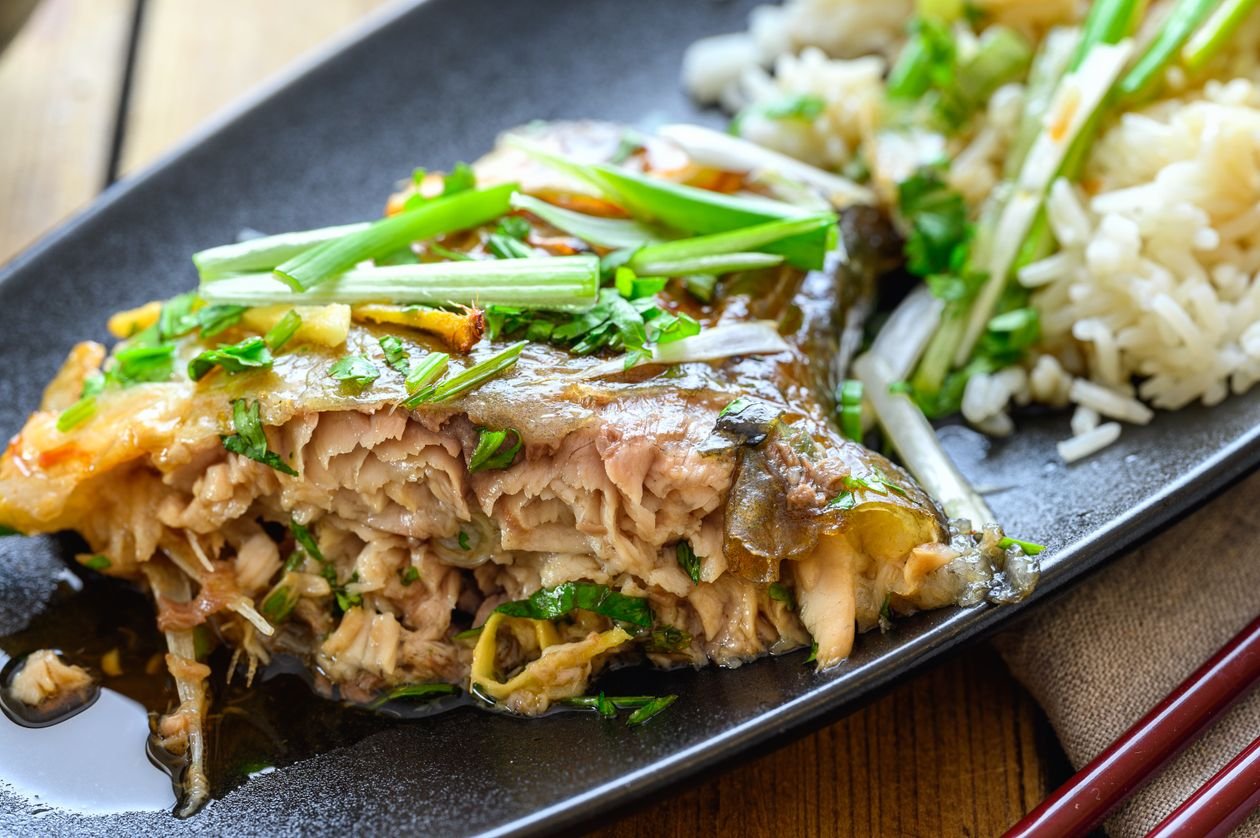
Chinese Steamed Fish is a whole fish gently steamed with ginger and spring onion, then finished with a sizzling pour of hot oil and soy sauce. The flesh turns silky and sweet, the ginger cuts any fishiness, and the hot oil makes the aromatics crackle and bloom. Serve it with steamed rice and let everyone pick at the fish together.
The story behind Chinese Steamed Fish
Steamed fish is one of the oldest dishes in Cantonese cooking, and it shows what Chinese cooks value most: the natural flavour of a good ingredient, treated with a light hand. A whole fish is steamed for just a few minutes with ginger and spring onion, then finished with soy sauce and hot oil. There is nowhere to hide a tired fish or a heavy hand, which is why the dish is also a test of a cook's skill.
The dish carries a special meaning at Chinese New Year, when the word for fish, yu, sounds like the word for abundance. Families serve a whole fish with its head and tail intact, as a wish for a good year from start to finish. The fish is placed in the middle of the table, and everyone picks at it together, turning it over only when one side is finished. The head and tail are left on as a wish for a good year from start to finish, and the fish is turned over only when one side has been eaten clean.
What makes Chinese Steamed Fish special is its texture. Done right, the flesh is silky and sweet, falling away from the bone in soft flakes. The ginger keeps the flavour clean, the soy sauce adds a savoury depth, and the hot oil poured over the spring onions at the end makes the whole dish smell wonderful. It is light enough to eat every day, yet grand enough for a celebration.
Cook this when you find a truly fresh fish and want to show it off without fuss. The recipe takes about half an hour from start to finish, and most of that is waiting for the fish to steam. Serve it with jasmine rice and a green vegetable, and let the fish sit in the middle of the table where everyone can reach it. The recipe is a good one to learn by heart, since it works with almost any white fish and needs no special equipment beyond a pot and a rack.
- Prep time
- 15 mins
- Cook time
- 12 mins
- Total time
- 27 mins
- Servings
- 4 servings
- Calories
- 280
Ingredients
- 1 whole sea bass or snapper (about 650 g), cleaned and scaled
- 2 tablespoons Shaoxing wine
- 1/2 teaspoon salt
- 1 tablespoon fresh ginger, cut into thin matchsticks
- 3 spring onions, cut into 5 cm lengths
- 1 small red chili, deseeded and thinly sliced
- 2 tablespoons light soy sauce
- 1 teaspoon sugar
- 2 tablespoons vegetable oil or peanut oil
- 1 teaspoon sesame oil
- 1 tablespoon fresh coriander leaves
- 1/2 teaspoon white pepper
Instructions
- Rinse the fish inside and out under cold running water and pat it dry with kitchen paper. Score three diagonal cuts on each side, about 1 cm deep, so the heat reaches the thickest part of the flesh. Rub the fish inside and out with the Shaoxing wine and salt, then leave it for 10 minutes while you prepare the steamer.
- Bring a large pot of water to a fierce, rolling boil. Set a steamer rack or an upturned bowl inside the pot, and place the fish on a heatproof plate that fits inside with room for the steam to circulate. The water should sit below the plate, not touch it. If you have no steamer rack, use a small upturned bowl or a ramekin to lift the plate above the water.
- Scatter half the ginger and half the spring onions over the base of the plate, then lay the fish on top. Put the remaining ginger and spring onions over the fish. The aromatics underneath lift the fish off the plate and let the steam flow around it, which keeps the flavour clean.
- Place the plate in the steamer, cover with a tight lid, and steam over high heat for 10 to 12 minutes. Do not lift the lid to peek, since the steam escaping will drop the temperature and the fish will cook unevenly. Listen for a steady hiss and watch for steam curling from the edges of the lid.
- Test the fish by pressing the thickest part with a fork. The flesh should flake easily and look opaque all the way through. If it still looks glassy near the bone, give it another two minutes. Take the plate out carefully with oven gloves, since the plate will be very hot. The eyes should look white and opaque, another sign that the heat has reached right through the fish.
- Tip away the cloudy liquid that has collected on the plate. This liquid carries the strong fishy taste, and getting rid of it is the step that keeps the dish tasting sweet and clean. Wipe the rim of the plate with kitchen paper if any liquid has splashed over it.
- Arrange the fresh spring onions, red chili and coriander over the fish. Mix the light soy sauce with the sugar in a small bowl, then drizzle it evenly over the fish. The soy will run into the crevices and mix with the fish juices to make a light, savoury sauce.
- Heat the vegetable oil in a small pan until it just starts to smoke, about 180 C. Pour it slowly over the spring onions and chili in a thin stream. You will hear a sharp sizzle and the aromatics will wilt and release their fragrance at once. That sound is the dish coming together.
- Drizzle the sesame oil over the top and sprinkle with white pepper. Serve the fish immediately, while it is still steaming, with a bowl of rice and a serving spoon so everyone can help themselves to the flesh.
Pro tips
- Buy the freshest fish you can find. Clear eyes, bright red gills and flesh that springs back when pressed are the signs to look for.
- Score the fish on both sides so the heat reaches the thickest part. Without the cuts, the belly cooks through while the back is still raw near the bone. Shallow cuts are enough; cut too deep and the fish will fall apart when you lift it from the plate.
- Use a plate with a rim so the juices collect, and a plate that fits your steamer with room for the steam to circulate. A plate that touches the sides will trap the steam and cook the fish unevenly.
- Heat the oil until it just starts to smoke. If it is not hot enough, the spring onions will not sizzle, and the dish will miss its best moment.
- Serve the fish the moment it is dressed. Steamed fish cools fast, and the hot oil finish loses its magic if the plate sits around for ten minutes.
Variations & serving ideas
For a richer version, add a handful of sliced shiitake mushrooms to the plate before steaming. The mushrooms soak up the fish juices and turn soft and savoury, and they make the dish feel more substantial. A few slices of Chinese sausage laid over the fish also work, adding a sweet, smoky note as they steam. The mushrooms also make the dish look more generous on the table, which matters when the fish is the centrepiece.
If you prefer fillets, use four sea bass or cod fillets of about 150 g each. They need only 6 to 8 minutes in the steamer, and the rest of the recipe stays the same. Fillets are easier for guests who do not like picking around bones, though you lose the drama of presenting a whole fish.
Change the aromatics to suit the season. In summer, add a few slices of lime and some torn basil to the plate. In winter, use more ginger and a dried red chili for warmth. A splash of black bean sauce over the fish before steaming gives a saltier, earthier flavour that suits stronger fish such as mackerel.
Serve Chinese Steamed Fish with steamed jasmine rice and a simple green vegetable such as bok choy or gai lan stir-fried with garlic. A clear soup to start and fresh fruit to finish keeps the meal light. A pot of hot jasmine tea on the table is the classic companion.
Getting it right
The steamer must be at a full, rolling boil before the fish goes in. Gentle steam cooks the fish slowly and leaves it soggy, while fierce steam cooks it fast and keeps the flesh firm and sweet. Put the pot on high heat a few minutes before you are ready, and do not lift the lid once the fish is in, since the escaping steam will drop the temperature and spoil the timing. Keep a kettle of boiling water nearby so you can top up the pot without dropping the temperature if the water runs low.
Timing is everything with this dish. A 650 g fish needs about 10 to 12 minutes, and two minutes too long will dry it out. Check the thickest part with a fork: the flesh should flake and look opaque right down to the bone. If you are unsure, take the fish out a minute early and let it rest; the heat left in the flesh will finish the job.
The most common mistake is leaving the steaming liquid on the plate. That cloudy liquid carries the strong, fishy taste that puts people off steamed fish, so always tip it away before you add the soy sauce and garnish. The second mistake is pouring oil that is not hot enough. The oil must be smoking so it sizzles the spring onions on contact; lukewarm oil just makes the dish greasy.
Storing & reheating
Steamed fish is best eaten fresh, but leftovers keep in a sealed container in the fridge for up to one day. Reheat them gently by steaming for 3 to 4 minutes, or warm them in a covered pan with a splash of water. Do not microwave the fish on high, since it will dry out and turn rubbery.
Freezing is not a good idea for steamed fish. The flesh turns soft and watery on thawing, and the fresh ginger and spring onion garnish lose all their colour and crunch. If you have leftover fish, flake the flesh and stir it through fried rice or a noodle soup the next day instead.
Frequently asked questions
What fish is best for Chinese steamed fish?
Sea bass, snapper, tilapia or grouper are all excellent, since their flesh is sweet and holds up to steaming. Look for a fish of about 600 to 700 g with clear eyes and bright red gills. Fillets work too, but a whole fish looks better and stays juicier.
How long should I steam a whole fish?
A whole fish of about 600 g needs 10 to 12 minutes over fiercely boiling water. The flesh at the thickest part should turn opaque and flake easily with a fork. If the fish is larger, add two minutes per extra 100 g, and rest it for one minute after steaming.
How do I stop steamed fish tasting fishy?
Ginger is the key. A good amount of sliced ginger under and over the fish keeps the flavour clean and fresh. Fresh fish helps too, so buy from a fishmonger you trust and cook the fish the same day you buy it.
Can I use a bamboo steamer for this dish?
Yes, as long as the fish lies flat and the lid closes. Use a wide, shallow plate so the steam circulates freely. If the fish is too big for the steamer, score it and fold the tail, or use a wok with a rack and a large domed lid instead.
When do I add the soy sauce?
The soy sauce goes on after steaming, never before. Pour it over the fish with the hot oil, and it will mix with the natural juices to make a light, savoury sauce. Light soy sauce is best; dark soy sauce is too thick and salty for this dish.
What should I serve with Chinese steamed fish?
Steamed jasmine rice is the classic partner, with a simple stir-fried green vegetable such as bok choy or gai lan on the side. The fish is the centrepiece of the meal, so keep everything else simple and let it shine.