Chinese Broccoli with Garlic Recipe
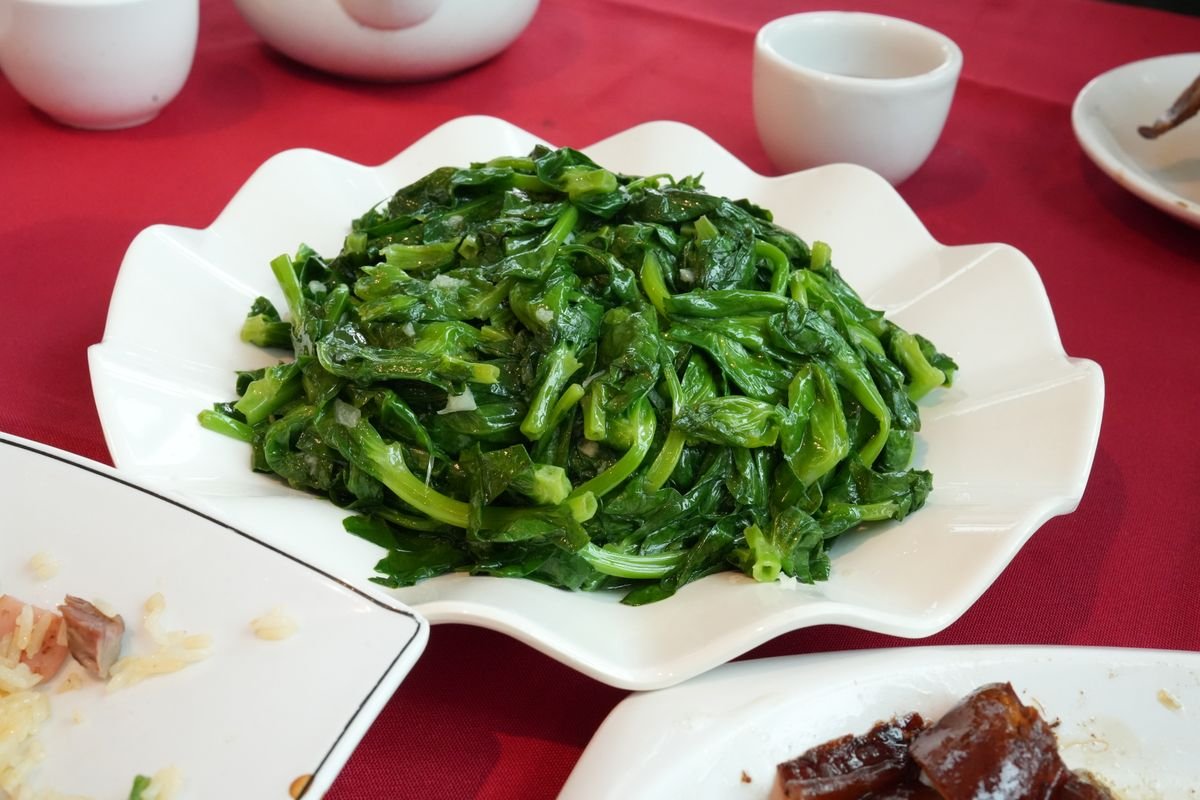
Chinese broccoli, or gai lan, is one of the great quick side dishes of Cantonese cooking. Thick stems and dark green leaves are blanched until just tender, then tossed in a hot wok with garlic, soy and oyster sauce. The result is fresh, lightly bitter, garlicky and glossy, and it takes about twenty minutes from start to finish. Serve it with steamed rice and your favourite main, and let its fresh green flavour brighten the whole table.
The story behind Chinese Broccoli with Garlic
Gai lan has been grown in southern China for centuries, and its name means mustard orchid, a nod to its small white flowers and its kinship with mustard greens. It is a staple of Cantonese cooking, where vegetables are treated with as much respect as meat or fish. In Guangdong, gai lan appears at almost every family meal, valued for its firm stems, its mild bitterness and the way it holds up to fast, hot cooking. Farmers in Guangdong harvest it through the cooler months, when the stems grow thick and sweet, and market stalls pile it in neat green bundles beside bok choy and choy sum.
In Cantonese restaurants, blanched gai lan with oyster sauce is one of the most ordered vegetable dishes on the menu. It turns up at dim sum lunches, at wedding banquets and at ordinary weeknight dinners alike. The dish is a mark of a good kitchen: it looks simple, but the timing has to be exact, and a cook who can keep the stems crisp and the leaves a deep green is showing real skill. A good plate arrives glossy and green, the stems still firm enough to snap, and the sauce pooled lightly at the bottom of the dish rather than drowning it.
What makes it special is the contrast inside a single stalk. The stems are thick, juicy and sweet when cooked right, with a clean snap. The leaves are tender and slightly bitter, and the small florets in the centre are delicate and soft. Garlic ties it together, turning golden in hot oil and lending a warm, savoury smell that fills the kitchen. A spoonful of oyster sauce gives the dish its savoury depth, while a little sugar rounds the edges and keeps the bitterness gentle rather than sharp. The sauce is light, just enough to glaze each piece.
Cook it when you need a fast vegetable side that still feels like a proper dish. It works with steamed rice and a simple main, next to roast chicken or fish, or as part of a larger spread of Chinese dishes. Make it last, right before you sit down to eat, since it is at its best the moment it leaves the wok.
- Prep time
- 10 mins
- Cook time
- 10 mins
- Total time
- 20 mins
- Servings
- 4 servings
- Calories
- 120
Ingredients
- 500 g Chinese broccoli (gai Lan), ends trimmed
- 4 garlic cloves, thinly sliced
- 2 tablespoons vegetable oil
- 1 tablespoon oyster sauce
- 1 tablespoon light soy sauce
- 1 teaspoon sugar
- 1 teaspoon sesame oil
- 1 tablespoon Shaoxing wine
- 1 teaspoon cornflour mixed with 2 tablespoons cold water
- 1/2 teaspoon fine sea salt
- 1/4 teaspoon chilli flakes (optional)
- 1 tablespoon toasted sesame seeds, to serve
- 1 small red chilli, thinly sliced (optional)
Instructions
- Bring a large pot of water to a rolling boil and add the salt. Drop in the gai lan and cook for 2 to 3 minutes, until the thickest stems turn bright green and yield slightly when you press them with tongs. The leaves will wilt quickly, so watch the stems, not the leaves.
- Lift the gai lan out with tongs and plunge it into a bowl of cold water for 30 seconds. This stops the cooking and keeps the green colour strong. Drain well and shake off as much water as you can, then pat the stems dry with a clean towel.
- Stir the oyster sauce, soy sauce, sugar, Shaoxing wine and sesame oil together in a small bowl. Keep the cornflour slurry in a separate small bowl, stirred just before use, since the cornflour settles fast.
- Heat the vegetable oil in a wok or wide frying pan over high heat until it shimmers and a thin wisp of smoke rises. Add the sliced garlic and stir for 20 to 30 seconds, until the edges turn pale gold and the smell turns warm and nutty. Do not let it brown. Watch the garlic closely, as it can go from pale gold to burnt in seconds, and burnt garlic will spoil the whole dish.
- Add the blanched gai lan to the wok and toss it through the garlic oil for 1 minute. Use tongs or a spatula and keep everything moving, so the stems pick up the garlic and the leaves do not catch on the hot metal.
- Pour the sauce around the edges of the wok, not straight onto the leaves, and toss for 30 seconds. The sauce will bubble at once and coat the stems in a thin, glossy layer. Listen for the sizzle and watch the sauce darken slightly as it hits the heat. Keep the pieces moving with the tongs so every stem gets coated and none of the leaves scorch on the hot metal.
- Give the cornflour slurry a quick stir, then drizzle it in while you toss. Cook for 30 seconds more, until the sauce thickens just enough to cling to the stems instead of pooling at the bottom of the wok.
- Taste a stem and check the salt. Add a pinch more if it needs it, remembering the oyster sauce and soy sauce already bring salt. Sprinkle over the chilli flakes if you like a little warmth.
- Tip the gai lan onto a warm serving plate, arranging the stems in a neat pile with the leaves on top. Spoon any sauce left in the wok over the top and serve at once, while the stems are still crisp and the garlic smells fresh.
Pro tips
- Trim the thick stem ends and peel any tough skin from the lower stems. A vegetable peeler takes off the stringy outer layer in seconds, and the stems cook more evenly once it is gone. Peeling also helps the sauce cling to the stems, so the flavour reaches every bite.
- Do not skip the cold water bath after blanching. It locks in the green colour and stops the stems going soft while you get the sauce ready, which matters more than it sounds.
- Slice the garlic thin and even. Thick pieces stay raw in the middle while thin ones burn, so take a moment to get the slices uniform before the wok gets hot.
- Get the wok as hot as you can before the garlic goes in. The whole stir fry takes under two minutes, and a hot wok gives you that light charred edge that makes the dish taste like a restaurant version. A wide frying pan works too if you keep the heat high and do not crowd the pan.
- Serve it the moment it is done. Gai lan keeps cooking in its own heat, so a plate that sits for ten minutes will be soft and dull instead of crisp and bright.
Variations & serving ideas
For a richer version, add a tablespoon of finely chopped ginger with the garlic. Ginger brings a warm, peppery note that suits the mild bitterness of the leaves, and it pairs well with the oyster sauce. A few dried chillies tossed in with the garlic give a gentle heat without changing the dish much. A splash of rice wine in the sauce adds a mellow warmth, and a few drops of chilli oil stirred in at the end give a slow heat that builds with each bite.
Swap the oyster sauce for a vegetarian mushroom sauce if you want a fully plant-based plate. The flavour is close, dark and savoury, though slightly less rich. A splash of rice vinegar in the sauce adds brightness, and a few drops of chilli oil on top give a slow, warm finish. If you like a brighter finish, squeeze half a lemon over the plate just before serving, which lifts the garlic and makes the greens taste even fresher.
Use broccolini or ordinary broccoli if you cannot find gai lan. Broccolini cooks a little faster, so blanch it for only 2 minutes, while broccoli needs the stems sliced thinner to cook evenly. The dish works with either, though the gentle bitterness of gai lan is part of its charm. Asparagus works too when it is in season: blanch the spears for 2 minutes, then toss them in the same garlic sauce, though the flavour will be sweeter and less bitter.
Serve it with steamed jasmine rice and a simple main such as steamed fish, roast chicken or tofu. It also sits well in a larger spread with fried rice and a soup. Pair it with hot green tea or a light lager, and keep the rest of the meal simple so the greens can shine. For a simple lunch, serve it over noodles with a fried egg on top, letting the sauce run into the noodles and the yolk add richness.
Getting it right
The key technique is the blanch. Salted water at a full boil, gai lan in for just 2 to 3 minutes, then straight into cold water. This short cook takes the raw edge off the thick stems while keeping their snap, and the cold water stops the cooking dead. Test a stem with your teeth: it should give with a clean bite, never bend limply. If the stems are very thick, split them lengthwise before blanching so they cook through in the same time as the thinner ones.
Heat and timing control the wok stage. The oil needs to be hot enough to shimmer before the garlic goes in, and the garlic needs only 20 to 30 seconds before the greens follow. If the wok is too cool, the garlic stews and turns bitter. If it is too hot, the garlic burns before you can add the gai lan, so have everything ready beside the stove. A wok is ideal because its curved sides let you toss fast, but a wide frying pan works too if you keep the heat high and the pieces moving.
The common mistake is overcooking the stems. Gai lan goes from crisp to limp in under a minute, so trust the blanch and keep the wok stage fast. If the sauce pools at the bottom, the cornflour slurry will fix it in seconds. Taste a stem before you plate up, and adjust the salt while the wok is still hot. A final drizzle of sesame oil off the heat adds a nutty aroma that lifts the whole plate, but use it sparingly or it will overpower the garlic.
Storing & reheating
This dish is best eaten fresh, straight from the wok. If you have leftovers, keep them in a sealed container in the fridge for up to 2 days. The stems will soften as they sit, but the flavour stays good. Add a fresh drizzle of oil and a squeeze of lemon when you serve the leftovers, which wakes the flavour up.
Reheat gently in a hot wok or frying pan for 1 minute, with a splash of water to loosen the sauce. Do not microwave it for long, as the leaves turn grey and limp. Freezing is not worth it: the stems turn watery and the leaves lose their colour when thawed. If you must cook ahead, blanch the gai lan and store it plain, then finish it in the wok with fresh garlic just before serving.
Frequently asked questions
What is Chinese broccoli?
Chinese broccoli, or gai lan, is a leafy green from southern China with thick stems, dark green leaves and small white flowers. It tastes mildly bitter and slightly sweet, and it is a staple of Cantonese cooking, often served blanched with oyster sauce. Look for firm stems and fresh leaves, and avoid bunches with yellow flowers or limp stalks.
Can I use regular broccoli instead?
Yes, though the flavour is different. Ordinary broccoli is sweeter and less bitter. Slice the stems thin so they cook evenly, blanch for 2 to 3 minutes, and follow the same garlic and sauce steps. Broccolini is a closer match, since it has a similar mild bitterness and cooks in about the same time.
Is this dish vegetarian?
Not as written, since oyster sauce is made from oysters. Swap it for a vegetarian mushroom oyster sauce and the dish is fully plant-based, with a very similar dark, savoury flavour. Check the label, as some mushroom sauces still contain oyster extract, so pick one that is marked vegetarian.
Why do you blanch the gai lan first?
Blanching cooks the thick stems evenly in a couple of minutes, which a quick stir fry alone cannot do. It also sets the green colour and lets you finish the dish fast in a hot wok without overcooking the leaves. Without blanching, the thick stems would still be raw while the leaves turned limp and dark.
How do I stop the garlic burning?
Slice it evenly, get the wok hot, and add the gai lan within 30 seconds of the garlic going in. Keep everything moving with tongs. If the garlic starts to darken fast, take the wok off the heat for a few seconds. Slicing the garlic thin and even also helps, since thick pieces stay raw while thin ones burn.
What should I serve with it?
Steamed jasmine rice and a simple main such as steamed fish, roast chicken or tofu. It also works in a larger Chinese spread with fried rice, soup and a meat dish, where it adds a fresh green note. For a simple lunch, serve it over noodles with a fried egg on top and let the sauce run into the noodles.