Baozi Recipe
Baozi are soft, pillowy steamed buns filled with juicy pork, cabbage and ginger, the kind of dumpling that makes a whole room go quiet. The dough rises light and fluffy, the filling stays moist and savoury, and each bun opens to a puff of steam. Make a batch for a US family dinner or a weekend project and watch them disappear while they are still warm.
The story behind Baozi
Baozi, also called bao, have been eaten in China for well over a thousand years, and legend credits the military strategist Zhuge Liang with the first version, a steamed bun made to replace a human sacrifice. Whether or not the story is true, the bun caught on because it solved a practical problem: a portable meal of bread and filling that could be carried, steamed and eaten anywhere. Travellers, workers and soldiers all relied on it. The bun spread along trade routes and through market towns, and each region made its own version, some large enough for a meal and some small enough for a snack.
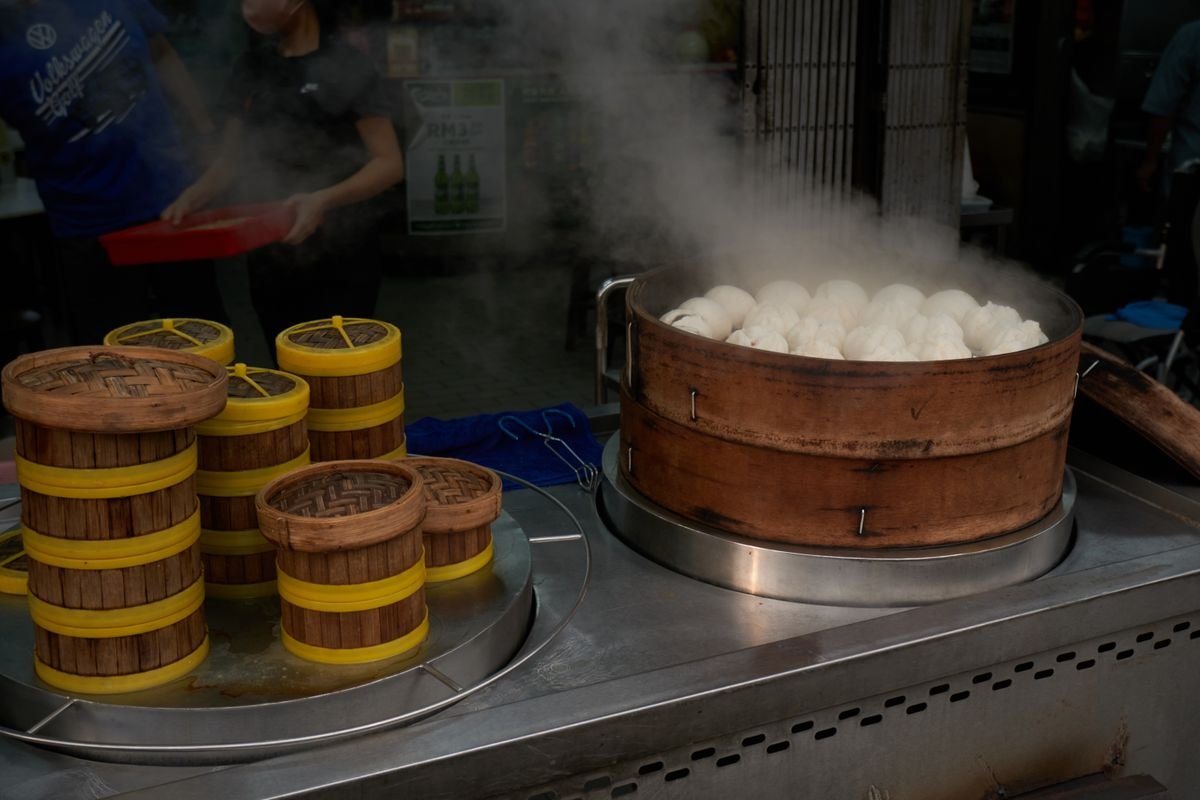
In China today, baozi are an everyday food, sold from street stalls at dawn and steamed at home for family meals. Vendors open their steamers in the morning and the smell of warm dough and pork fills the street, drawing a queue before the buns are even ready. Families make them together at weekends, with one person rolling dough, another filling, and a third pleating, turning the work into a shared job. The dough is made fresh each morning in most shops, and the first batch sells out fast, so regulars learn to arrive early or miss out on their favourite filling.
What makes baozi special is the contrast between the bun and the filling. The dough is soft, white and slightly sweet, while the pork inside is juicy and savoury with ginger and spring onion. When you bite through the fluffy bread, the filling releases its juices, and the two parts balance each other in a way that a plain dumpling never quite manages. The pleated top is part of the charm, a little knot that shows the bun was made by hand. The pleats on top are not just decoration; they show that the bun was closed by hand and help the dough expand evenly as it steams.
Cook this when you have a relaxed afternoon and want a project that feeds a crowd. It suits a US family dinner, when everyone can gather around the table and eat the buns straight from the steamer, or a weekend cooking session with friends. The dough takes time, but the work is simple, and the reward is a tray of warm buns that taste far better than anything from a shop.
- Prep time
- 60 mins
- Cook time
- 20 mins
- Total time
- 80 mins
- Servings
- 4 servings
- Calories
- 380
Ingredients
- 500 g plain flour, plus extra for dusting
- 7 g fast-action dried yeast
- 1 tablespoon caster sugar
- 250 ml warm water
- 1 tablespoon vegetable oil
- 400 g minced pork
- 200 g Chinese cabbage, finely chopped
- 3 spring onions, finely chopped
- 2 tablespoons soy sauce
- 1 tablespoon Shaoxing wine
- 1 tablespoon sesame oil
- 1 tablespoon fresh ginger, finely grated
- 2 garlic cloves, finely grated
- 1/2 teaspoon white pepper
Instructions
- Mix the flour, yeast and sugar in a large bowl, then pour in the warm water and the vegetable oil. Stir with a wooden spoon until a shaggy dough forms, then tip it onto a floured bench. The dough should feel soft and slightly tacky, not dry or crumbly.
- Knead the dough for 8 to 10 minutes, pushing it away with the heel of your hand and folding it back, until it turns smooth, elastic and springy. When you press a finger into it, the dent should slowly fill back in. Put the dough in a lightly oiled bowl and cover it with a damp cloth.
- Leave the dough to rise in a warm spot for about 1 hour, until it has doubled in size. The top should look puffy and the dough should feel light when you lift it. While it rises, make the filling so everything is ready when the dough is.
- Put the minced pork in a bowl and add the soy sauce, Shaoxing wine, sesame oil, ginger, garlic and white pepper. Mix in one direction with chopsticks for 2 minutes until the pork turns sticky and pale, which helps the filling hold together and stay juicy. Stir in the cabbage and spring onions last.
- Tip the risen dough onto a floured bench and press the air out gently with your palms. Roll it into a long sausage about 40 centimetres long and cut it into 12 equal pieces. Roll each piece into a smooth ball, then flatten it with your palm into a round about 10 centimetres across, thinner at the edges than in the middle.
- Spoon a heaped tablespoon of filling into the centre of each round, leaving a clear border of dough around the edge. Lift the edge up and pinch pleats around the filling, working your way around the circle until the top closes. Twist the gathered dough to seal it and set the bun seam side down on a small square of baking paper.
- Set the shaped buns on a tray, cover them with a cloth, and leave them to rest for 15 minutes so they puff up slightly. They should look a little rounder and feel light when you lift one. Meanwhile, bring a large pot of water to a rolling boil and set your steamer over it.
- Steam the buns in batches for 15 minutes over high heat, keeping the lid on tight the whole time. Do not lift the lid to peek, since the cool air can make the buns sink. When the time is up, turn off the heat and wait 2 minutes before lifting the lid.
- Lift the buns out carefully and serve them hot, with black vinegar and chilli oil on the side for dipping. The buns should feel soft and springy, and the first bite should release a puff of steam and a spoonful of savoury juices.
Pro tips
- Knead the dough for a full 8 to 10 minutes until it is smooth and springy, since a short knead gives dense, heavy buns that never rise properly and stay doughy inside.
- Roll each dough round thinner at the edges than in the middle, so the pleats close neatly and the top of the bun does not turn thick and doughy when it steams.
- Use only a heaped tablespoon of filling per bun, since overfilled buns burst open in the steamer and lose their juices into the basket.
- Keep the steamer lid on tight for the whole cooking time, and wait two minutes after turning off the heat before lifting it, so the buns do not sink.
- Line the steamer with baking paper or cabbage leaves so the buns do not stick, and leave space between them because they expand as they steam and will join together if crowded.
Variations & serving ideas
The filling is easy to change, so use minced chicken, beef or a mix of mushrooms and firm tofu in place of pork. Keep the same seasonings and the same amount of cabbage, since they give the filling its flavour and juiciness. A sweet version uses red bean paste or a spoonful of custard, and it steams in the same time as the savoury buns. A spoonful of hoisin sauce in the filling gives a sweeter, deeper flavour that works well with chicken, and a little five-spice powder adds warmth to a beef version.
For a lighter bun, use chicken mince and add a little more ginger and spring onion to keep the flavour bright. A spoonful of chilli paste in the filling gives gentle heat, while a few chopped water chestnuts add crunch. You can also make half the batch plain and half with a different filling, so everyone at the table has a choice.
Serve baozi as a main meal with black vinegar, chilli oil and a simple cucumber salad on the side. For a US family dinner, a tray of buns with a pot of soup makes a complete and satisfying meal. The buns are also good packed cold for lunch, though they taste best warm from the steamer. For a US family dinner, a tray of buns with a pot of soup makes a complete and satisfying meal, and the buns are also good packed cold for lunch the next day.
Pair the buns with a pot of green tea, a light lager, or sparkling water with lemon. Keep the drinks simple and let the warm buns carry the meal. A small dish of pickled vegetables on the side adds a sharp, fresh note that cuts through the rich pork filling. A small dish of pickled vegetables on the side adds a sharp, fresh note that cuts through the rich pork filling and gives the meal a little crunch.
Getting it right
The key technique is kneading the dough until it is smooth and elastic. The gluten needs time to develop, and a short knead gives a dense, heavy bun. Push the dough away with the heel of your hand, fold it back, and repeat for a full eight to ten minutes. The finished dough should feel soft and springy, and a dent made with your finger should slowly spring back.
Heat control matters in the steamer. The water must be at a rolling boil before the buns go in, so the dough rises fast and sets before it can collapse. Keep the lid on tight for the whole fifteen minutes, and then leave the heat off for two minutes before lifting it. Opening the lid early lets cold air rush in and can make the buns wrinkle and sink. Check that the water is at a full boil by listening for a strong, steady bubbling sound, and add more water to the pot if it runs low during steaming.
The most common mistake is overfilling the buns. A heaped tablespoon is enough, and more filling will burst through the pleats as the bun expands. The other common slip is rolling the dough rounds too thick at the edges, which makes the seal hard to pinch and the bun doughy at the top. Roll the edges thin and the centre slightly thicker, and the pleats will close neatly. If a bun bursts, the filling was too wet or too generous, so drain the cabbage well next time and measure the filling with a spoon instead of guessing.
Storing & reheating
Cooked baozi keep in the fridge for up to three days in a sealed container, and they reheat well by steaming for 5 minutes until hot through. The microwave works in a pinch, though the buns can turn tough, so sprinkle them with a little water first and heat in short bursts. Uncooked shaped buns freeze well on a tray before bagging.
To freeze, place the shaped buns on a lined tray so they do not touch, freeze until solid, then transfer them to a freezer bag for up to three months. Steam straight from frozen for 20 minutes, adding 5 minutes to the usual time. Label the bag with the date and the filling so you know what you have, and use the frozen buns within three months for the best texture and flavour.
Frequently asked questions
Why are my baozi not fluffy?
The most common reason is dough that was not kneaded long enough or not left to rise until doubled in size. Knead for a full 8 to 10 minutes until the dough is smooth and springy, and let it rise in a warm spot. Cold kitchens slow the yeast down, so give it extra time.
How much filling should I put in each bun?
A little filling goes a long way, since overfilled buns burst open as they steam. Use about one heaped tablespoon per bun and leave a clear border of dough around the edge. Pinch the pleats firmly so the seal holds when the bun expands in the steamer.
Can I use shop-bought dough for baozi?
Yes, you can use shop-bought pizza dough or bread dough in a pinch, though the texture will be chewier and less pillowy than a proper bao dough. Let the shop dough come to room temperature before shaping, and rest the buns for 10 minutes before steaming so they puff up.
What can I use if I do not have a bamboo steamer?
A metal steamer basket lined with parchment works well, as does a bamboo steamer over a wok. A plate set on a small rack inside a large pot with a lid also works. Keep the lid on tight and do not lift it during steaming, since the rush of cool air can make the buns collapse.
Can I freeze baozi?
Yes, baozi freeze well both before and after steaming. Freeze shaped raw buns on a tray, then bag them and steam straight from frozen for 5 extra minutes. Cooked buns can be frozen too and reheated by steaming for 5 minutes until hot through.
Can I use a different filling for baozi?
Yes, the filling is flexible. Use minced chicken, beef or mushrooms in place of pork, keeping the same seasonings and the same amount of cabbage. For a vegetarian version, use finely chopped mushrooms, firm tofu and extra ginger, with a spoonful of sesame oil for richness.