Belgian Waffles Recipe
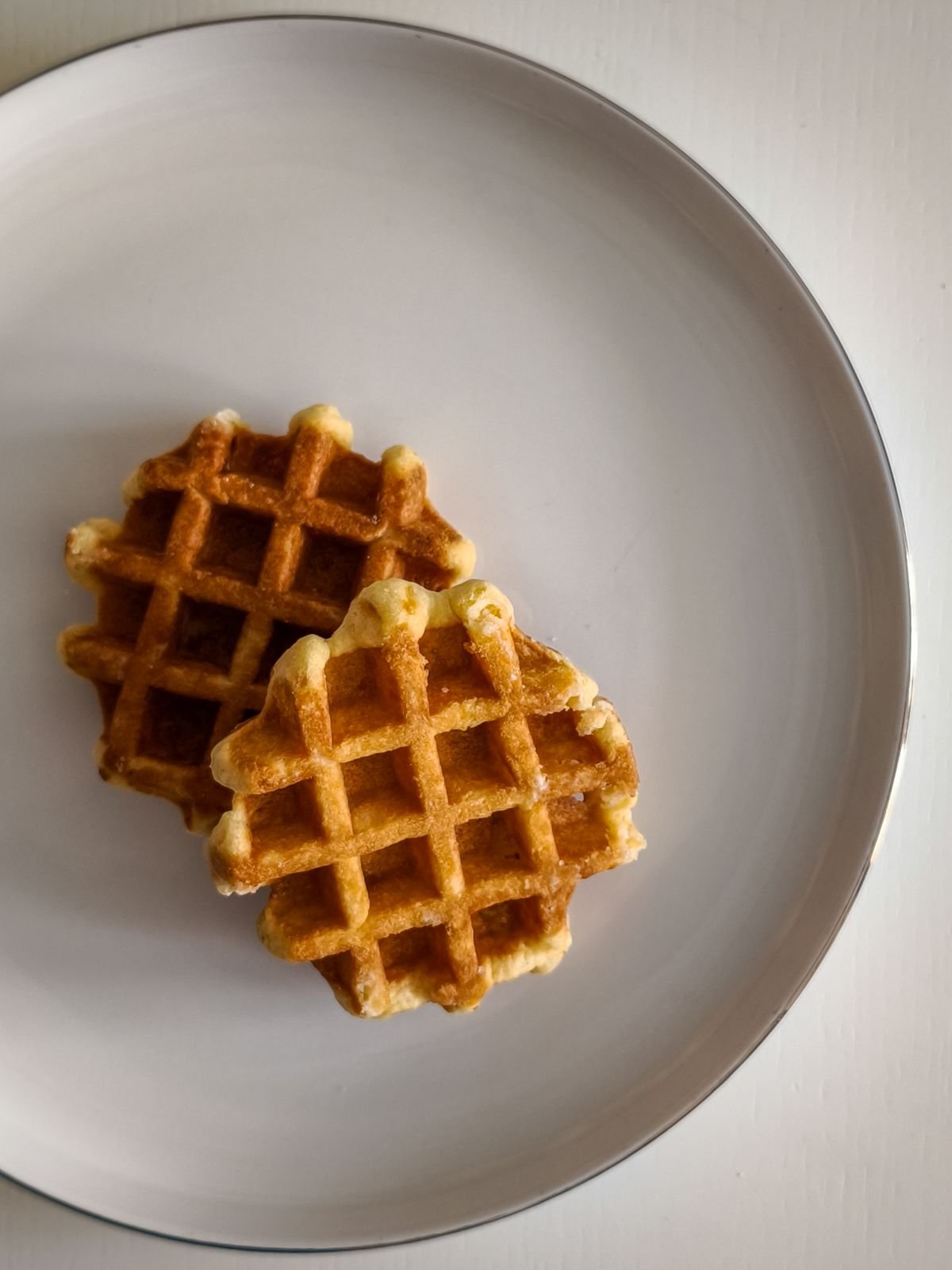
Belgian waffles are thick, golden and deeply crisp outside, with a soft, fluffy centre full of buttery flavour. The deep pockets hold maple syrup, whipped cream and berries perfectly. This is the waffle that turns a slow weekend morning into a proper brunch, and the batter comes together in minutes. They freeze well too, so a big batch can make weekday breakfasts easy.
The story behind Belgian Waffles
Belgian waffles arrived in America at the 1964 New York World's Fair, where a Belgian cook named Maurice Vermersch sold them from a stand in the Belgian Village. He served them with whipped cream and strawberries, and the crowds loved them. The waffles were based on the Brussels waffle, a light, crisp cake cooked in a deep-grid iron, and Americans quickly adopted them as a breakfast and brunch favourite. The name stuck, and the waffle became an American classic with Belgian roots.
In Belgium itself, waffles are street food, sold from small stands and eaten by hand with sugar or chocolate. The Brussels waffle is light and rectangular, while the Liège waffle is denser and studded with pearl sugar that caramelises in the iron. The American version kept the Brussels shape and the deep pockets, but made it bigger, richer and ready for a pile of toppings. It moved from the fairground to the diner, then to the home kitchen, where it became a weekend ritual.
What makes a Belgian waffle special is the contrast between the outside and the inside. The iron creates a crisp, golden shell with deep squares that hold syrup and cream, while the centre stays soft, airy and buttery. Whipped egg whites in the batter give the crumb its lift, and a touch of vanilla rounds out the flavour. A good waffle should shatter slightly when you cut it, then give way to a pillowy middle.
This is a weekend breakfast, and it suits an American brunch table perfectly. In the US it is the centrepiece of a slow Saturday or Sunday morning, served with maple syrup, berries and whipped cream, and eaten hot from the iron while the coffee brews. Make the batter the night before, cook the waffles in batches, and let everyone top their own. It is the kind of breakfast that makes a normal morning feel like a small celebration.
- Prep time
- 15 mins
- Cook time
- 20 mins
- Total time
- 35 mins
- Servings
- 4 servings
- Calories
- 450
Ingredients
- 250 g plain flour
- 2 tablespoons caster sugar
- 1 tablespoon baking powder
- 1 pinch of fine sea salt
- 2 large eggs, separated
- 400 ml whole milk
- 80 g unsalted butter, melted and cooled
- 1 teaspoon vanilla extract
- 1 tablespoon vegetable oil, for the iron
- 150 ml maple syrup, to serve
- 100 g fresh berries, to serve
- 100 ml double cream, whipped, to serve
Instructions
- Whisk the flour, caster sugar, baking powder and salt together in a large bowl. Make a well in the centre. A good whisk now means no lumps later, so take a few seconds to break up any clumps of flour. The dry mixture should look even and pale, with the baking powder spread through it.
- Whisk the egg yolks, milk, melted butter and vanilla extract together in a jug until smooth. The mixture should look pale gold and smell faintly of vanilla. Pour it into the well in the flour and stir gently with a wooden spoon, just until the batter comes together. A few small lumps are fine; overmixing makes tough waffles.
- Beat the egg whites in a clean bowl with a whisk or an electric mixer until they form soft peaks. The whites should hold their shape when you lift the whisk, but still look glossy and soft, not dry or grainy. This step takes about two minutes by hand. The whipped whites are what make the waffles light and airy inside.
- Fold the whipped egg whites into the batter in two batches, using a large spoon and a gentle lifting motion. Cut down through the middle, scoop underneath, and fold the batter over the whites. Stop as soon as no white streaks remain. The batter should look thick, pale and full of tiny air bubbles. Let it rest for five minutes.
- Preheat your Belgian waffle iron until the indicator light shows it is ready, about five minutes. Brush the grids lightly with vegetable oil, even on a non-stick iron, because the oil helps the waffles release and turn golden. The iron should be hot enough that a drop of batter sizzles at once.
- Ladle about 120 ml of batter onto the centre of the lower grid, spreading it just to the edges with the back of the ladle. Close the lid gently and do not press it down. The batter will spread and rise as it cooks. Let the waffle cook for four to five minutes without opening the lid, until the steam slows to a thin wisp.
- Open the iron and check the waffle. It should be deep golden brown, crisp to the touch, and it should lift away from the grids easily. If it sticks, close the lid and cook for another minute. Lift the waffle out with a fork or tongs and set it on a wire rack, not a plate, so the steam escapes and the crust stays crisp.
- Repeat with the remaining batter, brushing the iron lightly with oil between waffles if they start to stick. Keep the finished waffles warm on a wire rack in a 120°C oven while you cook the rest. Stacking them on a plate traps steam and softens the crust, so keep them in a single layer.
- Serve the waffles at once, while they are still crisp, with maple syrup poured into the deep pockets, a spoonful of whipped cream, and a handful of fresh berries. The syrup should pool in the squares and soak just a little into the fluffy centre. Eat them hot, with a fork and knife, and enjoy the contrast of crisp edges and soft middle.
Pro tips
- Separate the eggs while they are cold, then let the whites come to room temperature before whipping. Cold whites separate cleanly, and room-temperature whites whip up higher and faster for a lighter waffle.
- Do not overmix the batter. Stir only until the flour disappears, and leave a few small lumps. Those lumps cook out in the iron, and a gently mixed batter makes a tender, fluffy waffle instead of a tough one.
- Preheat the iron fully before the first waffle. A hot iron gives a crisp crust at once, while a half-hot iron lets the batter soak into the grids and stick. Wait for the indicator light, then give it one more minute.
- Brush the iron lightly with oil, even if it is non-stick. A thin film of oil helps the waffle release cleanly and gives the crust a better golden colour. Use a pastry brush so the oil reaches the corners of the grids.
- Serve the waffles on warm plates, straight from the rack. A cold plate cools the waffle fast and softens the crust, while a warm plate keeps it crisp for the few minutes it takes to add the syrup and berries.
Variations & serving ideas
The toppings are where you can have fun. Classic maple syrup and butter never fails, but fresh berries with whipped cream, sliced banana with chocolate sauce, or a spoonful of lemon curd all work well. For a savoury version, serve the waffles with fried chicken and a drizzle of hot honey, a combination that has become a brunch favourite across the southern United States.
The batter can change too. Add a teaspoon of cinnamon or a pinch of nutmeg for a warm spice note, or fold in a handful of chocolate chips for a treat the children will love. For a richer waffle, replace half the milk with buttermilk, which adds a gentle tang and a softer crumb. A spoonful of cocoa powder turns the batter into chocolate waffles, which pair well with berries and cream.
Serve Belgian waffles as the main event of a weekend brunch, with coffee, fresh fruit and maybe a side of bacon or sausage. In the US they also work as a dessert, served warm with a scoop of vanilla ice cream and a drizzle of chocolate sauce. For a party, cook a big batch and set out a topping bar so everyone builds their own waffle.
Pair them with good coffee, which cuts through the sweetness of the syrup. A glass of cold milk is the classic choice for children, and a fresh orange juice brings a bright contrast to the rich, buttery waffle. For a special brunch, a glass of sparkling wine with orange juice makes the whole meal feel like a celebration.
Getting it right
The key skill in Belgian waffles is the egg whites. Whip them to soft peaks in a clean bowl, with no trace of yolk or grease, and fold them in gently at the end. The whites carry air into the batter, and that air is what makes the waffles light instead of dense. If you stir the batter hard after adding the whites, you knock the air out and the waffles turn flat and heavy.
Heat control is the second skill. The iron must be fully hot before the batter goes in, so the outside sets and crisps at once. Cook each waffle for four to five minutes without opening the lid, and watch the steam: it pours out thickly at first, then slows to a thin wisp when the waffle is nearly done. Opening the lid early lets the heat escape and leaves a pale, soft waffle.
The most common mistake is overmixing the batter, which develops the gluten in the flour and makes the waffles tough and chewy. Stir only until the flour disappears, and leave a few small lumps. The second common mistake is stacking hot waffles on a plate, where the trapped steam softens the crust. Set each waffle on a wire rack as soon as it leaves the iron, and keep them in a single layer in a warm oven.
Storing & reheating
Belgian waffles are best eaten fresh from the iron, while the outside is crisp and the inside is hot and fluffy. If you have leftovers, cool them completely on a wire rack, then keep them in the fridge for up to two days in a sealed container. Reheat them in a toaster or a 200°C oven for five minutes, until the crust crisps up again. A microwave will make them soft and chewy, so avoid it.
You can freeze waffles for up to a month. Cool them fully, then stack them in a freezer bag with a sheet of baking paper between each one. Reheat straight from frozen in a toaster or a hot oven. The batter itself keeps in the fridge overnight, covered, and you can cook fresh waffles from it in the morning after a gentle stir.
Frequently asked questions
What makes Belgian waffles different from regular waffles?
The difference is the batter and the iron. Belgian waffles use a yeasted or baking-powder batter cooked in a deep-grid iron, which makes them thick, crisp and airy. Regular waffles are thinner, denser and cooked in a shallow iron. The deep pockets of a Belgian waffle hold far more syrup and toppings.
Can I make Belgian waffles without a waffle iron?
Yes, but the result will be thinner and less crisp. A sandwich press or a grill pan can make a waffle-like cake, but it will not have the deep pockets or the crisp crust of a proper waffle iron. If you love waffles, a basic Belgian waffle iron is a good buy and lasts for years.
Can I make the batter the night before?
Yes, and it improves them. Mix the batter the night before, cover it and refrigerate it overnight. The flour hydrates fully and the flavour deepens. Let the batter sit at room temperature for 15 minutes in the morning, stir it gently, and cook as usual. Do not add the egg whites until morning if you whip them separately.
Why are my waffles soft instead of crisp?
This usually means the iron was not hot enough, or the waffle was left in the iron too briefly. Preheat the iron until it is fully ready, and cook each waffle for four to five minutes, until the steam slows and the outside is deep golden. Opening the iron early lets the heat escape and softens the crust.
Can I make Belgian waffles dairy-free?
Yes. Swap the milk for oat milk or almond milk and the butter for a neutral oil or dairy-free butter. The waffles will be a little less rich but still crisp and fluffy. Use a gluten-free flour blend made for baking, and add an extra egg to help the batter hold together in the iron.
Can I freeze leftover Belgian waffles?
Yes. Cook the waffles, cool them completely on a wire rack, and freeze them in a single layer in a freezer bag for up to a month. Reheat them straight from frozen in a toaster or a 200°C oven for five minutes, until crisp. They come back almost as good as fresh, which makes them a smart weekday breakfast.