Baked Macaroni and Cheese Recipe
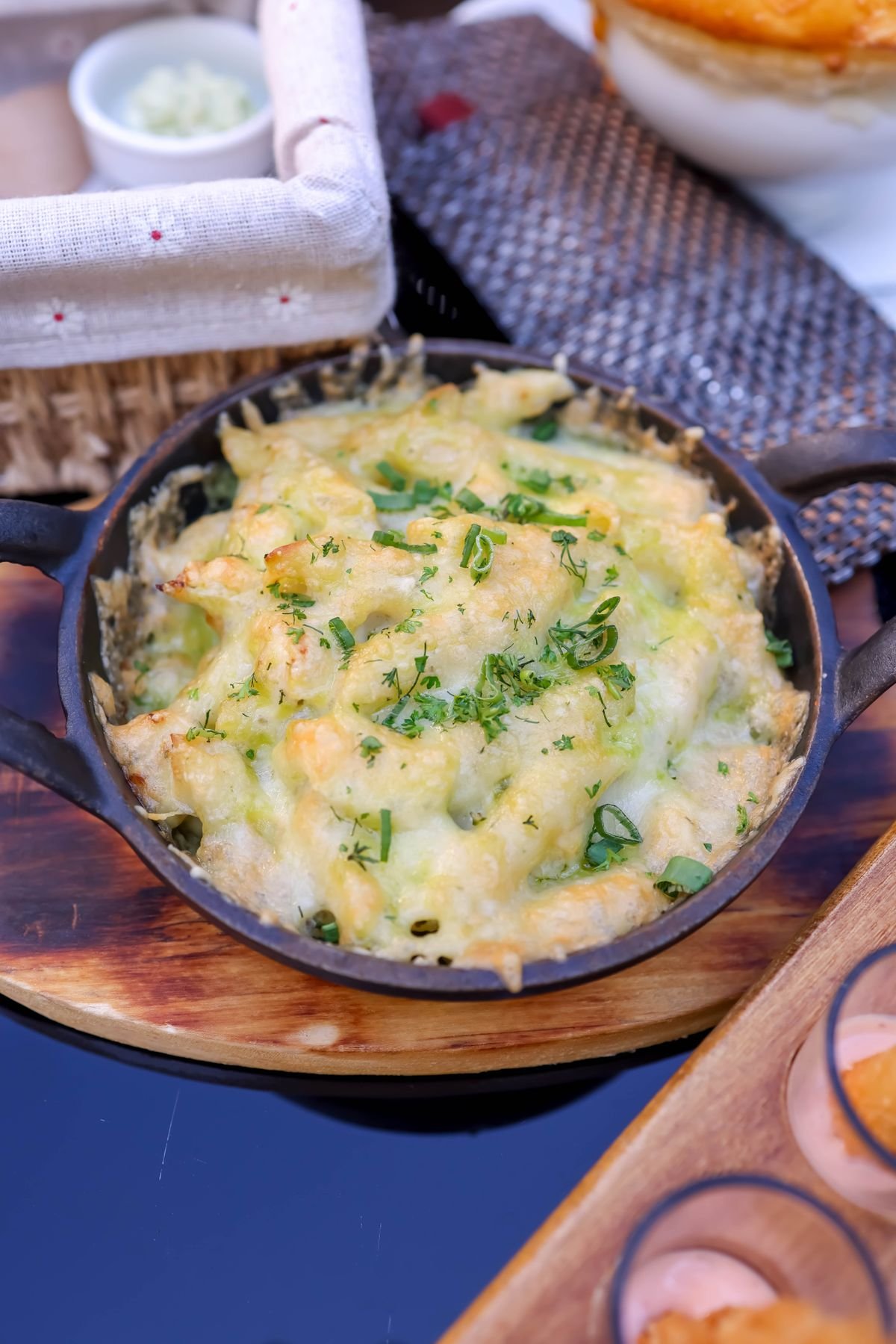
Baked Macaroni and Cheese is comfort food at its purest: elbow pasta folded through a rich Cheddar sauce, topped with buttered breadcrumbs and baked until the top is golden and crisp. It is creamy underneath, crunchy on top, and the kind of dish that makes a whole table go quiet. This is the version worth making from scratch. It uses a proper cheese sauce, a crisp topping and real Cheddar, and it tastes nothing like the box.
The story behind Baked Macaroni and Cheese
Macaroni and cheese has been on American tables since the early days of the republic. Thomas Jefferson is often credited with bringing the idea home from Europe, and his cook James Hemings, who trained in France, served a baked macaroni dish at the President's table. The dish spread through the south, where it became a fixture of Sunday dinners and holiday tables, served alongside ham, greens and fried chicken. The dish travelled with families as they moved, and every region added its own habit. In the south it stayed rich and baked, with a crisp top, while in the north it was often served straight from the pan, soft and creamy.
In the twentieth century the boxed version took over, and for many families macaroni and cheese meant a packet of powder and a pan of milk. But the baked version never went away. Church suppers, family reunions and Thanksgiving tables kept it alive, with each cook guarding their own recipe: sharp Cheddar or mild, a roux-based sauce or an egg custard, breadcrumbs or a plain cheese top. The arguments continue today, and every family has a version they insist is the right one. The recipe here follows the roux-based sauce and the breadcrumb top, which is the version most people picture when they hear the name.
What makes the baked version special is the contrast. The sauce is smooth and rich, the pasta is tender, and the top turns crisp and golden in the oven, with browned edges of cheese and crunchy crumbs. The mustard and the pinch of cayenne sit quietly in the background, sharpening the cheese flavour without making the dish taste spicy. The topping matters as much as the sauce. Buttered breadcrumbs turn golden and crisp, and the Parmesan in the mix gives the top a salty, savoury edge that plain crumbs never achieve.
Cook it when you want a dish that feeds a crowd and asks little in return. It suits a family dinner, a potluck, a holiday table, or a cold evening when only comfort food will do. Serve it as a main course with a green salad, or as a side dish next to roast chicken or baked ham. Make it for a crowd and watch it disappear. A dish of macaroni and cheese on the table has a way of making people relax, and there are rarely leftovers to argue over.
- Prep time
- 20 mins
- Cook time
- 35 mins
- Total time
- 55 mins
- Servings
- 4 servings
- Calories
- 650
Ingredients
- 400 g elbow macaroni
- 60 g unsalted butter, plus extra for the dish
- 60 g plain flour
- 600 ml whole milk, warmed
- 1 teaspoon Dijon mustard
- 1 pinch of cayenne pepper
- 300 g sharp Cheddar cheese, grated
- 100 g Gruyere cheese, grated
- 60 g fresh breadcrumbs
- 2 tablespoons grated Parmesan
- Salt and black pepper, to taste
Instructions
- Heat the oven to 190 C (170 C fan) and butter a large baking dish. Bring a big pot of well-salted water to a boil and cook the macaroni for 2 minutes less than the packet says, so it is still firm. Drain it and set it aside; it will finish cooking in the oven.
- Melt the butter in a large saucepan over medium heat. Add the flour and stir with a wooden spoon for 2 minutes, until the mixture smells nutty and turns pale gold. This roux is the base of the sauce, so do not rush it or let it brown too far.
- Pour in the warm milk a little at a time, whisking hard after each addition so no lumps form. Keep whisking as the sauce comes to a gentle simmer, then cook for 3 to 4 minutes, stirring, until it thickens enough to coat the back of a spoon.
- Take the pan off the heat and stir in the mustard, the cayenne and a good pinch of salt and pepper. Add the Cheddar and Gruyere a handful at a time, stirring until each addition melts into the sauce. The sauce should be smooth, thick and glossy.
- Taste the sauce and adjust the salt. It should taste well seasoned on its own, as the pasta will dilute it. A little extra mustard will sharpen the cheese flavour if the sauce tastes flat.
- Tip the drained macaroni into the sauce and stir until every piece is coated. The mixture should look creamy and loose, not stiff. If it seems thick, add a splash of warm milk.
- Pour the macaroni into the buttered baking dish and spread it evenly. Mix the breadcrumbs with the Parmesan and a drizzle of melted butter, then scatter the mixture over the top in an even layer.
- Bake for 25 to 30 minutes, until the top is deep golden and crisp and the sauce bubbles at the edges of the dish. The corners should be browned and the centre should be creamy when you spoon into it.
- Leave the dish to rest for 10 minutes before serving, so the sauce settles and the pasta holds together when you spoon it out. Serve in generous portions, with a green salad on the side.
- Check the centre of the dish with a spoon before you serve. It should be creamy and hot all the way through, with the sauce clinging to the pasta rather than pooling at the bottom.
Pro tips
- Undercook the pasta by 2 minutes. It finishes cooking in the oven, and pasta cooked to the packet time turns soft and mushy in the finished dish. Firm pasta holds its shape in the sauce.
- Warm the milk before you add it to the roux. Cold milk makes the sauce lumpy and slow to thicken, while warm milk blends in smoothly and keeps the sauce silky.
- Take the pan off the heat before you add the cheese. Cheese added over high heat can turn grainy and split, so let the sauce cool for a minute and stir the cheese in a handful at a time.
- Use sharp Cheddar for flavour. Mild Cheddar melts smoothly but tastes bland in the finished dish, while a sharp Cheddar gives the sauce its character. A little Gruyere adds a nutty depth.
- Rest the dish for 10 minutes after baking. The sauce needs time to settle, and cutting into it straight from the oven will send the sauce running across the plate.
Variations & serving ideas
For a richer version, stir in 150 g of cooked bacon lardons or diced ham before the macaroni goes into the dish. The salty meat balances the rich cheese sauce and turns the dish into a full meal. Fry the bacon until crisp and drain it well first. Diced ham works just as well, and it is a good way to use leftover ham from a roast. Stir the meat through the sauce so it is evenly spread, not piled in one corner.
Add vegetables to make it lighter and more colourful. Steamed broccoli florets, roasted cauliflower or sautéed mushrooms all fold through the sauce well. Add them with the pasta, and keep the amount modest so the cheese stays the star of the dish. Steam the broccoli until just tender, so it keeps a little bite, and roast the cauliflower until the edges are golden. Both hold their shape in the sauce and add colour to the dish.
Swap the Cheddar for a mix of Monterey Jack and a little smoked cheese for a different character. Monterey Jack melts beautifully and gives a mild, creamy sauce, while the smoked cheese adds a gentle depth. Keep the mustard, as it sharpens any cheese you use. A little smoked Cheddar in the mix gives the same effect in smaller amounts, and a spoonful of cream cheese stirred into the sauce makes it extra smooth.
Serve it as a side dish with roast chicken, baked ham or grilled steak, or as a main course with a sharp green salad and a tomato salad. It pairs well with a cold beer or a glass of iced tea. The leftovers are excellent the next day, gently reheated. A glass of cold milk is the old-fashioned partner for a plate of macaroni and cheese, and children still ask for it. Adults tend to reach for a cold beer.
Getting it right
The key technique is the roux-based sauce. Butter and flour cooked together for 2 minutes, then warm milk whisked in a little at a time, gives a smooth, thick base that holds the cheese without splitting. Rushing the milk in all at once makes lumps that no amount of whisking will fix. The roux should smell nutty and look pale gold before the milk goes in. If it smells raw and floury, it needs another minute on the heat.
Heat and timing control the bake. The oven at 190 C crisps the breadcrumb topping in 25 to 30 minutes while the sauce bubbles at the edges and the pasta finishes cooking. Too hot and the top burns before the centre is hot; too cool and the topping stays pale and soft. Place the dish in the centre of the oven, where the heat is most even, and check it after 20 minutes. If the top is browning too fast, lay a sheet of foil loosely over it.
The common mistake is overbaking the pasta before it goes into the dish. Macaroni cooked to the packet time plus 30 minutes in the oven turns to mush. Undercook it by 2 minutes and the finished dish holds its shape, with pasta that is tender but still has a little bite. Another common error is a sauce that is too thick before the pasta goes in. The pasta absorbs liquid in the oven, so the sauce should look loose in the pan, almost too loose, before you tip the macaroni in.
Storing & reheating
Leftovers keep in a sealed container in the fridge for up to 3 days. Reheat portions in a moderate oven at 170 C for 15 minutes, covered with foil, with a splash of milk stirred in to loosen the sauce. and the topping will crisp again in the last few minutes uncovered. Stir the milk in before the dish goes into the oven, so the sauce loosens evenly as it warms.
The assembled dish freezes well for up to 2 months. Cool it fully, cover it tightly, and thaw it overnight in the fridge before baking. Add the breadcrumb topping fresh before it goes into the oven, so it stays crisp.
Frequently asked questions
Can I use pre-grated cheese?
You can, but freshly grated cheese melts far better. Pre-grated cheese is coated in starch to stop it clumping, which can make the sauce grainy. Grating a block takes a few minutes and gives a much smoother result. If you must use pre-grated cheese, add it very slowly and stir well, as the starch coating makes it slower to melt.
Why did my sauce turn grainy?
The cheese was added over too high a heat, or the sauce boiled after the cheese went in. Take the pan off the heat, add the cheese a handful at a time, and stir until each batch melts. If the sauce has already turned grainy, whisk in a spoonful of warm milk off the heat to smooth it out.
Can I make it ahead of time?
Yes. Assemble the dish up to a day ahead, cover it and keep it in the fridge, then add the breadcrumb topping just before baking. Add 5 extra minutes to the baking time if it goes in cold. Bake it straight from the fridge and check the centre is piping hot before serving.
What pasta works best?
Elbow macaroni is the classic choice, as its curves hold the sauce well. Small shells, penne or fusilli all work too. Avoid long pasta, which does not coat evenly in the dish. Cook the pasta a minute less than the packet says, as it will keep cooking in the oven.
Can I use low-fat milk?
Whole milk gives the richest sauce, but semi-skimmed works if you prefer. Avoid skimmed milk, as the sauce will be thin. A spoonful of cream stirred in at the end helps if the sauce seems lean. For the creamiest result, use whole milk and a good mature Cheddar rather than a mild one.
How do I keep the topping crisp?
Toss the breadcrumbs with melted butter before scattering them, and bake until deep golden. If the topping softens on reheating, warm the dish uncovered in a hot oven for the last 5 minutes. A handful of grated Parmesan mixed into the crumbs adds flavour and helps the top brown evenly.